Hallowell and Ratey's Driven to Distraction: The C5 Facet
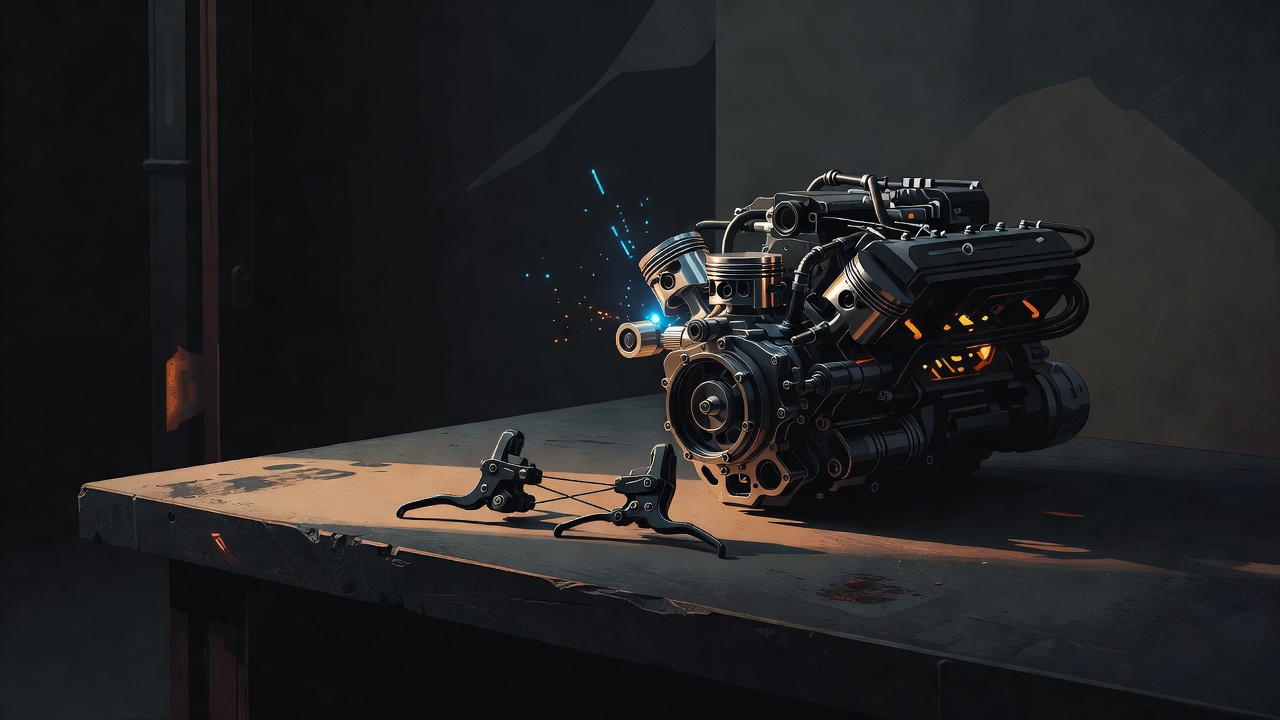
Edward Hallowell and John Ratey's Driven to Distraction is the book that pulled adult ADHD into the mainstream, written by two psychiatrists who both have it. Their signature move was to refuse the deficit framing. Hallowell is known for describing the ADHD brain as a Ferrari engine fitted with bicycle brakes, where the answer is stronger brakes rather than a weaker engine. That metaphor changes how you read the one trait ADHD most affects. In the Big Five, it shows up on Self-Discipline, and it is easy to misjudge.
ADHD shows up on the Self-Discipline facet
Self-Discipline (C5), under Conscientiousness, measures the brakes: starting a dull task and finishing it without being dragged. ADHD tends to score low here, and the trait-vulnerability point from the last decade of research is that this is a wiring difference in attention and impulse control, not a lapse in character. What Hallowell and Ratey added, decades before it was fashionable, is that the same brain carries real strengths. As Hallowell writes, their model holds that "there is as much good stuff (creativity, originality, curiosity, an entrepreneurial spirit, spunk, and persistence) as there is bad." A low C5 score can sit right next to a high-imagination, high-energy profile.
That pairing is the part most productivity advice misses. The ADHD brain that cannot force itself through a boring form will also chase a fascinating problem for nine hours straight, because interest, not importance, is what switches it on. Hallowell is almost gleeful about the upside. "Creativity begins in a mess," he writes, and the messy, tangent-following mind that struggles with C5 is often the one that makes the unexpected connection. The challenge is real; so is the gift, and reading only the C5 number misses half of what is there.
We break the facet down on its own in Self-Discipline (C5), and the specific stall of putting things off in procrastination through OCEAN. None of this is a diagnosis or a treatment plan, and Hallowell built a whole practice around the fact that ADHD often needs real support. But the useful reframe from Driven to Distraction, thirty years on, still holds: a low C5 score in an ADHD brain is a note about the brakes, not the engine. Strengthen the brakes, and the engine was never the problem.
Read the book: Driven to Distraction: Recognizing and Coping with Attention Deficit Disorder by Hallowell and Ratey.
See Where You Fall
Where do you actually fall? The 30-facet OCEAN personality test takes about 15 minutes and scores all five domains and the facets underneath them. Take the test
Research Citations
Hallowell, E. M., & Ratey, J. J. (1994). Driven to distraction: Recognizing and coping with attention deficit disorder from childhood through adulthood. Pantheon Books.
Gomez, R., & Corr, P. J. (2014). ADHD and personality: A meta-analytic review. Clinical Psychology Review, 34(5), 376-388.
Johnson, J. A. (2014). Measuring thirty facets of the Five Factor Model with a 120-item public domain inventory: Development of the IPIP-NEO-120. Journal of Research in Personality, 51, 78-89.
Costa, P. T., & McCrae, R. R. (1992). Revised NEO Personality Inventory (NEO-PI-R) professional manual. Psychological Assessment Resources.