Procrastination Is Three Different Problems: Arousal, Avoidant, and Decisional Types in OCEAN
The word "procrastination" covers three completely different failure modes. Someone who waits until 2am because the pressure finally makes the task interesting is not having the same experience as someone who can't open the document because submitting it means it could be judged. A procrastination quiz will label both of them the same way. The personality structure underneath is doing different things in each case, and the fix for one type will actively make another type worse.
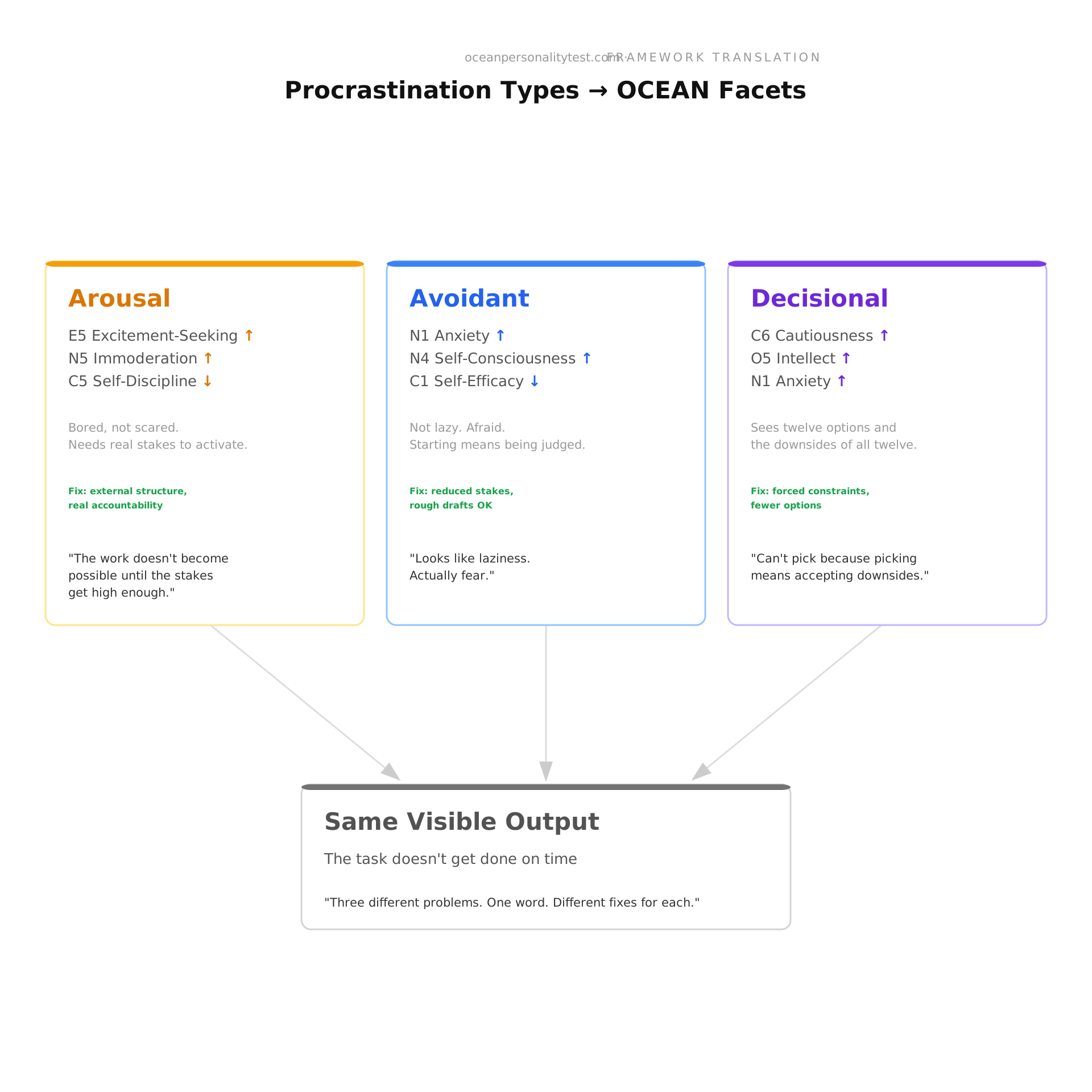
Low Self-Discipline (C5) shows up in all three types. That's what makes them all look the same from the outside: the task doesn't get done on time. But C5 is being pulled down by different forces in each case, which means "just use a planner" is useless advice for two out of three.
Arousal Procrastination
High Excitement-Seeking (E5), high Immoderation (N5), low Self-Discipline (C5). These people aren't avoiding the task. They're bored by it. The nervous system needs a certain level of stimulation to engage, and a deadline three weeks away produces zero activation. So they wait. Not because they're scared, not because they can't decide, but because the work genuinely doesn't become possible until the stakes get high enough to generate the arousal their brain requires. N5 makes it worse: the pull toward whatever feels good right now consistently wins over the thing that matters later. Once the deadline is close enough to trigger real consequences, they become extremely productive. The problem is that "extremely productive at 3am" is not a sustainable system.
The intervention for arousal procrastinators is external structure. Artificial deadlines with real accountability, shorter task cycles, environments with built-in consequence. Telling them to "break it into smaller pieces" misses the point; smaller pieces are even more boring. They need someone else imposing the constraint their C5 can't provide.
Avoidant Procrastination
High Anxiety (N1), high Self-Consciousness (N4), low Self-Efficacy (C1). This is the version that looks like laziness but is actually fear. Starting the task means producing something that can be evaluated, and evaluation might confirm what N4 already suspects: that they're not good enough. C1 is the belief that you can handle what's in front of you. When it's low, every task carries an implicit question about whether you're capable, and delay becomes a way to avoid answering it. N1 keeps the threat signal running in the background even when they're not working, so the avoidance doesn't actually reduce the anxiety. It just converts it from sharp (doing the thing and possibly failing) to dull (knowing you should be doing the thing and not doing it).
Reduced stakes fix avoidant procrastination. Permission to submit rough drafts, tasks framed as experiments rather than evaluations, feedback that separates the work from the person. A planner won't help here either; they already know exactly what they need to do and when. The obstacle is emotional, not organizational.
Decisional Procrastination
High Cautiousness (C6), high Intellect (O5), high Anxiety (N1). This one is counterintuitive because C6 is a Conscientiousness facet, and conscientious people are supposed to get things done. But C6 at the high end means needing to evaluate every option before committing. Pair that with high O5, which sees implications and second-order effects in every direction, and N1, which assigns threat weight to each of those possibilities. The result: they can see twelve ways to approach the task, can articulate the downsides of all twelve, and can't pick one because picking means accepting those downsides. So they research more. They refine their criteria. They wait for more information. The deadline arrives and they either rush something out or ask for an extension.
Forced constraints are what decisional procrastinators need. Two options, not twelve. A time limit on the decision itself, separate from the deadline for the work. Someone else choosing for them in low-stakes situations so the decision muscle isn't exhausted before the important choices arrive. Their bottleneck isn't motivation or fear; it's the inability to close a decision loop when the options all look flawed.
Why the Quiz Doesn't Help
A procrastination quiz tells you that you procrastinate, which you knew before you took it. Some of the better ones will categorize you into a type, which is useful for about five minutes until you realize the category doesn't come with a mechanism. Knowing you're an "avoidant procrastinator" doesn't tell you whether your avoidance is driven by N1, N4, C1, or some combination, and the ratio between those facets determines which intervention works.
The 30-facet OCEAN personality test measures all six of the facets involved in procrastination (E5, N5, C5, N1, N4, C1, C6, O5) along with 22 others, and the scores tell you not just which type you match but how strongly each contributing facet is pulling. Two avoidant procrastinators with different N1-to-C1 ratios need different approaches. The facet profile is the thing that makes the type actionable instead of just descriptive.
Take the 30-facet OCEAN personality test and find out which version of procrastination your facet scores are actually producing.