Every Game Group Has These Five Personality Roles
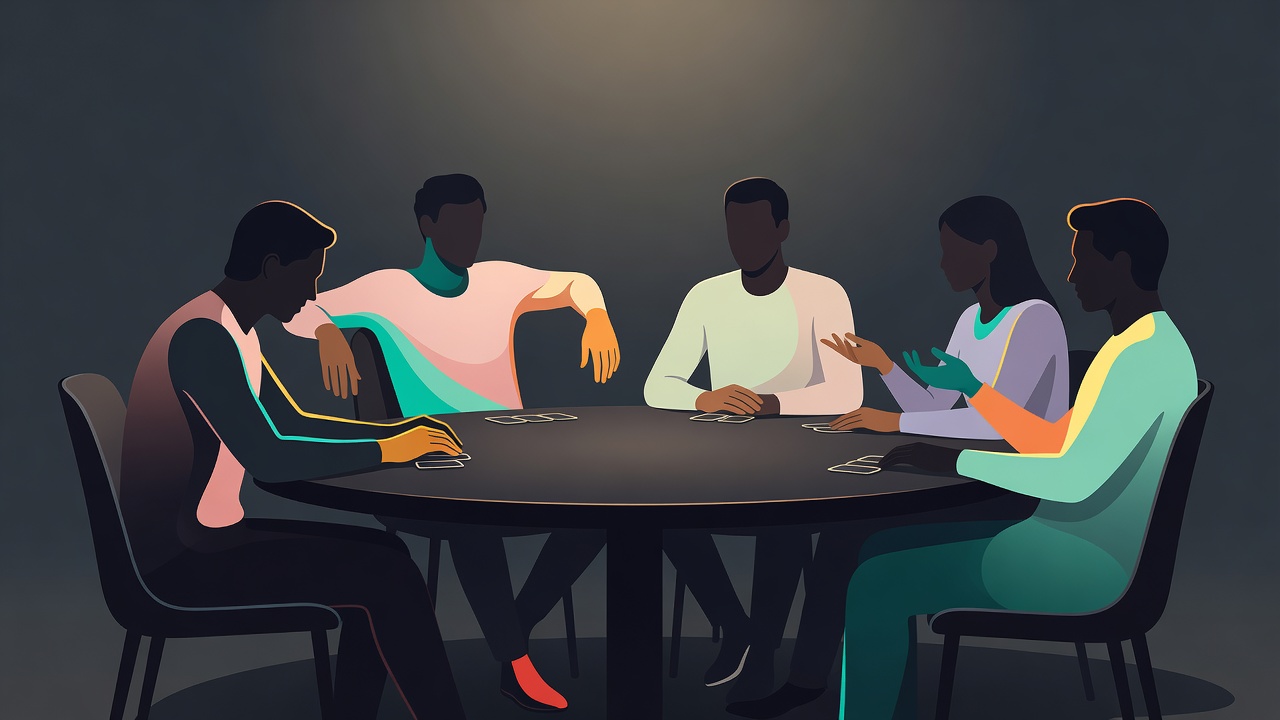
Sit at any regular game table long enough and the same roles appear, whatever the game is. Someone runs the logistics, someone breaks the plan for fun, someone optimizes everything, someone keeps the mood level, and someone slowly drifts toward their phone. These are not random. Each role is what a particular trait looks like in a small group, and once you can name the traits you can spot who is who at your own table.
The organizer
The one who picks the date, books the space, and actually owns the group chat is running on high Orderliness plus enough Assertiveness to make things happen. Without this person the group quietly stops meeting, because someone has to convert the vague intention to hang out into an event on a calendar. If your group has drifted apart, it usually lost its organizer and nobody replaced the role.
The wildcard
Low Orderliness and high Excitement Seeking make the player who does the unexpected thing on purpose, the one who takes the risky move because the safe one is boring. The wildcard is why the night is memorable and occasionally why it goes off the rails. A group with no wildcard is competent and a little flat; a group that is all wildcards never finishes a game.
The strategist and the peacemaker
The strategist runs on high Intellect and wants to solve the game as a system, which makes them formidable and, in a casual group, occasionally exhausting. The peacemaker is high Cooperation and low Anger, the person who smooths the friction when the strategist and the wildcard collide over whether to follow the plan. The peacemaker rarely gets credit, but they are usually the reason the group has survived as long as it has.
The one who checks out
The member who fades, glances at their phone, and needs to be pulled back in is often not bored at all. Frequently they are the quietest thinker in the group, high on the traits that generate ideas and low on the Assertiveness that would push those ideas into the game. Left alone they disengage; drawn in by name they turn out to have been paying closer attention than anyone. Knowing which of your players this is, and pulling them in on purpose, is the single move that most improves a table.
The catch is that the loudest role is not always the one you assume, and the quiet one is easy to misread. The 30-facet OCEAN personality test is free for the domain scores and takes each person about 15 minutes, and the group report maps who actually holds each role at your table, which is worth knowing before you plan the next night around the wrong person.