Donor Psychology: How Personality Profiles Predict Giving Patterns
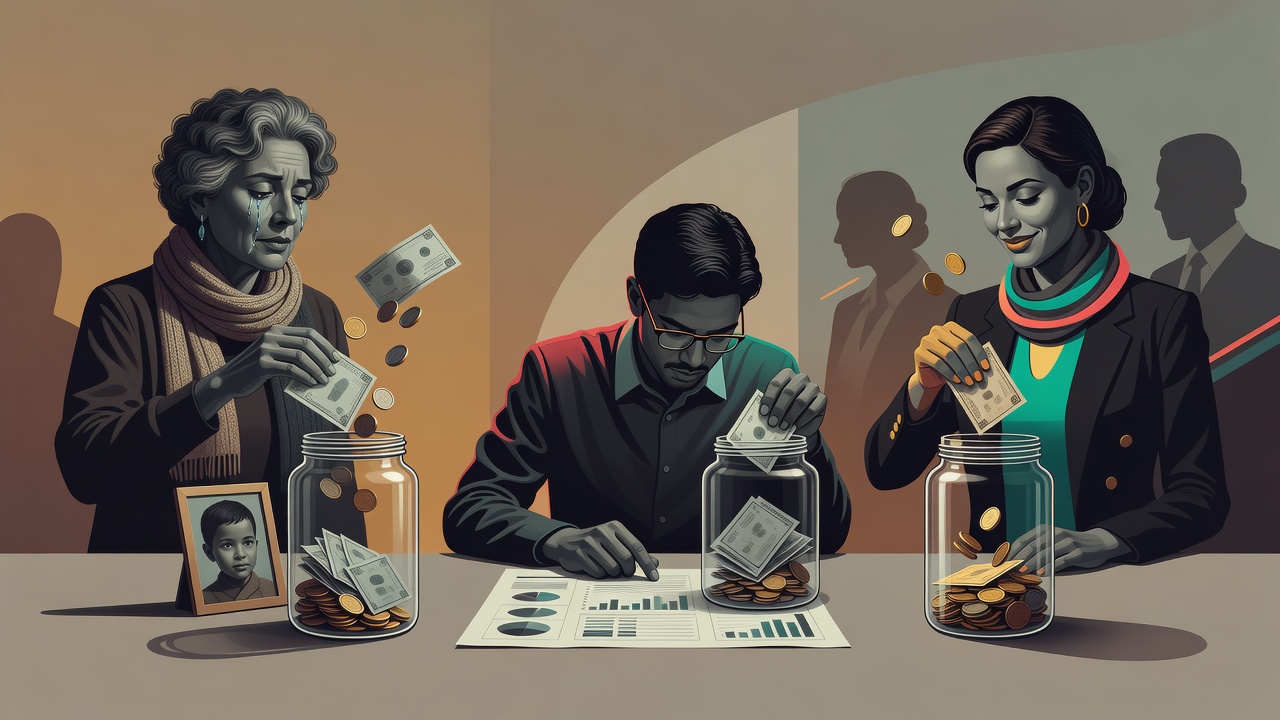
Send the same fundraising appeal to two people of identical wealth and one gives generously while the other deletes it, and the difference is rarely about the cause. It is about what moves each of them to give, which varies enormously from person to person and tracks personality more closely than income does. Fundraisers who send one message to everyone are, without realizing it, speaking fluently to one donor personality and gibberish to the others. The Big Five explains why the same ask lands so differently.
Giving is not one motivation
The mistake underneath most generic appeals is treating generosity as a single thing that people simply have more or less of. In reality, different people give for structurally different reasons, and an appeal built around one reason is close to invisible to a donor who gives for another. One person gives from empathy, moved by an individual's suffering. Another gives from principle, because their values say a person in their position ought to. A third gives to belong to a community of givers, and a fourth from a wish to have visible impact and be seen to have made a difference. These are not degrees of the same generosity but different engines, and each responds to a different key.
The traits behind the engines
Each giving motive maps onto a recognizable trait pattern. The empathy-driven donor tends to be high in the Agreeableness facets of Sympathy and Altruism, and is moved by the specific story of one identifiable person far more than by statistics, which is the well-documented reason a single named child outraises a number in the millions. The principle-driven donor is often high in Conscientiousness and driven by a sense of duty and consistency, and responds to appeals framed around obligation, effectiveness, and doing what is right rather than around emotion. The belonging-driven donor is high in Extraversion and gives partly to be part of something, responding to social proof, peer participation, and the community around a cause. And the impact-driven donor, frequently high in Openness and achievement-oriented, wants to see measurable results and back the most effective intervention, which is much of the psychology behind the effective-altruism movement. The Altruism facet breakdown and the moral foundations breakdown both feed into this map.
Why one message cannot reach them all
The practical consequence is that a single appeal necessarily optimizes for one of these donors at the expense of the others. The emotional story of one suffering child, which is close to optimal for the empathy-driven donor, can actively irritate the impact-driven donor, who reads it as manipulative and wants the cost-per-outcome data instead. The rigorous effectiveness report that delights the impact donor leaves the empathy donor cold, because it strips out the individual human they needed to feel something for. The appeal to duty that moves the principled giver sounds preachy to the belonging-driven donor, who wanted to be invited into a community rather than lectured about obligation. There is no universal appeal, only appeals matched or mismatched to the donor's underlying engine.
What fundraisers should actually do
The sophisticated move is to segment donors by motivation rather than only by capacity, and to match the message to the engine. Where you know or can infer a donor's profile, you tailor: the individual story for the empathic, the effectiveness data for the impact-driven, the community invitation for the belonging-driven, the appeal to values and consistency for the principled. Where you must broadcast to a mixed audience, the best appeals deliberately include multiple hooks, the human story and the impact number and the community and the principle, so that each donor finds their own reason somewhere in the message rather than being served only someone else's. This is the same logic that makes personality-matched communication work everywhere, applied to the specific act of asking for money for a cause.
The 30-facet OCEAN personality test profiles the exact traits that drive these giving engines, the Agreeableness facets behind empathy, the Conscientiousness behind principle, the Extraversion behind belonging, and the Openness behind impact-seeking, in about 15 minutes, with domain results free. For anyone in fundraising, understanding that donors are not more-or-less generous but differently motivated is the shift that turns a flat response rate into a set of tailored appeals that each reach the people they were built for. Two gifts can be the same size and spring from entirely different reasons, and it is the reason your message has to speak to.