Austin Kleon's Steal Like an Artist and Artistic Interests (O2)
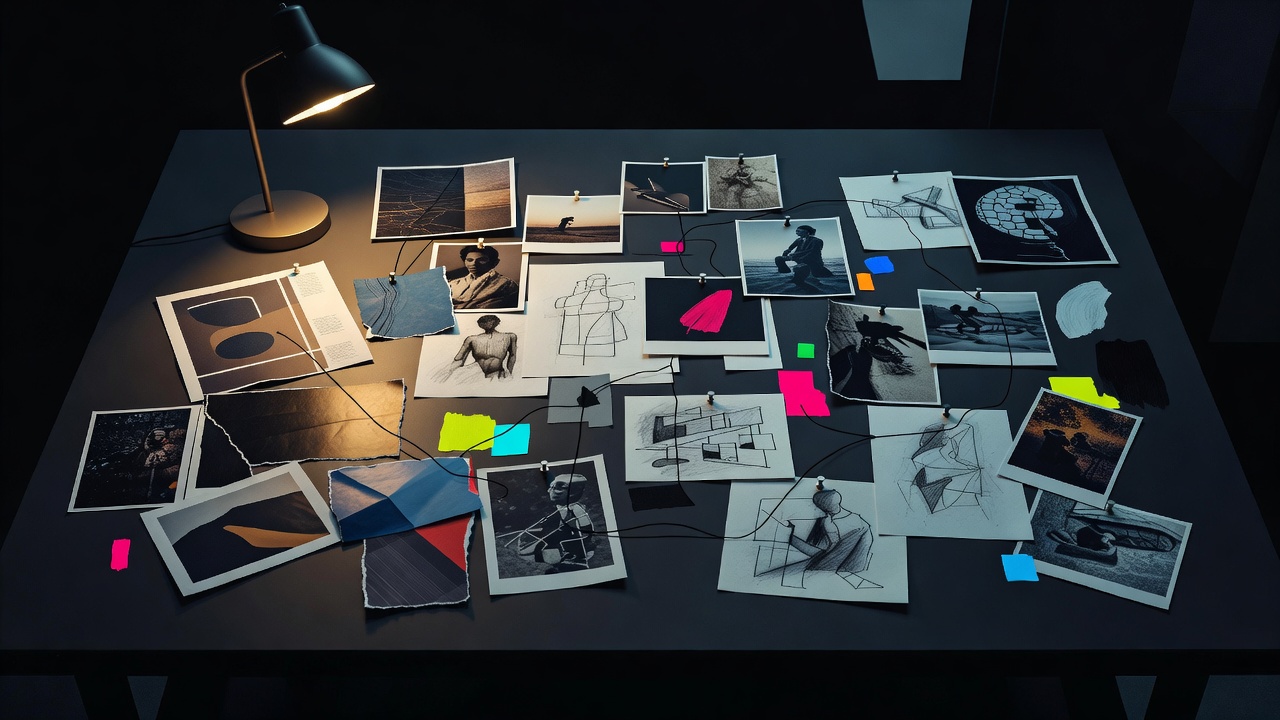
Austin Kleon wrote Steal Like an Artist for people who feel they are not creative because they are not spouting fully original ideas out of nowhere. His argument is that nobody does that, and that creative work is really the act of collecting things you love and combining them into something that carries your own fingerprints. He states the permission slip plainly, in the principle at the center of the book: "You don't need to be a genius, you just need to be yourself." The pull to collect and remix in the first place is, in the Big Five, a specific facet.
The pull to collect and remix is Artistic Interests
That facet is Artistic Interests (O2), under Openness, which measures how drawn you are to art, music, writing, and the made world in general. A high scorer collects influences without being told to, noticing how a song is built or why a sentence lands, and Kleon's method is basically a set of instructions for doing on purpose what high O2 already does by instinct. The book reads like a permission slip to them, confirming that their magpie habit of borrowing is the work itself, not a shameful shortcut around it.
For a lower O2 reader the book lands differently, and Kleon knows it, which is why he spends so little time on inspiration and so much on process: keep a logbook and steal openly from your heroes. He is trying to turn creativity into a behavior anyone can practice rather than a gift you either have or lack. That reframing is generous, and it is where the honesty of the score helps. O2 will not tell you whether you can make something good, but it does predict how naturally you reach for the raw material in the first place.
Read your O2 as a gauge of how much of Kleon you already live. High on it and Steal Like an Artist mostly gives language to what you have been doing since you were a kid taking things apart to see how they worked. Lower on it and the value flips: the book becomes less a mirror and more a manual, a way in for someone who was told early that they were not the creative type and half-believed it. The score does not decide whether you get to make things, only how loud the invitation has to be before you pick up the pen.
Read the book: Steal Like an Artist: 10 Things Nobody Told You About Being Creative by Austin Kleon.
See Where You Fall
Where do you actually fall? The 30-facet OCEAN personality test takes about 15 minutes and scores all five domains and the facets underneath them. Take the test
Research Citations
Kleon, A. (2012). Steal like an artist: 10 things nobody told you about being creative. Workman Publishing.
McCrae, R. R. (1987). Creativity, divergent thinking, and openness to experience. Journal of Personality and Social Psychology, 52(6), 1258-1265.
Johnson, J. A. (2014). Measuring thirty facets of the Five Factor Model with a 120-item public domain inventory: Development of the IPIP-NEO-120. Journal of Research in Personality, 51, 78-89.
Costa, P. T., & McCrae, R. R. (1992). Revised NEO Personality Inventory (NEO-PI-R) professional manual. Psychological Assessment Resources.