Artistic Interests (O2): Why Some People Notice Beauty and Others Walk Past It
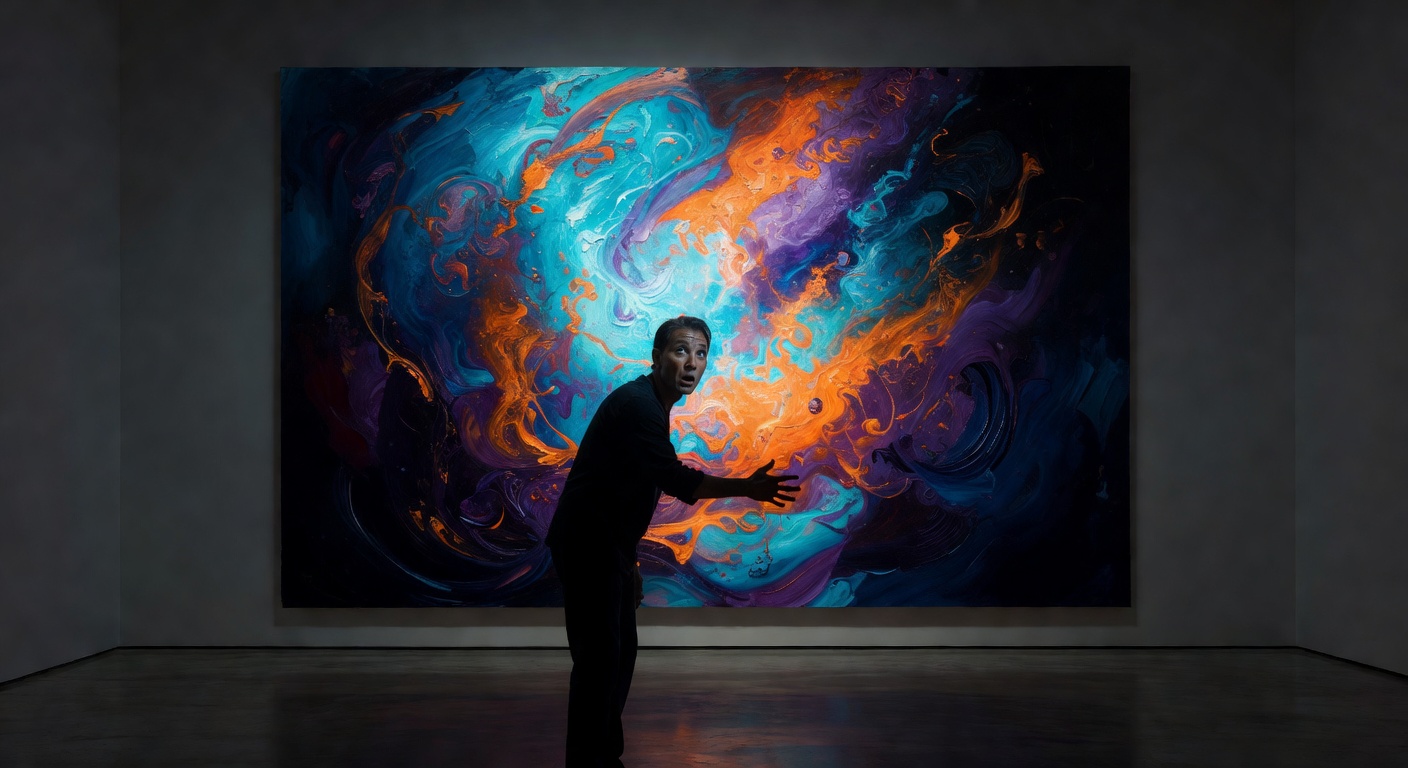
Two people walk through the same neighborhood at dusk. One of them stops at a corner because the light has changed. Not a traffic light. The actual light. The sun has dropped below the roofline and thrown a stripe of copper across the side of a brick building, and for about forty seconds the wall looks like it is glowing from inside. She stands there. Something in her chest tightens. She does not take a photo because photos never capture it. The moment passes, the light shifts, and she keeps walking, carrying a feeling she could not explain to anyone who was not already carrying it too.
The other person was on his phone. He looked up when she stopped, saw a brick wall, and waited. When she started walking again he asked what she was looking at. She said "the light." He looked at the building. It was a building. They kept walking.
Neither person is wrong. Neither person is broken. They are processing the same sensory input through two completely different systems, and the gap between those systems is measurable. It is called Artistic Interests, or O2: the second subfacet of Openness to Experience in the Big Five personality model.
What O2 Actually Measures
Artistic Interests is one of six facets under Openness to Experience, alongside Imagination (O1), Emotionality, Adventurousness, Intellect, and Liberalism. Where O1 measures the vividness of your inner world, O2 measures something more physical: how strongly you respond to beauty, art, music, nature, and the sensory texture of your environment. The domain is external. A painting on a wall. A chord progression. The way afternoon light falls on water. The question O2 answers is not whether you can see these things. Everyone can see them. The question is whether they do something to you.
High scorers on O2 report being moved by art, sometimes to the point of tears. They experience aesthetic chills (the technical term is frisson): goosebumps, a tightening in the throat, a wave of emotion triggered by a piece of music or a visual scene. They notice architectural details, color relationships, and the way a room is lit. When something is ugly, they feel it as a low-grade irritation that does not go away.
Low scorers can evaluate beauty intellectually without feeling it somatically. They know a sunset is beautiful the way they know a car is fast: as a fact about the world, not as an event in the body. Music is pleasant. Art is interesting. But the physical response, the chest-tightening, the frisson, the involuntary pause, does not happen. Or it happens so rarely that it does not register as a personality trait.
The IPIP-NEO assessment measures O2 with items that probe whether you are moved by poetry, whether you experience emotional reactions to art, whether beauty is something you seek out or something that occasionally shows up. Your percentile score tells you where you fall relative to the population. A 90th percentile does not mean you are an artist. It means your nervous system responds to aesthetic input more intensely than 90% of people.
The Body Feels It First
The neuroscience of aesthetic experience is stranger than most people expect. When someone with high O2 looks at a painting they find beautiful, the brain regions that activate are not just visual processing areas. The reward circuitry lights up (the same dopamine pathways involved in food and sex). The default mode network engages (the same network involved in self-referential thought and daydreaming). And the insula activates, which is the part of the brain responsible for interoception: the perception of what is happening inside your own body.
That last part is the key. Aesthetic experience is not primarily a cognitive process. It is a bodily one. Research published in Scientific American found that the strength of emotional experience triggered by artwork correlated with the strength of bodily sensations reported while viewing it. The most common positive emotion was empathy, and sensations were most prominent when viewers described the experience as "touching" or "moving." Art perception, the researchers concluded, is an interoceptive process: it involves awareness of the body's internal state.
This explains why high-O2 people describe their responses to beauty in physical terms. "It hit me in the chest." "My skin prickled." "I felt it in my stomach." They are not being poetic. They are reporting sensory data. The medial prefrontal cortex, which integrates emotional meaning with perception, shows stronger activation in people who score high on aesthetic sensitivity. Their brains are literally encoding beauty as a felt experience rather than a classified observation.
Low-O2 people show less insula activation when viewing the same stimuli. The visual processing happens. The classification happens ("that is a well-composed photograph"). But the interoceptive loop, the step where the perception becomes a body sensation, fires weakly or not at all. This is not a deficiency in the same way that color blindness is not a deficiency in reasoning. The information arrives. It just does not get routed to the same destination.
High O2: When Everything Has a Frequency
If you score in the 75th percentile or above on Artistic Interests, your environment is not neutral. It has a texture, a weight, a mood. Rooms feel different to you depending on the light, the proportions, the colors on the walls. You arrange your living space with a level of care that other people find excessive because visual disorder does not just look bad to you. It feels bad. Like a low hum of static that does not stop until the thing that is wrong has been corrected.
Music does not function as background. A particular chord change can rearrange your entire emotional state in under a second. You have probably had the experience of listening to a piece of music and feeling something so intense that you had to stop what you were doing. Not because the song was sad or happy in any obvious way, but because some combination of melody, harmony, and timing activated a response that was physical before it was emotional. The goosebumps came first. The feeling came after.
You probably notice things that other people genuinely do not perceive. The shadow that a railing casts on a staircase. The specific blue of a sky ten minutes before sunset. The way the font on a menu communicates something about the restaurant before you have read a single word. This information is constant and it is involuntary. You cannot turn it off any more than you can turn off your sense of smell.
The term for this is the aesthetic sensitivity threshold: the minimum level of sensory input required to trigger an aesthetic response. For high-O2 people, the threshold is very low. A crack in a sidewalk can be beautiful if the light is right. A stranger's jacket can be offensive if the color is wrong. You are receiving aesthetic data from your environment at a rate that most people would find overwhelming, and you are processing all of it, all the time, whether you want to or not.
People have probably told you that you are "too sensitive" about things that seem trivial. The color of a wall. The typeface on a sign. The way a plate of food is arranged. From the outside, this looks like pickiness. From the inside, it feels like having a sense that other people are missing. You are not overreacting. You are reacting to information they are not receiving.
Low O2: The Functional Eye
If you score in the 25th percentile or below, beauty is a category you understand without inhabiting. You can walk through a museum, appreciate the skill involved in each piece, read the placard, nod, and move to the next one without your chest doing anything unusual. This does not confuse you. What confuses you is the person next to you who has been standing in front of the same painting for seven minutes with wet eyes.
Your relationship with your environment is functional. A room is clean or messy, organized or disorganized. The color of the walls is not something you think about unless someone asks. Your desk faces the window or it does not. You did not choose your coffee mug for its glaze or its proportions; you chose it because it holds the right amount of coffee.
This is genuinely useful. Low-O2 people are less distracted by their surroundings. A cluttered office, a fluorescent-lit cubicle, a beige conference room: none of these register as hostile environments the way they do for high-O2 people. You can work anywhere because the aesthetics of a space do not affect your cognitive state. In environments where beauty is irrelevant to the task (trading floors, server rooms, warehouses, field operations), your indifference to visual stimuli is a competitive advantage.
You evaluate beauty cognitively rather than somatically. You can tell a well-designed building from a poorly designed one. You can distinguish a good photograph from a bad one. The distinction is analytical, not visceral. Where the high-O2 person feels a good photograph, you assess it. Both processes arrive at similar conclusions. The difference is in the route, not the destination.
The risk is dismissing aesthetic sensitivity as frivolous in others. When your partner rearranges the living room for the fourth time or spends thirty minutes choosing which frame to put around a print, the temptation is to see it as wasted effort. It is not wasted. It is maintenance of a perceptual system you do not share. They are solving a problem that is real to them even though it is invisible to you.
O2 and the Other Facets
O2 does not sit in isolation. Its expression shifts depending on what else is in your 30-facet profile. Some combinations amplify it. Others bend it into something unexpected.
High O2 + High O1 (Imagination)
The artist's combination. O1 builds inner worlds. O2 makes those worlds beautiful. The person with both facets elevated does not just imagine freely; they imagine with texture, color, and atmosphere. Painters, filmmakers, poets, and composers almost always score high on both. The imagination generates content, and the aesthetic sensitivity refines it. Raw material meets quality control, both running in the same skull.
High O2 + High N3 (Depression)
This combination turns beauty into a source of pain. Sunsets feel melancholy because they end. Music triggers grief instead of joy. The same perceptual sensitivity that lets you feel beauty so deeply also makes you feel its transience, its fragility, and the distance between what the world could look like and what it actually looks like. Japanese aesthetics has a word for this: mono no aware, the bittersweet awareness of impermanence. High O2 + High N3 is mono no aware as a personality profile. The capacity to be moved by beauty and the tendency toward sadness become the same capacity, and it is difficult to have one without the other. Your emotional reactivity baseline determines how much of the aesthetic signal gets converted into mood.
High O2 + Low C2 (Orderliness)
Aesthetic chaos. The person who loves beauty but does not organize it. Their apartment is a disaster by any conventional measure, but the disaster has a strange internal logic that only they can see. The stack of books is arranged by color, not alphabetically. The clothes on the floor are layered in a way that, to them, has a certain visual rightness. They will spend an hour choosing a lamp and then set it on a table covered in mail. The aesthetic sense is precise. The organizational system is not.
High O2 + High A6 (Sympathy)
The empathic aesthetic response. You do not just see a painting; you feel what the artist was feeling when they made it. A film does not move you because of the plot. It moves you because of the framing, the lighting, the way the score swells at the exact right moment, and the human intention behind all of those choices. You cry at craft, not at content. Someone spent years learning how to make you feel this, and the fact that it works is what gets you.
Low O2 + High C4 (Achievement-Striving)
The optimizer. Function over form in every domain. Their workspace is ergonomic, efficient, and ugly. Their wardrobe is practical. Their car was selected for reliability ratings, not lines. They cannot understand why the designer on their team cares about the spacing between two elements when the product works fine as it is. Performance metrics are real. Aesthetics are opinions. This profile ships fast and iterates on the things that show up in the data, which never includes beauty.
High O2 + High E5 (Excitement-Seeking)
The experience hunter. Not content to notice beauty passively, this person chases it. Concerts, travel, food, architecture, markets, festivals: they seek sensory richness the way a high-E5 person seeks stimulation, because for them, beauty is stimulation. They are the ones who plan a vacation around a single restaurant, a specific beach at a specific hour, or a building they saw in a photograph once. The aesthetic drive and the excitement drive reinforce each other into a life organized around the next overwhelming sensory moment.
O2 at Work
Certain jobs require you to see what is beautiful. Architecture, UX design, branding, fashion, interior design, photography, film direction, typography, product design: all of these demand a perceptual system that responds to aesthetic quality before it responds to function. You cannot design a good interface by testing usability alone. Someone has to feel that the spacing is wrong before anyone measures it. That person scores high on O2.
Other jobs require you to ignore beauty entirely. Engineering, logistics, operations, finance, compliance, data analysis: these demand a perceptual system that filters aesthetic noise and focuses on function. The server room does not need to look good. The spreadsheet does not need visual harmony. The supply chain diagram needs to be correct, not beautiful. The person who can work in a fluorescent-lit basement without their mood deteriorating scores low on O2, and that indifference is the asset.
Misplacement is where the friction starts. Put a high-O2 person in a beige cubicle under fluorescent lights, and they will describe it as physically draining. They are not being dramatic. The aesthetic hostility of the environment is consuming cognitive resources that should be going toward work. Their aesthetic sensitivity threshold means the ugly room is a constant low-level stressor. It is the perceptual equivalent of a persistent noise that only some people can hear.
Put a low-O2 person on a design team, and they will not understand why anyone cares whether the button is 4 pixels to the left or the right. Both versions work. Both versions pass QA. The distinction is invisible to them, and invisible distinctions feel like wasted time. They are not wrong that the functional outcome is the same. They are wrong that function is the only outcome that matters.
The best teams contain both. The high-O2 members set the aesthetic standard. The low-O2 members hold the functional standard. The arguments between them are productive only when each side recognizes that the other is optimizing for something real.
O2 in Relationships
One partner wants to spend Saturday at a gallery. The other wants to spend it at a hardware store. One partner chose the apartment for the light. The other chose it for the parking. One partner agonizes over which shade of white to paint the bedroom. The other cannot tell the samples apart.
These look like taste differences. They are not. They are perceptual differences. The high-O2 person is receiving information from the environment that the low-O2 person is not picking up. When the high-O2 partner says "this room feels wrong," they are reporting a real sensory experience. The low-O2 partner, looking at the same room, sees nothing wrong. Not because they are insensitive. Because the signal that is producing discomfort in their partner does not reach the threshold for their system to register it.
The arguments that come out of this gap are repetitive and unsolvable because both people are telling the truth. "It looks fine" and "it feels wrong" are both accurate statements about two different perceptual experiences of the same space. No amount of discussion changes either person's O2 score. The apartment that feels wrong will keep feeling wrong, and the partner who cannot see why will keep not seeing why.
What works is division of jurisdiction. Let the high-O2 partner make the aesthetic decisions: paint colors, furniture, lighting, the restaurant for Saturday night. Let the low-O2 partner make the functional decisions: lease terms, appliance specs, the route for the drive. Neither person needs to understand the other's process. They need to trust that the other's process is solving a real problem, even when the problem is invisible from where they stand.
What to Do with Your Score
Your O2 score explains why some environments energize you and others drain you, why some experiences move you while other people shrug, and why certain arguments with the people closest to you never seem to resolve.
If you score high (75th percentile and above)
- Invest in your environment. This is not vanity. For you, the aesthetics of a space are a direct input to your cognitive performance and emotional state. A workspace that feels good will produce better work. Budget for it the way other people budget for ergonomic chairs or fast internet.
- Find an outlet. Aesthetic sensitivity without creative expression becomes restless dissatisfaction with everything. You notice what is wrong. Making things (photographs, meals, rooms, playlists, gardens) lets you produce what is right. The making does not have to be professional. It has to exist.
- Stop expecting everyone to see what you see. Half the population scores below the 50th percentile on O2. They are not failing to notice the light on the building. Their system does not flag it. Explaining your aesthetic experience to them is like describing a flavor they cannot taste. Share it with the people who can taste it. Accept the blank look from the people who cannot.
If you score low (25th percentile and below)
- Trust the high-O2 people in your life when they say something looks wrong or feels off. They are not being difficult. They are receiving data you are not. You do not have to understand the data. You have to accept that it is real.
- Leverage your immunity to aesthetic noise. You can work in environments that would distract or depress a high-O2 person. You can make decisions without being swayed by how something looks. In hiring, purchasing, and operational roles, this objectivity is genuinely valuable.
- Do not mistake functional for sufficient. A workspace that works is good. A workspace that works and looks good is better, not because aesthetics are a luxury, but because half the people on your team may be high-O2 and affected by the environment in ways you cannot perceive.
If you score in the middle (30th to 70th percentile)
You notice beauty when it is strong enough. A truly stunning sunset gets through. A truly ugly room registers. But the subtler signals, the ones that keep a high-O2 person in a constant dialogue with their environment, mostly pass without comment. This gives you flexibility. You can enjoy aesthetic richness without being hostage to it. You can tolerate aesthetic poverty without being oblivious to it. Watch which direction you drift under pressure: if stress makes you stop caring about your environment entirely, your surroundings may be degrading your state without you realizing it. If stress makes you fixate on rearranging your desk instead of doing work, the aesthetic sensitivity is functioning as avoidance.
Next Steps
O2 is one facet out of thirty. It interacts with your scores on Imagination, Emotionality, Depression, Orderliness, Excitement-Seeking, and a dozen others to create a profile that no single number can capture. The 30-facet OCEAN personality test measures all of them in about 15 minutes. Basic results are free.
Take the OCEAN personality test
If you have already taken the test and want to see how your O2 score interacts with a partner's or colleague's profile, the compatibility and team reports map exactly where two people's aesthetic thresholds collide and where they align. The O2 gap between two people predicts arguments about home design, vacation planning, restaurant choices, and gift-giving with uncomfortable accuracy.