Overthinking Test
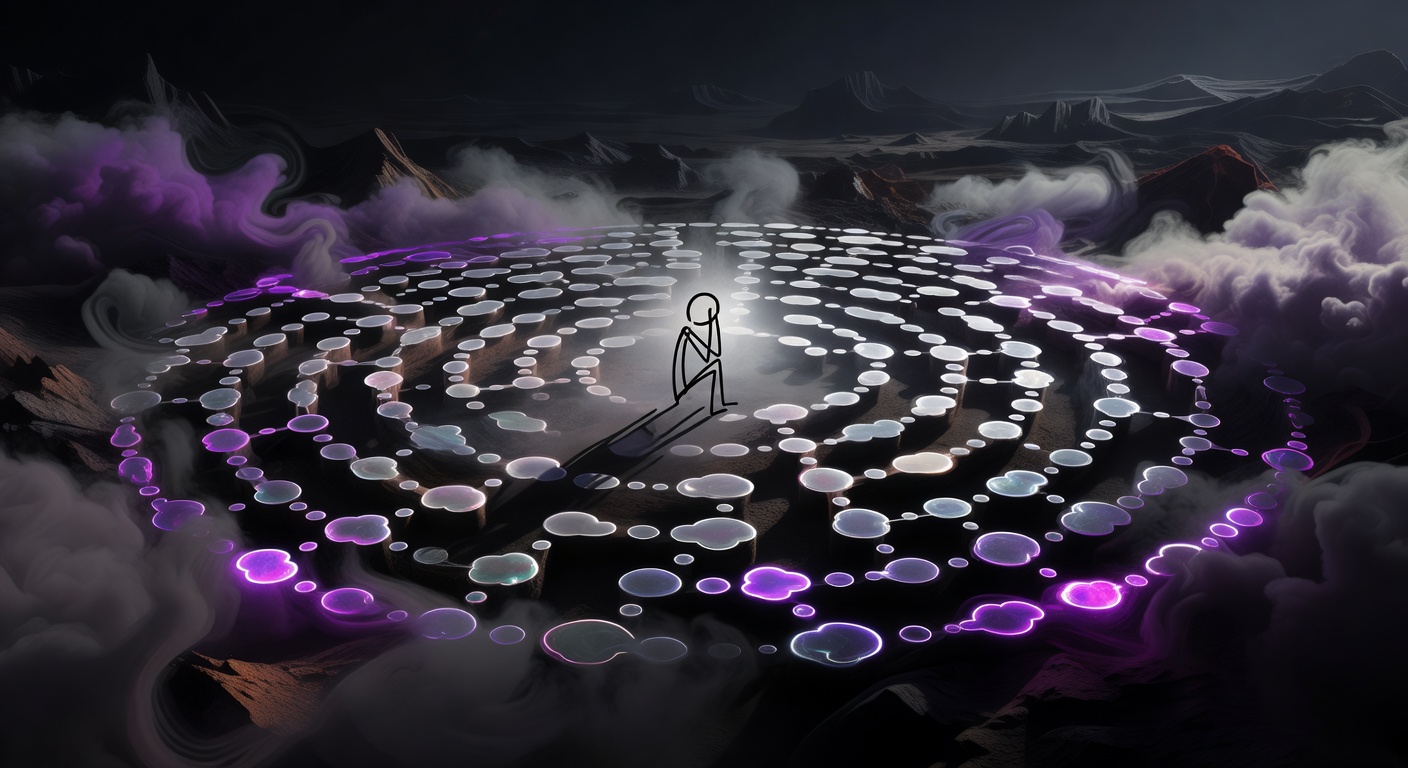
You are lying in bed and your phone buzzes. A friend sent a message three hours ago that you missed. Before you read it, your brain has already written three versions of what it says. One is disappointed. One is angry. One has given up on you entirely.
You open the message. It says "hey, are we still on for Thursday?" Nothing bad. Nothing urgent. But the three phantom versions your brain created are still running in the background. The real message cannot compete with the ones you invented.
Your imagination does not build fantasy worlds. It builds catastrophes in high definition. Every detail rendered. Every worst case fully furnished with dialogue, consequences, and facial expressions.
The four facets behind the spiral
This pattern runs on four measurable facets feeding each other in real time. Anxiety (N1 on the Big Five OCEAN model) generates the threat signal. Imagination (O1) gives that signal a movie studio budget. Cautiousness (C6) refuses to let you decide until every possible outcome has been examined, so the analysis never closes. And Depression (N3) colors every rendered outcome as hopeless and somehow your fault, so the loop sinks instead of resolving.
Alone, anxiety produces worry. Alone, imagination produces possibility. Together, they produce disaster films starring everyone you love.
The scenarios are vivid, specific, and completely fictional. But your body does not know that. It reacts to the imagined version like it already happened.
When it gets physical
Your partner is twenty minutes late. They did not text. Your brain does not go to traffic. It goes to the hospital. Then to the funeral. Then to the part where you are alone and it is your fault somehow. Within three minutes you have lived an entire catastrophe that has not happened.
Your anxiety generates the alarm and floods your body with it. Your imagination gives it a screenplay. Your cautiousness refuses to close the case until every branch is checked. Your depression insists the ending is bleak. Four systems feeding each other in real time.
The imagined disaster is so vivid and so detailed that your chest tightens, your hands shake, and your eyes start to burn. The catastrophe has not happened. Your body does not know that.
Four facets, one loop
Anxiety (N1) sounds the alarm. Imagination (O1) builds the disaster in 4K. Cautiousness (C6) keeps you examining every branch so you never reach a verdict. Depression (N3) colors every branch hopeless, so the loop sinks instead of closing.
Four facets that turn a delayed text into a funeral. The worry creates the movie. The caution refuses to stop the projector. The low mood insists the ending is real. The loop is self-confirming and nearly impossible to interrupt once it starts. We wrote a full breakdown of all five OCEAN facets behind chronic overthinking, including why standard advice like meditation only partially works.
Your body lives through emergencies that never happened. And it carries the cost as if they did.
Measure the loop
Your Anxiety, Imagination, Cautiousness, and Depression scores are measurable. They show exactly how these four facets stack in your profile, and whether the combination is producing creative thinking or producing catastrophes.
The 30-facet OCEAN personality test measures all four. It takes about 15 minutes. When you get your results, you will see exactly where the overthinking originates in your personality structure, not as a diagnosis but as specific trait scores you can examine and understand.
Frequently asked questions
Why can't I stop overthinking?
Overthinking runs on two personality traits feeding each other: high Anxiety (N1), which generates the alarm signal, and high Imagination (O1), which gives that alarm a movie studio budget. Alone, anxiety produces worry. Alone, imagination produces possibility. Together they produce disaster films in high definition. Both are measurable on the Big Five OCEAN model.
What is catastrophizing?
Catastrophizing is when your brain skips every reasonable explanation and lands on the worst possible outcome. It typically runs on high Anxiety (N1) paired with high Imagination (O1). Your anxiety generates a threat signal, and your imagination renders it in full detail with dialogue, consequences, and facial expressions. The scenarios are vivid, specific, and completely fictional, but your body reacts as if they already happened.
Is overthinking a sign of anxiety?
Overthinking and anxiety share the same root trait: high Anxiety (N1) on the OCEAN model. But overthinking becomes catastrophizing when paired with high Imagination (O1). Adding high Cautiousness (C6) keeps you examining every branch, and high Depression (N3) colors each one hopeless, so the loop sinks instead of closing. A delayed text becomes a funeral. A missed call becomes abandonment. The OCEAN test measures all four traits independently.