The Stress Floor: What Level Do You Drop to When Everything Falls Apart?
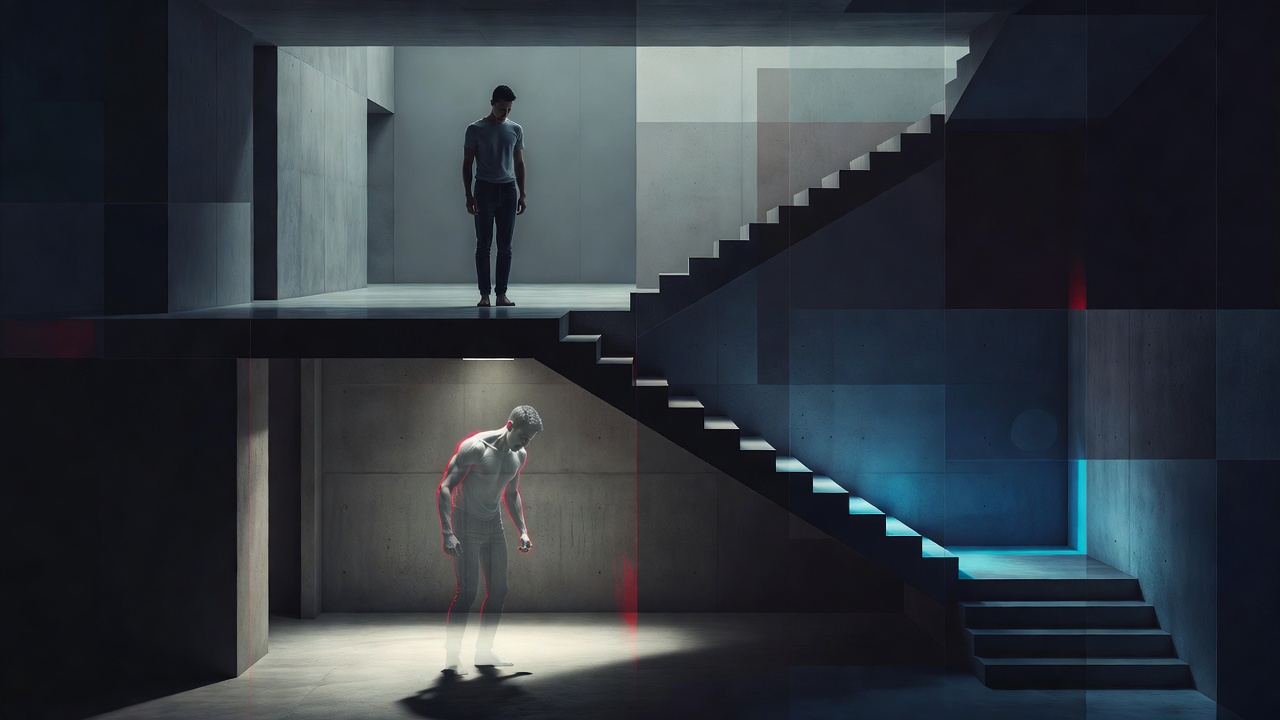
Everyone has a best self, the version that shows up when they're rested and safe. That's usually the version people describe when they describe themselves, and it's real. It's also not the version that shows up when the diagnosis comes back bad or the money runs out. Under enough pressure, people regress to an earlier, more self-protective version of themselves. That lower version, not the peak, is your stress floor. Knowing it is more useful than knowing your best self, and almost nobody does.
Why regression happens
Operating at your most developed level takes resources. Holding several perspectives at once, tolerating ambiguity, watching your own reactions instead of being run by them, all of it costs cognitive and emotional bandwidth, and under acute stress that bandwidth collapses. The mind falls back to a more primitive way of organizing experience, because in a genuine emergency simple and fast can be adaptive. This is why the calm, careful person you know can turn rigid and reactive during a crisis. It isn't hypocrisy or weakness. It's what a mind does when it drops below the level it can sustain when resourced.
What the floor looks like
Regression has a recognizable shape: it runs the developmental sequence backwards. The perspective-taking goes first. A person who normally holds several viewpoints narrows to one, their own, and other people's needs stop registering. Then situations and people sort into all-good or all-bad. Old defensive strategies the person had mostly grown out of come back online, the childhood coping moves that were the best available once and look crude now. And the self-awareness that lets a person catch themselves goes offline exactly when it's needed most, which is why people say and do things during their worst weeks that they can't believe afterward. "I wasn't myself" is inaccurate. You were a real, earlier self, the one you drop to under load.
Why the floor matters more than the peak
Here is the counterintuitive part. Your worst self does more damage than your best self does good, because it shows up at the highest-stakes moments. The version of you that appears during the medical emergency or the fight that could end the marriage is the version making the decisions that matter most, and it's your floor making them. A person who is magnificent at their best and cruel at their worst will be remembered far more for the cruelty, because the cruelty arrives precisely when everything is on the line. This is also why choosing a partner or a co-founder should weight their floor heavily. You will meet it, and the calm of their good days tells you little about it. The Vulnerability breakdown raises a closely related question from the trait side: how well does the machinery hold when the load exceeds what it was built for.
Raising the floor
The floor isn't fixed, and this is the hopeful part. You can't think your way up in the moment, because the moment is exactly when the higher capacities are offline. But you can raise the floor over time through two mechanisms. The first is rehearsal: pre-deciding, while calm, how you want to handle the specific crises most likely to drop you, so a prepared response is available when the sophisticated one isn't, the same principle that lets first responders function in emergencies. The second is the slow structural work between crises, so that even your regressed level sits higher than it used to. You don't eliminate regression. You regress to a better place.
The 30-facet OCEAN personality test measures your traits at their baseline, which is the resourced version. The most useful thing you can do with the result is ask how each strong trait behaves when you're overwhelmed rather than rested. Your high Anger, your low Vulnerability, your reactive facets are the ones that come forward when the floor drops out, and knowing your baseline is where you start mapping who you become under a load you haven't been tested by yet. It takes about 15 minutes, and domain results are free. The best self is easy to see. The floor is the one worth studying.