TRACOM Social Styles to OCEAN: Driver, Expressive, Amiable, Analytical in Facet Scores

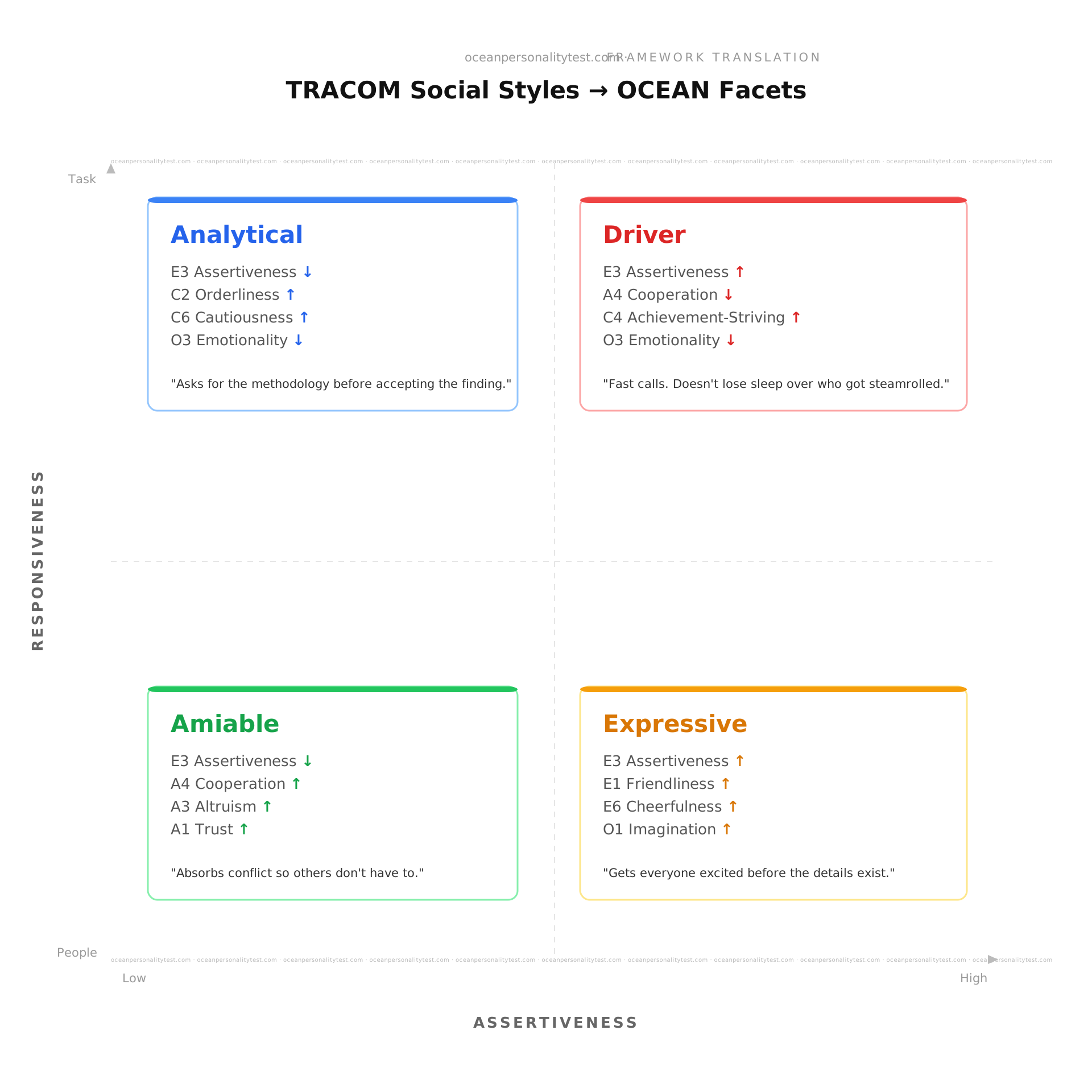
TRACOM's Social Styles model sorts people into four quadrants using two axes: assertiveness and responsiveness. You get labeled a Driver, Expressive, Amiable, or Analytical. It's clean, it fits on a slide, and corporate trainers can explain it in fifteen minutes. The problem is that each quadrant contains people who behave in wildly different ways, because two axes can't capture what's actually going on under the surface. The Big Five's 30 subfacets can.
The assertiveness axis maps almost directly to E3 (Assertiveness) in the OCEAN model. High E3 means you state positions, push back in meetings, and take visible control of conversations. Low E3 means you defer, ask rather than tell, and let others set the pace. TRACOM's responsiveness axis is harder to pin down; it's roughly an inverse composite of Emotionality (O3) and Agreeableness facets like Cooperation (A4) and Altruism (A3). High responsiveness means you lead with feelings and relationships. Low responsiveness means you lead with tasks and logic.
Driver: High E3, Low A4, High C4, Low O3
Drivers are task-focused and controlling. In facet terms, high Assertiveness (E3) gives them the push, low Cooperation (A4) means they don't yield to social pressure, high Achievement-Striving (C4) keeps them locked on outcomes, and low Emotionality (O3) means they aren't tracking the room's feelings while they work. That combination produces the classic results-oriented leader who makes fast calls and doesn't lose sleep over who got steamrolled in the process.
But "Driver" hides enormous variation. A Driver with high Intellect (O5) will challenge assumptions and rethink strategy constantly. A Driver with low O5 will repeat what worked last quarter until it stops working, then blame the market. Both test as Drivers. They lead in completely different ways.
Expressive: High E3, High E1, High E6, High O1
Expressives are also assertive, but they bring people along instead of pushing through them. High Warmth (E1) makes others feel included, high Cheerfulness (E6) keeps energy up, and high Imagination (O1) means they pitch visions rather than spreadsheets. They're the person in the room who gets everyone excited about a direction before the details exist.
Where it gets interesting: an Expressive with low Cautiousness (C6) and low Self-Discipline (C5) will generate ideas constantly and finish almost none of them. An Expressive with moderate C5 and C6 can actually execute on the vision they sold. TRACOM calls both of them Expressives. One builds companies; the other burns through goodwill.
Amiable: Low E3, High A4, High A3, High A1
Amiables yield. Low Assertiveness (E3) means they don't push their position. High Cooperation (A4) means they go along with group decisions even when they disagree. High Altruism (A3) means they prioritize others' needs, and high Trust (A1) means they assume good intent longer than they probably should. In a team setting, this person absorbs conflict so others don't have to deal with it.
The cost depends entirely on facets TRACOM doesn't measure. An Amiable with high N1 (Anxiety) and high N6 (Vulnerability) will accumulate resentment silently until they break. An Amiable with low Neuroticism across the board genuinely doesn't mind deferring; they're stable, not suppressed. Same quadrant, completely different internal experience.
Analytical: Low E3, High C2, High C6, Low O3
Analyticals are task-focused and yielding. Low Assertiveness (E3) means they won't force their conclusions on others. High Orderliness (C2) means they need structure and process. High Cautiousness (C6) means they won't move until they've checked the data twice. Low Emotionality (O3) means feelings don't enter the evaluation. They're the person who asks for the methodology before they'll accept the finding.
Two Analyticals can disagree on everything that matters in a work context. One with high Intellect (O5) will question existing frameworks and look for better models. One with low O5 will treat the current process as settled truth. TRACOM puts them in the same box because they're both quiet and data-oriented, but their actual contribution to a team is opposite: one challenges assumptions, the other enforces them.
Why Two Axes Aren't Enough
TRACOM's grid works as a starting vocabulary. It gives people a fast way to recognize that the person across the table has a different communication preference. That's useful in a half-day workshop. It stops being useful when you need to predict how someone will handle pressure, whether two people will actually collaborate well, or why a "Driver" on one team succeeds and a "Driver" on another team creates turnover.
The answer is always in the facets that the two-axis model discards. O5 (Intellect) determines whether a leader adapts or repeats. N1 (Anxiety) determines whether an Amiable is peacekeeping by choice or by fear. C5 (Self-Discipline) determines whether an Expressive's vision ever becomes a product. None of these show up in the Social Styles quadrant, and all of them matter more than which quadrant you land in.
The 30-facet OCEAN personality test measures all of this: E3, A4, C4, O3, and the 26 other subfacets that social styles assessments compress or ignore. Your results break down exactly where you sit on every facet, so you can see which parts of your "style" are structural and which ones shift depending on context.