The Shutdown: When Everything Goes Numb to Survive
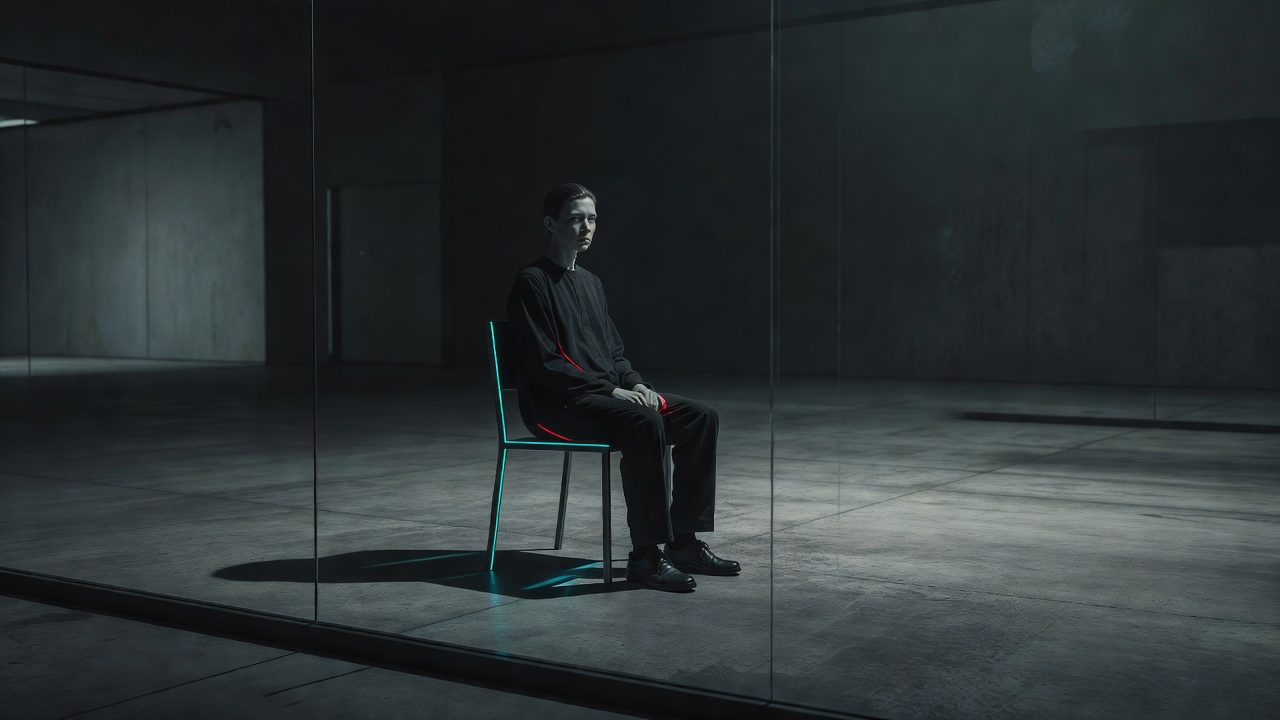
The threat lands, and instead of panic, you go quiet and flat, nothing like the calm of rest. Your body cools from the inside, your voice levels out, and some part of you steps back and up until you are watching the whole thing from behind a pane of glass. The person in the room answering questions looks like you. The feelings that should be roaring are somewhere far off, muffled, happening to someone else. You are here and you are gone at the same time.
Take the free test and see if this is your pattern
This is the deepest version of the freeze response, the one that shows up when fight and flight both got you nowhere and your system made a different, older calculation. If you cannot win and you cannot run, you can go so still and so empty that the danger passes over you. You can feel nothing. You can become nothing. And for a while, that works.
If you have lived here, you already know the strange thing about it. It arrives feeling like a great and terrible peace, a floor dropping out into softness. That softness is the shutdown doing its job.
What the shutdown actually is
When a threat is too big to fight and too close to escape, the nervous system has one move left. It pulls the plug. Heart rate slows, muscles slacken, the mind floats up out of the body, and the volume on everything gets turned toward zero. Animals do this when a predator has them. It is a switch thrown far below the level of thought, designed to keep you alive by making you absent for the part you could not have survived awake.
The numbness is a rescue that worked. The fact that you are reading this means the switch did its job when you needed it to.
The three moves
The shutdown tends to run through a sequence, and once you can name the parts, they stop feeling like proof that something is wrong with you.
First comes freeze. Everything shuts off. Warmth reads at the very floor, and cheerfulness sits right beside it, which is the affective picture of a person whose feelings have been pulled offline for their own protection. You go flat because caring, in the moment the switch got thrown, would have cost more than you had. The deadening is a mercy your body gave you.
Then comes fawn and self-blame. Watch how high modesty runs here, higher than almost anywhere. That high modesty looks like humility on the surface, but underneath it works as a survival bargain. If the whole thing was your fault, then you had control over it, and if you had control, then you can prevent it next time by being smaller and quieter. Making yourself the guilty one is how you try to make the danger predictable. It is appeasement wearing the mask of an apology.
Last, you disappear. You become invisible, because invisible is safe. Trust sits at the floor, and self-efficacy right there with it, so reaching outward feels pointless and staying unseen feels like the only door left. Meanwhile imagination climbs, and you slip into an inner room where the volume is low and nothing can reach you. That inner room is where a lot of shut-down people actually live. It kept a child company when the outside world was not survivable, and it is still there.
The cruel part
This profile is quietly painful for one reason. The same wiring that keeps you alive is the wiring that keeps help out.
Trust at the floor means every hand extended toward you reads as a possible trap. Self-efficacy at the floor means that even when you know, intellectually, that you could reach out, the muscle for it feels gone, like trying to lift an arm that fell asleep. So you can be actively looking for a way out, opening the tab and reading the page, and still be too depleted and too wary to take the last small step. The injury and the search are happening in the same body at once, which from outside reads as stubbornness.
If that is you right now, reading this and feeling far away from it, that distance is allowed. You do not have to feel anything about these words. You do not have to reach for anything today.
Safety has to come first
People who study the freeze response are clear on one thing. Nothing else can move until the body believes it is safe. You cannot think your way out of a shutdown, and you cannot force the numbness to lift on schedule, because the numbness is the alarm system telling the truth about how unsafe things were, and how unsafe they might still feel.
The first work is safety, before any insight or change. This is the small, physical kind of safety. Safety looks like a locked door, or a warm drink held in both hands. The nervous system reads those signals long before your thoughts catch up, and it needs a great many of them, repeated, before it will consider setting the switch back to on.
When the thaw does start, it rarely arrives as relief. It usually comes back as sensation you had forgotten, and some of it will hurt, because feeling was switched off for a reason. Numbness coming undone slowly, at its own pace, is exactly what healing from this looks like. Slow is the only speed the body trusts.
You froze because freezing was the smartest thing your body knew how to do. None of it was your fault. A part of you did something extraordinary to carry you here. The work now is to convince that part, gently and over a long time, that the danger it braced for is finally allowed to be over.
If you want language for the specific shape your shutdown takes, the exact places where warmth and agency went quiet, you can map it. The 30-facet OCEAN personality test shows you the signature underneath the numbness, and the Recovery Report turns that map into a slow, safety-first path back toward feeling. There is no rush. The door stays open, and it stays open at whatever pace lets you keep breathing behind the glass.