The Shadow Side of Your Strengths: When Your Best Trait Hides Your Deepest Wound
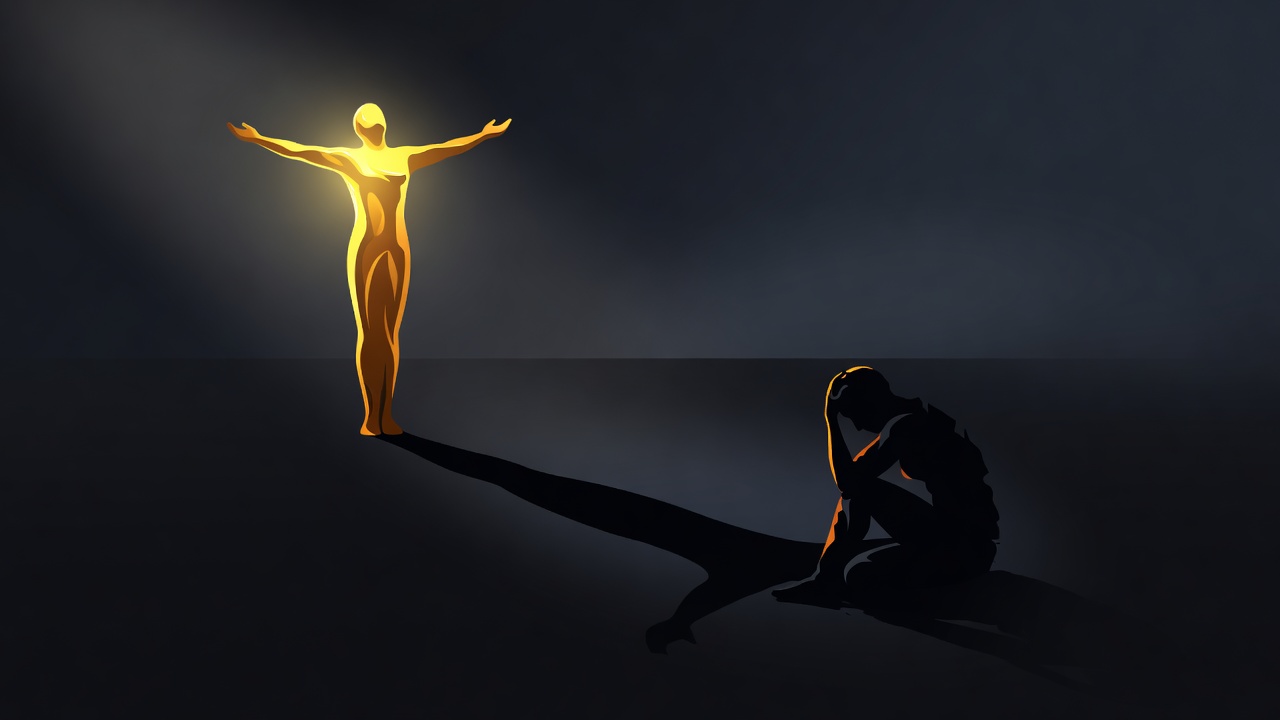
The quality you are proudest of is sometimes the most sophisticated defense you have ever built. Plenty of strengths are just strengths, of course. But some of the qualities people most admire in a person turn out to be load-bearing walls around a wound, and they are hard to examine precisely because everyone, you included, keeps filing them under virtue.
How a wound becomes a strength
The mechanism is simpler than it sounds. A child in a painful situation develops some capacity to cope with that specific pain. If the capacity works, it gets practiced relentlessly and refined over years, until it becomes a genuine high-level skill, because nothing trains a talent like survival depending on it. The competence that impresses everyone in the adult was forged in a childhood where being competent was the price of safety or love. The skill is real. Underneath it is the wound it was built to manage, which never went anywhere, and which keeps the practice going long after the danger has passed. This is the same machinery the coping styles breakdown calls overcompensation, seen from the strength's side instead of the wound's.
Strengths that are often defenses
Take relentless competence, the person who is extraordinarily capable and never drops the ball. For some people this defends against a defectiveness wound: the belief that they are acceptable only while performing. That belief is why the competence cannot be switched off, even when it costs them everything else.
Fierce independence works the same way for others. Someone who needs no one, and takes pride in it, may have learned early that depending on people ends in being let down. Self-sufficiency became a genuine strength and a wall at the same time.
Deep empathy can also be a survival skill in disguise. A child who got through by tracking and soothing a volatile parent grows into an adult with exquisite attunement to everyone around them. It makes them a wonderful friend. It is also the exact skill that once kept them safe.
In each case the gift is real. So is the wound sitting under it.
The tell: rigidity and cost
So how do you tell an ordinary strength from one doing a second job? Two markers give it away: rigidity and cost. A strength that is only a strength can be set down. The person can be competent and still rest, capable and still lean on someone, empathic and still guard their own energy. When a strength is defending a wound, though, it cannot be set down, because putting it down exposes the very thing it was built to cover. So the person runs the strength even when it is clearly hurting them. They work past exhaustion, refuse help they obviously need, give until there is nothing left, because the alternative feels like standing unprotected in front of an old pain. A strength that is compulsive rather than chosen, and that costs you more than it should, is usually doing double duty.
What to do with a load-bearing strength
The point is not to give up the strength. You earned it, and it is genuinely valuable. What you want is to make it optional instead of mandatory, and that means going down to the wound underneath and doing the work there, so the skill stops being the only thing standing between you and an old pain. Tend the wound and something strange happens. The strength does not vanish. It just gets lighter, because it is no longer carrying a second load. The competent person stays competent, and can finally rest. The strength was real all along; what changes is that it stops being a hiding place. This is deep work, usually done with a professional, and it starts with the nerve to look at a virtue and ask what it might be protecting.
The 30-facet OCEAN personality test shows you your genuine high scores, the traits and facets where you are strong, in about 15 minutes, with domain results free. It cannot tell you which of your strengths double as defenses, because that lives below the trait layer. What it can do is show you clearly what your strengths are, which is the starting point for the harder question worth asking: which of these could I set down, and which one, if I tried, would leave me feeling dangerously exposed. That second one is worth getting curious about.