Sensation Seeking Mapped to OCEAN: Zuckerman's Model in Big Five Facets

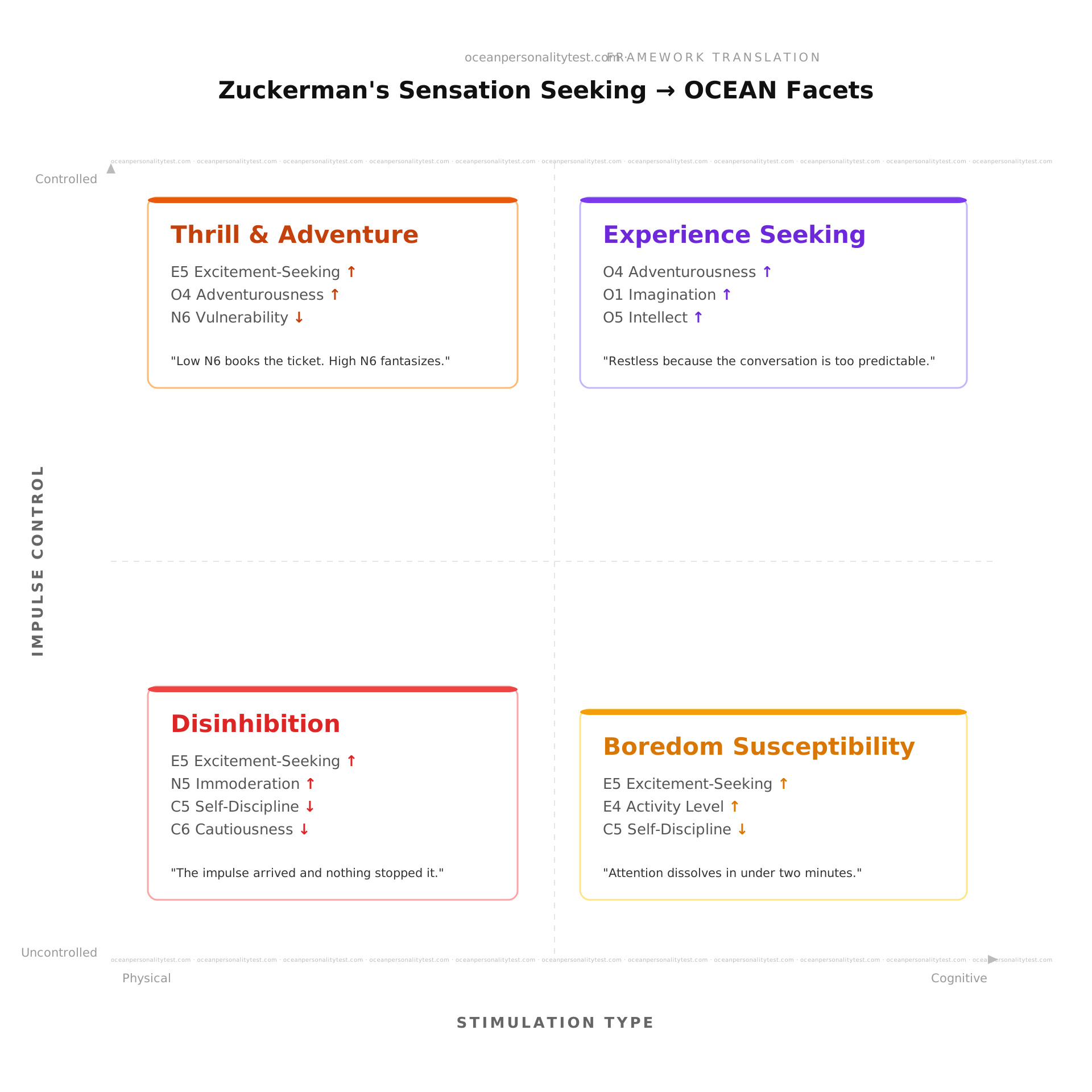
Zuckerman's Sensation Seeking Scale gives you one score and four subscale scores. What it doesn't give you is any explanation of why two people with the same total score can be completely different kinds of thrill seekers. One jumps off cliffs. The other reads obscure philosophy at 3am because normal ideas bore them. Same score, different wiring entirely. The Big Five subfacets show you which version you are.
Zuckerman built his model in the 1960s, before the Big Five existed as a consensus framework. His four subscales (Thrill and Adventure Seeking, Experience Seeking, Disinhibition, and Boredom Susceptibility) were derived from factor analysis of risk-taking behaviors. The OCEAN model came later and mapped personality at a deeper structural level. When you overlay the two, each of Zuckerman's subscales lands on a distinct cluster of OCEAN facets.
Thrill and Adventure Seeking
This is the one most people picture when they hear "sensation seeker": skydiving, motorcycles, white-water rafting. The facet signature is high E5 (Excitement-Seeking), high O4 (Adventurousness), and low N6 (Vulnerability). E5 provides the appetite for stimulation. O4 removes the preference for the familiar. Low N6 is what makes the difference between wanting thrills and actually pursuing them; it suppresses the fear response that would normally pump the brakes. People with high E5 and high O4 but also high N6 fantasize about adventure. They don't book the ticket.
Experience Seeking
This subscale catches the people Zuckerman noticed who scored high on sensation seeking but had zero interest in physical danger. They travel to countries where they don't speak the language. They change careers to learn something from scratch. The facet cluster here is high O4 (Adventurousness), high O1 (Imagination), and high O5 (Intellect). O4 again provides openness to the unfamiliar, but paired with O1 and O5 instead of E5, the seeking turns inward and cognitive. These are the people who get restless not because the room is too quiet but because the conversation is too predictable.
Disinhibition
Disinhibition is where sensation seeking starts to carry real cost. High E5 (Excitement-Seeking) combined with high N5 (Immoderation), low C5 (Self-Discipline), and low C6 (Cautiousness). E5 creates the pull toward intense experiences. N5 means the braking system is weak once the pull starts. Low C5 removes the ability to override impulse with routine. Low C6 strips out the part of the brain that runs cost-benefit before acting. This is the subscale most strongly linked to substance use, risky sexual behavior, and financial recklessness. The person isn't choosing risk because they calculated the odds; they're choosing it because the impulse arrived and nothing stopped it.
Boredom Susceptibility
High E5 (Excitement-Seeking) plus high E4 (Activity Level) and low C5 (Self-Discipline). E5 sets a high stimulation threshold. E4 means the body wants to be moving, doing, producing output. Low C5 means monotonous tasks drain energy fast. These people don't necessarily seek danger or novelty. They seek pace. Slow environments feel physically uncomfortable to them, almost aversive. Put them in a meeting that should have been an email and watch their attention dissolve in under two minutes.
Why the Distinction Matters
Zuckerman's total score treats all four subscales as versions of one thing. They aren't. Someone high on Thrill and Adventure Seeking but low on Disinhibition is a calculated risk taker: they ski double black diamonds but wear a helmet and check the avalanche report first. Someone high on Disinhibition but low on Thrill Seeking might never touch a mountain but can't stop spending money they don't have. Telling both of them they're "high sensation seekers" is technically correct and practically useless.
The strongest correlates in the Big Five are E5 (Excitement-Seeking) and O4 (Adventurousness). E5 shows up in three of the four subscales. O4 shows up in two. But the subscales diverge on everything else: Conscientiousness facets, Neuroticism facets, whether the seeking is physical or cognitive. That divergence is where the actual information lives.
The 30-facet OCEAN personality test measures E5, O4, N5, N6, C5, C6, O1, O5, E4, and 21 other subfacets. Your results will show you not just whether you're a sensation seeker but which kind, which facets are driving it, and where the actual risk sits in your profile.
Take the 30-facet OCEAN personality test and see which version of sensation seeking your facets produce.