Self-Determination Theory in OCEAN: Autonomy, Competence, and Relatedness as Personality Needs

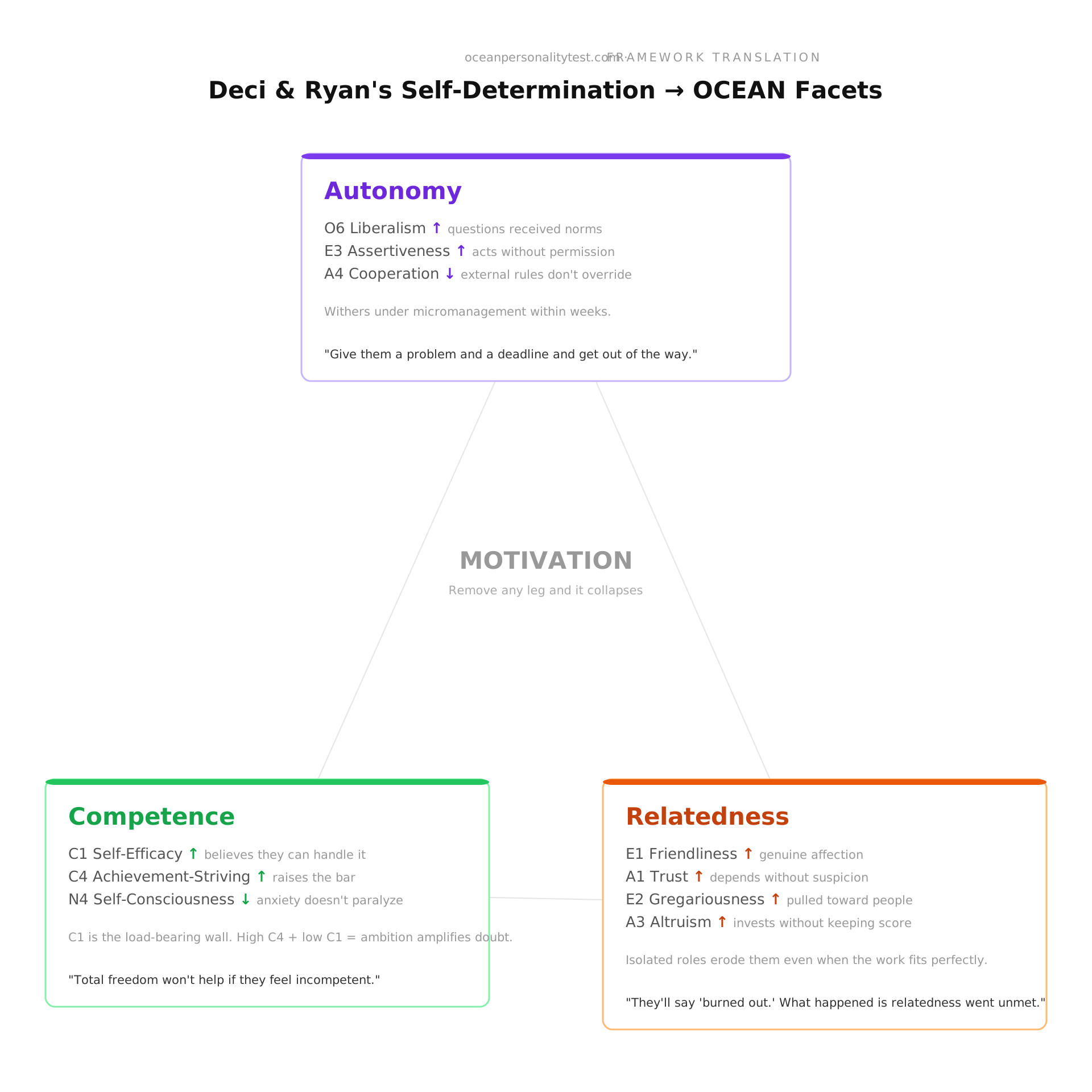
Deci and Ryan argued that every person needs three things to stay motivated: autonomy, competence, and relatedness. Remove any one and motivation starts to decay, regardless of salary, praise, or how much the person cares about their work. Self-Determination Theory treats those three as universal. But the OCEAN profile shows they aren't equally distributed. Each person has a specific vulnerability, and the subfacets tell you exactly where it sits.
Autonomy: O6, E3, and low A4
Autonomy in the SDT sense means the need to act from your own values rather than external pressure. In OCEAN terms, this maps to three facets working together. High O6 (Liberalism) is the disposition to question received norms and choose your own. High E3 (Assertiveness) gives you the force to act on that internal direction without waiting for permission. Low A4 (Cooperation) means external rules don't automatically override your own judgment.
Someone high on all three of those facets will wither in a micromanaged environment. Not slowly; it happens within weeks. The loss of motivation looks like laziness or disengagement from the outside, but internally it's a values conflict. They can feel the gap between what they'd choose and what they're being told to do, and that gap is corrosive. A manager who interprets the withdrawal as a performance problem and responds with more oversight makes it worse. The fix is structural: give them a problem and a deadline and get out of the way.
Competence: C1, C4, and low N4
Competence is the need to feel effective. High C1 (Self-Efficacy) is the belief that you can handle what's in front of you. High C4 (Achievement-Striving) is the drive to keep raising the bar. Low N4 (Self-Consciousness) means performance anxiety doesn't paralyze execution. When all three are in place, the person seeks harder challenges because succeeding at them is the reward.
Here's what SDT doesn't quite capture but the facets do: when C1 drops through repeated failure, harsh feedback, or a role that's genuinely beyond someone's current ability, motivation collapses regardless of how much autonomy they have. You can give a person total freedom and they'll still shut down if they feel incompetent. C1 is the load-bearing wall. A person with high C4 and low C1 is especially brittle because the drive to achieve keeps pushing them toward situations that confirm the inadequacy. The ambition doesn't compensate for the self-doubt; it amplifies it.
Relatedness: E1, A1, E2, and A3
Relatedness is the need to feel connected. High E1 (Warmth) produces genuine affection toward others. High A1 (Trust) allows dependence without suspicion. High E2 (Gregariousness) pulls the person toward social situations. High A3 (Altruism) makes them invest in others without keeping score.
People with this cluster running strong will lose motivation in isolated roles even if the work itself is a perfect fit for their skills and values. Remote work with asynchronous communication and no real human contact erodes them. They don't always name it correctly; they'll say they're "burned out" or that the work "lost its meaning." What actually happened is the relatedness need went unmet for long enough that everything else started to feel pointless.
Which need breaks first
SDT says all three needs are universal, and that's probably true at the species level. But the OCEAN profile reveals which one is most exposed for a given person. Someone with low C1 and high E1 will lose motivation from incompetence before loneliness ever registers. Someone with low A1 and high C4 will lose motivation from isolation before failure touches them, because the distrust keeps people at a distance while the achievement drive masks the emptiness.
This matters for practical decisions. If you're choosing between two jobs and one offers more autonomy while the other offers a stronger team, your facet profile tells you which trade-off you can survive and which one you can't. The person with high O6, high E3, and low A4 should take the autonomy. The person with high E1, high A1, and high A3 should take the team. Getting this wrong doesn't just reduce satisfaction; it erodes the specific psychological need that keeps you functional.
The 30-facet OCEAN personality test measures all the subfacets that map to autonomy, competence, and relatedness. Your results show which of the three needs is strongest, which is most vulnerable, and where motivation is most likely to collapse when conditions change.