Ross and Rachel: OCEAN Compatibility Profile
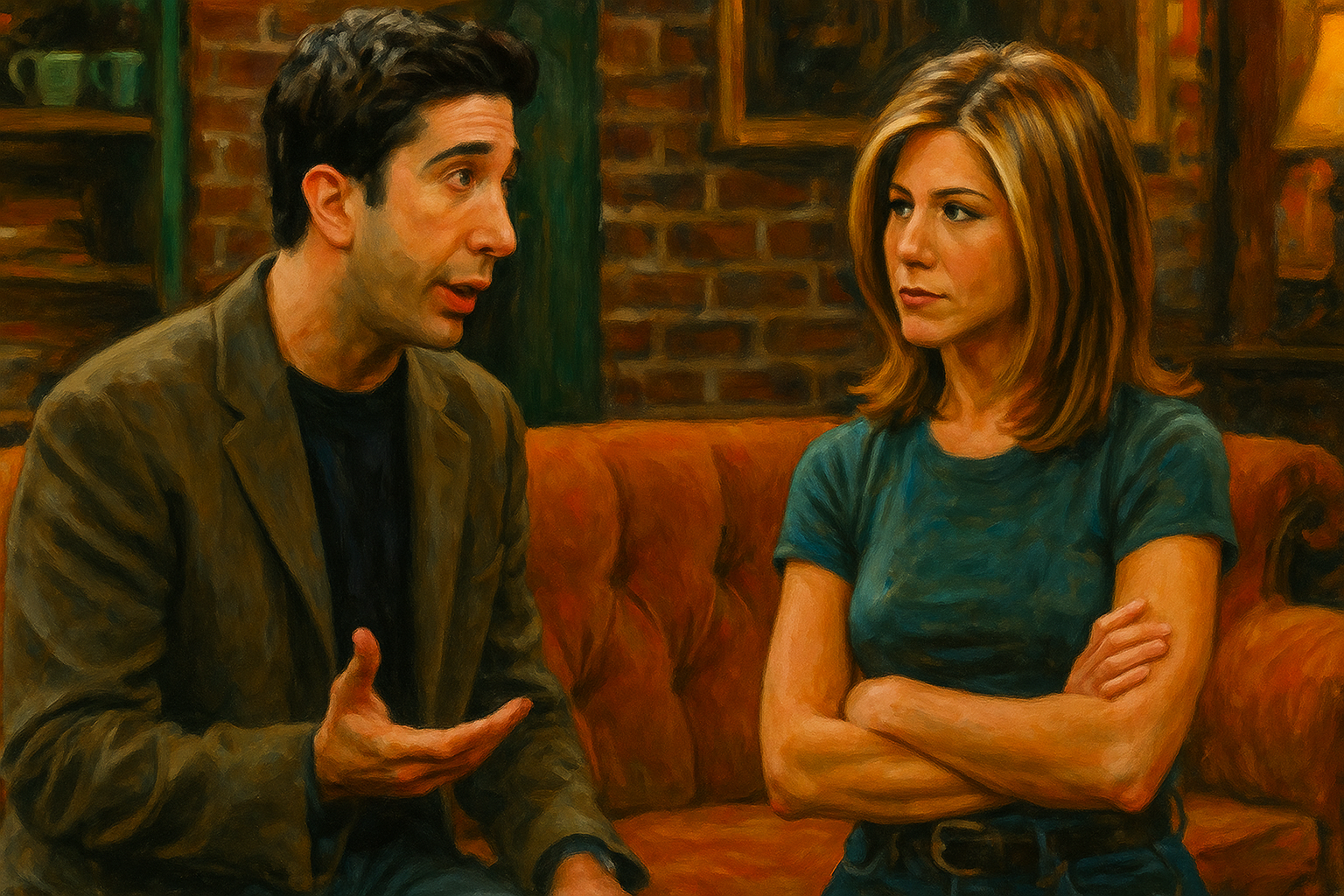
Ross and Rachel break up and get back together so many times over ten seasons that "we were on a break" is now something people say. The 30-facet framework explains why the cycle never resolves. The profiles show a couple with real underlying compatibility that keeps pulling them back, plus one structural flaw that keeps blowing them apart. Both things are true at once, which is why they could never settle it.
Why they keep coming back
Underneath all the drama, Ross and Rachel genuinely fit on the dimension that matters most for a lasting connection. Their Openness scores are close, 66 and 62, so they approach the world with similar curiosity and want similar experiences from it. There's real warmth too, since neither scores low on the caring facets. That baseline is why the reunions never feel forced. Something real does keep drawing them together, and the framework reads it as a solid foundation on the values-and-outlook axis. If the show were only about the pull, they would have made it work.
Where it breaks
The damage comes from Ross's Neuroticism at 72. That's the trait behind his jealousy and the possessiveness that shows up every time Rachel builds an independent life, and it drives the relationship's most famous blowups. High Neuroticism turns an ordinary situation like a new coworker into a threat, and Ross responds to that perceived threat in ways that hurt the very thing he's scared of losing. His anxiety doesn't sit quietly. It manufactures the conflicts that end the relationship, again and again, which is the pattern the Anxiety facet breakdown describes.
Why the fight never de-escalates
Ross's Neuroticism would be more survivable if the two of them had a way to cool things down. They don't, and that's the second problem the framework surfaces. Their Cooperation scores are identical and low, both 43, so neither of them has much instinct to yield in a conflict. Rachel is also independent and socially confident, with an Extraversion of 86 against Ross's 47, so when his insecurity flares at her social life, she isn't going to shrink that life to reassure him. Two low-Cooperation people plus one anxious, jealous partner is a combination with no built-in off-ramp. His fear starts the fight, and neither of them is wired to be the one who backs down.
Ross and Rachel are the specific tragedy of a couple who actually fit, undone by a single facet with nothing to buffer it. The compatibility is real enough to explain every reunion, and Ross's Neuroticism running into their shared low Cooperation is destructive enough to explain every breakup. Because both forces are permanent features of the profiles, the cycle was always going to repeat until the writers picked an ending for them. It's a useful case because it shows that overall compatibility isn't the whole story. One high-Neuroticism partner with no cooperative buffer can wreck a genuinely good match. These profiles came from the same 30-facet OCEAN personality test you and a partner can each take in about 15 minutes, with domain results free, and a compatibility report shows you both the pull and the flaw, which is the honest version of the picture.