Psychological Flexibility in OCEAN: What ACT Measures Through the Big Five Lens

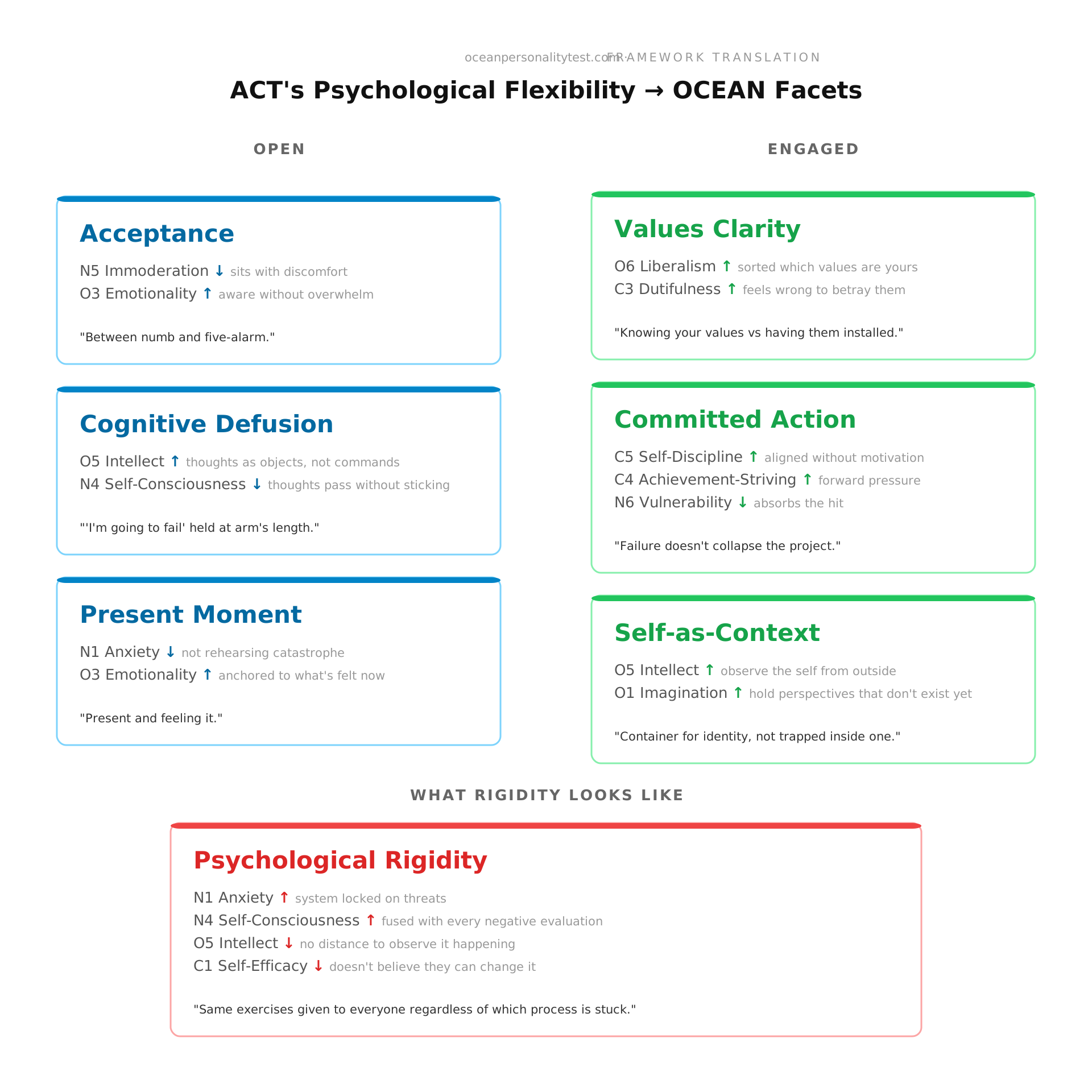
Acceptance and Commitment Therapy identifies six processes that make a person psychologically flexible. Most ACT assessments measure those six as a bundle, giving you a single score or a rough breakdown. The problem is that someone who scores "moderately flexible" could be strong in five of the six and completely locked up in the one that matters most for their life. The OCEAN subfacets let you see which specific process is the bottleneck.
The Six Processes in Facet Scores
Acceptance runs on low Immoderation (N5) and moderate Emotionality (O3). N5 governs the urge to fight or suppress internal experience: when it's high, uncomfortable feelings trigger an immediate need to fix, numb, or escape. Low N5 means the person can tolerate discomfort without launching into damage control. O3 at a moderate level means emotional awareness exists without overwhelm. Too low and the person is numb rather than accepting; too high and every feeling becomes a five-alarm event. Acceptance lives in the space between those extremes.
Cognitive defusion requires high Intellect (O5) and low Self-Consciousness (N4). O5 is the capacity to treat thoughts as objects you can examine rather than commands you obey. Someone with high O5 can notice the thought "I'm going to fail" and hold it at arm's length. N4 is what makes that hard: when Self-Consciousness is high, every self-referential thought feels like an identity statement. The combination of high O5 and low N4 means thoughts pass through without sticking.
Present moment awareness maps to low Anxiety (N1) paired with high O3. N1 is future-scanning. A high-N1 mind is always running simulations of what could go wrong next, which pulls attention out of the current moment and into a threat that hasn't materialized yet. High O3 anchors attention to what's actually being felt right now. Low N1 plus high O3: present and feeling it, rather than somewhere else rehearsing catastrophe.
Values clarity shows up as high Liberalism (O6) combined with high Dutifulness (C3). O6 in the IPIP-NEO isn't political; it measures the tendency to question received values and examine whether inherited beliefs actually fit. High O6 means the person has done the work of sorting which values are theirs versus which were installed by family, culture, or convenience. C3 adds the commitment piece. Knowing your values is one thing; C3 is the trait that makes you feel genuinely wrong when you betray them.
Committed action depends on Self-Discipline (C5), Achievement-Striving (C4), and low Vulnerability (N6). C5 keeps behavior aligned with intention even when motivation disappears. C4 provides the forward pressure, the drive toward something rather than just maintenance of what exists. Low N6 means setbacks don't collapse the entire project. When N6 is high, a single failure can feel like proof that the whole endeavor was a mistake, and the person stops. Low N6 lets them absorb the hit and keep moving.
Self-as-context requires high O5 and high Imagination (O1). This is the ability to hold multiple versions of yourself simultaneously: who you were at 20, who you are now, who you might become. O5 gives the cognitive flexibility to observe the self from outside. O1 provides the representational space to hold perspectives that don't currently exist. Together, they create the experience of being the container for identity rather than being trapped inside a single version of it.
What Rigidity Actually Looks Like
Psychological rigidity, the opposite of flexibility, has its own signature: high N1, high N4, low O5, low C1 (Self-Efficacy). The anxiety keeps the system locked on threats. Self-Consciousness fuses the person with every negative self-evaluation. Low O5 removes the cognitive distance needed to observe any of this happening. And low C1 means they don't believe they can change the pattern even if they saw it clearly. ACT therapists spend months building the six flexibility processes through exercises and metaphors. That work is valuable, but it's generic: the same exercises given to everyone regardless of which process is actually stuck.
The 30-facet OCEAN personality test shows you which of the six processes is your weakest. Someone with strong acceptance but collapsed committed action needs a completely different intervention than someone who can act decisively but can't defuse from a single self-critical thought. The facet profile doesn't replace therapy, but it tells you where the therapy should aim first.
Take the 30-facet OCEAN personality test and find out which ACT flexibility process is your constraint.