People Pleaser or Personality Trait? What Your OCEAN Score Says

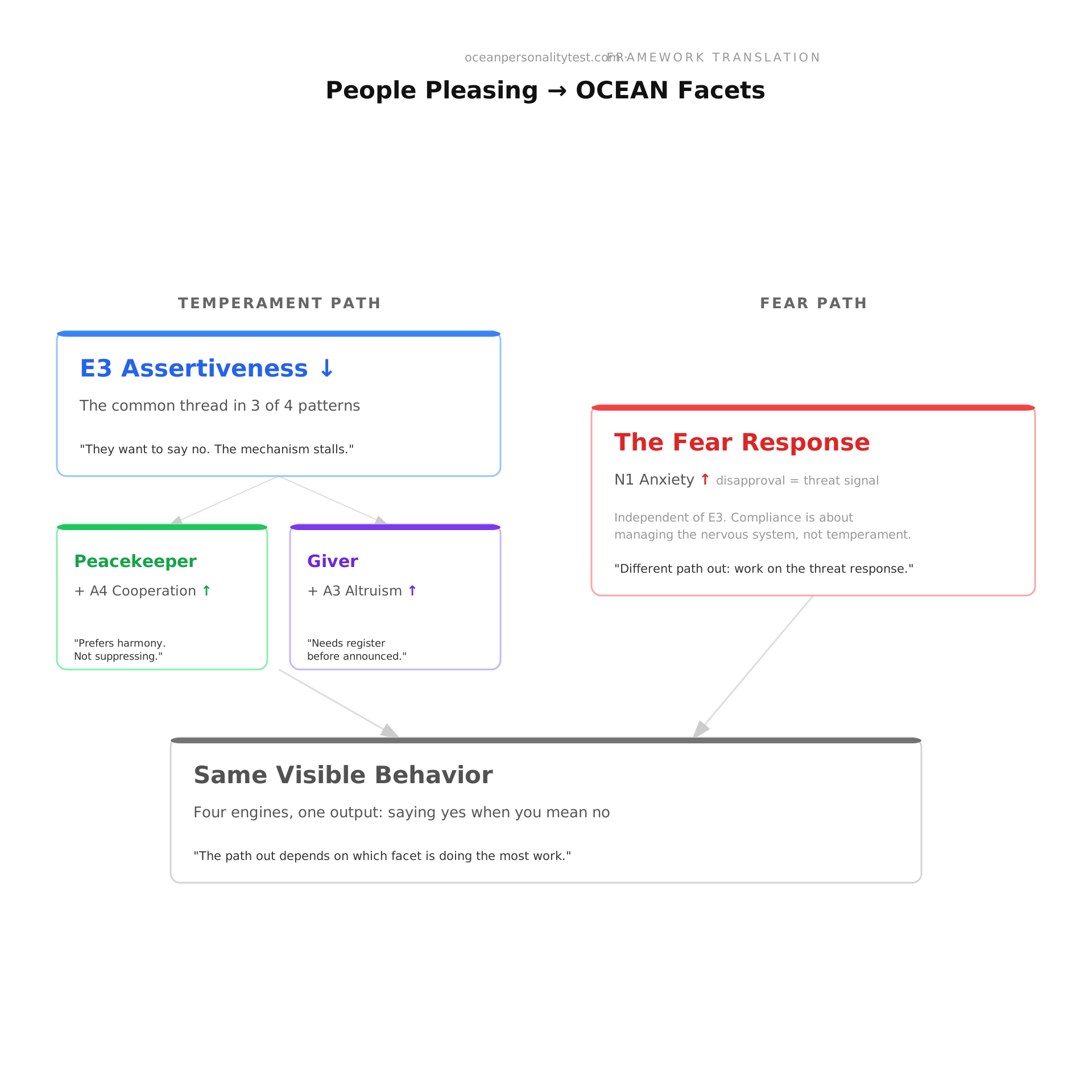
The phrase "people pleaser" gets used as a personality diagnosis, a therapy term, and an insult, sometimes all three in the same conversation. What it rarely gets treated as is something measurable. The OCEAN model scores the specific facets that drive the behavior, and they don't all come from the same place.
Assertiveness (E3) is the most consistent marker. Low scorers struggle to generate the internal force needed to push back, not because they don't see a situation clearly, but because the act of asserting feels disproportionately costly. A request arrives. They process it. They want to say no. Then something in the mechanism stalls, and they say yes anyway. This isn't weakness in any meaningful sense. It's a trait that sits on a spectrum, and it's been measured in population studies consistently enough that it shows up as a distinct facet in nearly every validated personality model.
Cooperation (A4) works differently. High scorers default to yielding in conflict, not from fear exactly, but because harmony genuinely registers to them as the better outcome. They're not suppressing a preference; the preference is to avoid friction. Someone with high A4 and normal anxiety levels can look identical to a people pleaser from the outside while having a completely different internal experience. They're not managing dread. They just actually prefer the path of least resistance in interpersonal situations.
Altruism (A3) adds another layer. At high levels, other people's needs don't wait to be announced. They register automatically, often before the other person has said anything. Paired with low E3, that automatic registration becomes a kind of permanent queue where you're always next in line to give something. The two facets amplify each other.
Then there's anxiety (N1). This is where people pleasing stops being about temperament and starts being about fear. High N1 scorers are tracking the risk of disapproval in real time: What did that pause mean? Are they annoyed? Did I say something wrong? The compliance isn't about being helpful. It's about managing a nervous system that treats social disapproval as a threat signal. People with this pattern can feel awful about saying yes to things they don't want, unlike the high-A4 person, who generally doesn't experience the same internal conflict.
There's one more facet worth mentioning because it runs counter to expectations. Self-Consciousness (N4) measures how much you register others' opinions of you in the moment. Some long-term people pleasers score surprisingly low here, not because they don't care, but because sustained compliance over years can produce a kind of dissociation from the cost. The awareness gets suppressed. The behavior persists even when the sensitivity that originally drove it has dimmed.
The practical difference between the anxiety-driven pattern and the temperament-driven one matters because the paths out of them are different. If the behavior is coming from N1, the work is about the threat response. If it's coming from high A4 and low E3, you're working with traits that are simply more stable, less amenable to reframing, and not necessarily problems that need solving. Some people are genuinely built to prioritize harmony, and nothing about that requires correction.
The 30-facet OCEAN personality test scores all of these separately: Assertiveness, Cooperation, Altruism, Anxiety, and Self-Consciousness each get their own score. You can see whether the pattern is anxiety-driven or temperament-driven, and which facets are doing the most work.
Take the 30-facet OCEAN personality test and find out exactly where your scores land.