Mark Zuckerberg's OCEAN profile
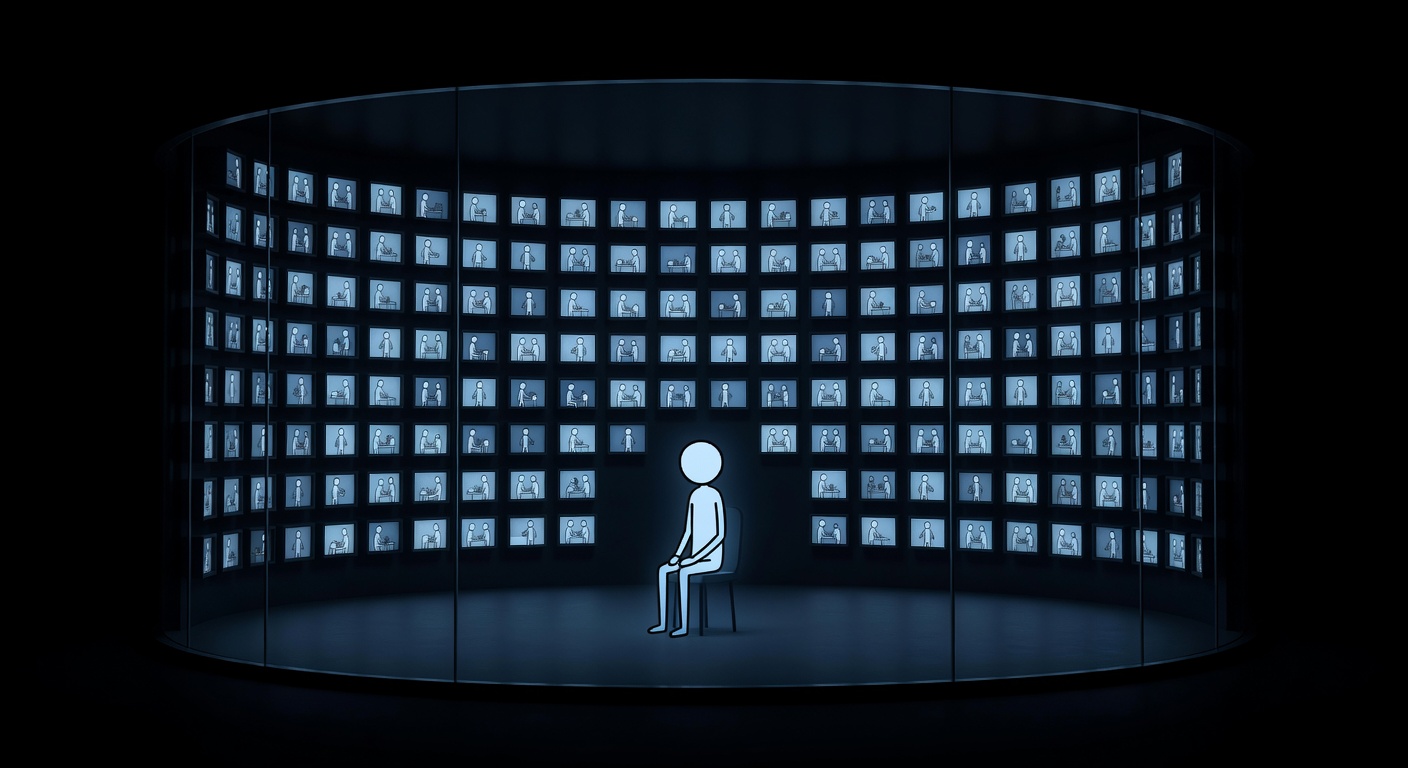
Mark Zuckerberg built a product used by three billion people to connect with each other. He himself appears to connect with almost no one. This is not a contradiction. It is the signature of a specific personality architecture operating exactly as designed.
The Estimated Profile
| Domain | Estimated Percentile | What It Means |
|---|---|---|
| Openness | 60th | Above average. Intellectually curious, systems-oriented, but not aesthetically driven |
| Conscientiousness | 97th | Extreme. The system-building drive that turned a dorm project into a global platform |
| Extraversion | 16th | Low. Avoids social energy, communicates through product decisions rather than presence |
| Agreeableness | 7th | Low. Competitive, strategic, willing to copy or crush competitors without hesitation |
| Neuroticism | 4th | Very low. Emotionally flat under pressure. Congressional hearings barely register |
Zuckerberg's profile is dominated by two extremes: near-ceiling Conscientiousness and near-floor Extraversion. Everything about his public behavior, his management style, his product decisions, and the specific way Facebook evolved follows from this combination.
The system-building drive
C=97 is not "organized." It is a compulsion to systematize. Zuckerberg does not just build products. He builds systems that build products. Facebook's internal infrastructure, its algorithmic feed ranking, its approach to content moderation, its acquisition strategy. All of these reflect a mind that sees human behavior as a problem to be structured, measured, and optimized.
His C4 (Achievement-Striving) is obvious. He coded the first version of Facebook in a two-week sprint, dropped out of Harvard to scale it, and has spent twenty years refusing to sell or step aside despite enormous social pressure to do both. But his C2 (Orderliness) is where the system-building drive lives. High C2 individuals need their environment to be structured. Most high-C2 people organize their desk or their calendar. Zuckerberg organized human social interaction into a database schema. The News Feed is not a communication tool. It is a sorting algorithm built by someone who finds unsorted information physically uncomfortable.
C5 (Self-Discipline) at his level produces something most people would find disturbing if they experienced it from the inside: the ability to maintain focus on a single project for decades without the diversification impulse that drives most founders to jump between ideas. Zuckerberg has been working on the same fundamental problem (mapping and mediating human relationships through software) since he was 19. He is now 42. That is not passion. That is a C5 score so high that changing direction registers as a threat rather than an opportunity.
Extraversion at the floor
E=25 explains why Zuckerberg built a social network rather than being social. Every interview, congressional hearing, and public appearance shows the same pattern: minimal facial expression, flat vocal prosody, rehearsed responses that sound memorized rather than felt, visible discomfort with unstructured interaction.
His E1 (Warmth) is low. Not hostile. Absent. He does not radiate warmth or coldness. He radiates nothing. People who meet him privately describe someone who is pleasant but who you would never describe as warm. He asks questions. He listens to answers. He does not make you feel seen in the way that high-E1 individuals do automatically. This is not rudeness. It is the behavioral output of a nervous system that does not generate spontaneous warmth signals.
E2 (Gregariousness) is extremely low. He does not seek out social contact for its own sake. His social life, by all accounts, consists of his wife, a small number of close friends he has known since college, and professional relationships that serve strategic objectives. The idea of attending a party for fun, of working a room, of making conversation with strangers because human contact is pleasurable. None of this maps to his observable behavior.
Research on speech convergence offers a useful contrast. When two people collaborate closely, they tend to unconsciously mirror each other's speech patterns, a sign of genuine mutual engagement with the task. Studies show this kind of convergence emerges from deep engagement with a shared problem. Zuckerberg does converge, intensely, but with systems and problems rather than with people. His engagement loop runs through the work, not through the relationship.
Here is the paradox the Big Five illuminates: Zuckerberg built the largest social network in history precisely because he does not experience social connection the way most people do. For a high-E person, social interaction is intuitive, automatic, pleasurable. It does not need to be engineered. For Zuckerberg, social interaction is opaque, effortful, and structurally interesting. Things you do not understand intuitively, you study. Things you study, you systematize. Things you systematize, you can build tools for. Facebook is what happens when someone with E=25 and C=97 decides to solve the problem of human connection the only way their personality allows: by turning it into an engineering challenge.
The social detachment index
Low E combined with low A produces what personality researchers informally call social detachment. It is the combination of not needing social contact (low E) and not prioritizing others' feelings when making decisions (low A). In most people, at least one of these scores is moderate enough to create friction against socially harmful decisions. Either you care what people think of you (high E) or you care about the impact on them (high A). Zuckerberg appears to have neither brake.
This explains the pattern that has defined Facebook's relationship with its users: decisions that prioritize data collection over privacy, engagement over wellbeing, growth over community health. These are not evil decisions made by someone who enjoys harming people. They are rational decisions made by someone whose personality does not weight social consequences the way most people's does. He is not ignoring the harm. He is genuinely unable to feel its weight the way a high-A or high-E person would.
His A2 (Straightforwardness) appears moderate rather than extremely low. He does not lie in the way that truly Machiavellian low-A individuals do. He simply omits. He processes questions literally and answers them technically rather than in the spirit they were asked. This is not deception. It is what communication looks like when A4 (Cooperation) is low enough that the social contract of "I will answer in the way you intended to ask" does not register as a felt obligation.
Openness: high enough to see possibilities, not high enough to question himself
O=72 is above average but not extreme. This matters. Extremely high O (90+) tends to produce self-questioning, philosophical doubt, awareness of multiple valid perspectives. Zuckerberg does not appear to experience much self-doubt. His Openness is high enough to generate novel technical ideas (O5, Intellect) but not high enough to generate the kind of existential uncertainty that would slow down his system-building.
O4 (Adventurousness) appears moderate. He does not seek novelty for its own sake. His recent ventures (MMA, hunting, building things with his hands) look less like spontaneous curiosity and more like deliberate self-optimization projects. A high-O4 person tries new things because they cannot resist the pull of the unknown. Zuckerberg tries new things because he has identified a gap in his capability set and decided to fill it. The difference is the motivation: curiosity versus engineering.
Neuroticism: the absence that changes everything
N=15 is perhaps the most consequential score in his profile. Extremely low Neuroticism means almost no anxiety, almost no self-consciousness, almost no vulnerability to social pressure. Combined with his low E and low A, this creates a person who can sit in front of Congress, absorb hostile questioning from senators performing outrage for cameras, and respond with the same flat affect he uses in product meetings.
Most people would find that experience terrifying. N=15 means Zuckerberg likely found it boring. His N4 (Self-Consciousness) is so low that public humiliation does not register the way it would for most humans. His N1 (Anxiety) is so low that existential threats to his company do not produce the visceral dread that would force most founders to change course. His N6 (Vulnerability) is so low that sustained public hatred, which has been directed at him personally for over a decade, does not degrade his functioning.
This is the trait configuration that allowed him to make the Cambridge Analytica pivot, the Meta rebrand, the $15 billion metaverse bet, and every other decision that would have paralyzed a higher-N founder with doubt and fear of failure. He is not brave. He simply does not experience the fear that bravery requires overcoming.
What the profile predicts
Zuckerberg's profile predicts three things that have all proven true:
First, he will never voluntarily step down. C4 + C5 at his level means the work IS the identity. There is no version of Zuckerberg that retires. The system-building drive does not have an off switch.
Second, he will continue making decisions that feel inhuman to outside observers. Low E + low A + low N means there is no internal mechanism that converts "this will upset people" into "I should not do this." The feedback loop that constrains most leaders (social pain from causing social harm) does not exist in his architecture.
Third, the people closest to him will always be few, long-term, and strategically chosen. His E2 floor means he does not accumulate casual relationships. His A1 (Trust) is likely selective rather than generalized. The result is a social circle that looks like a system rather than a community. Because for someone with this profile, that is exactly what it is.
See your own profile
The 30-facet OCEAN personality test measures the same subfacets discussed here: the specific Extraversion facets that determine how you connect, the Agreeableness facets that predict how you weigh others' feelings in decisions, and the Conscientiousness facets that reveal whether you are a system-builder or something else entirely. If you already have your scores, sign in to your dashboard to explore your subfacets or compare your profile with someone else's.