Love Languages Are Personality Traits: Chapman's Five Languages Mapped to OCEAN

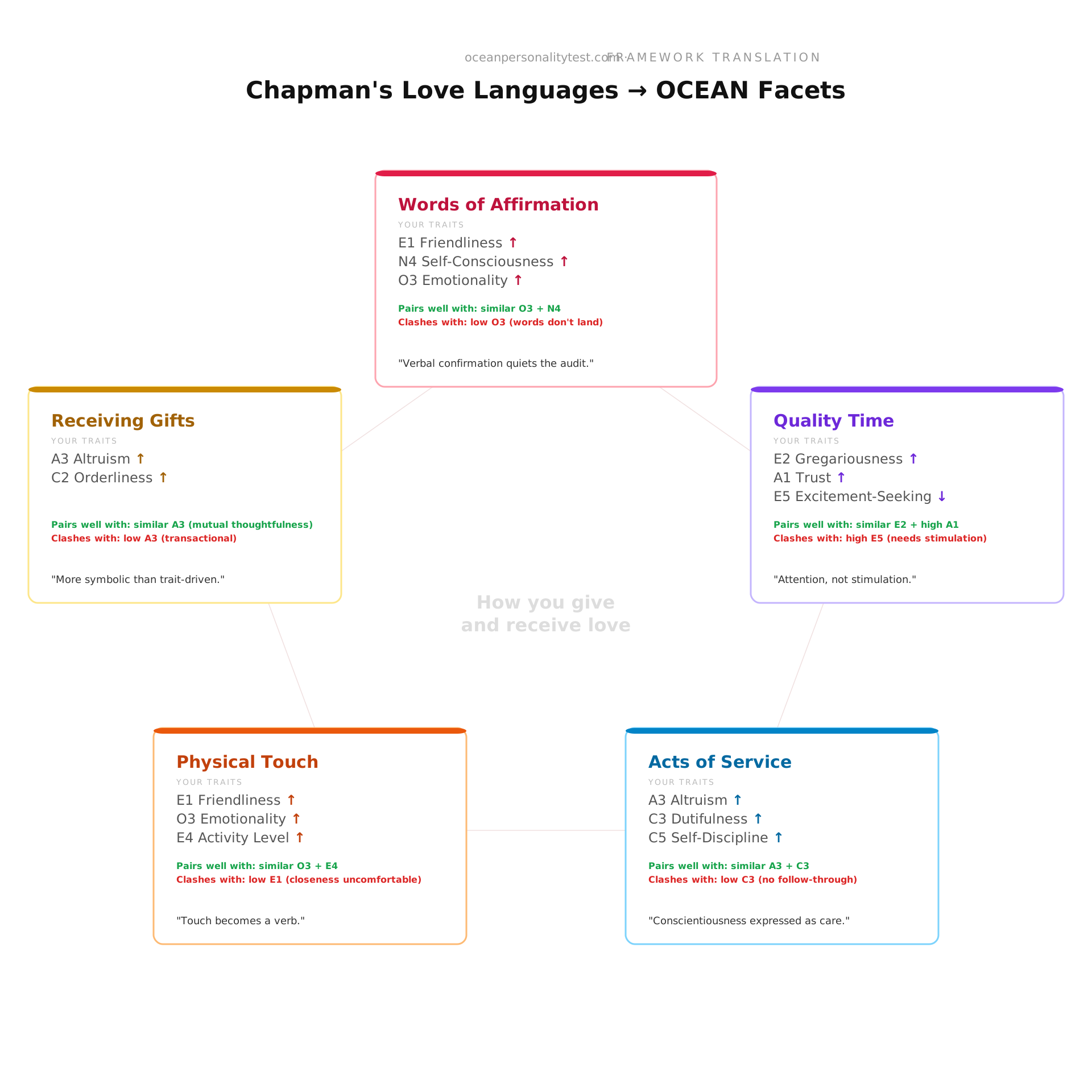
Chapman's love languages model has no peer-reviewed validation. Zero controlled studies confirming the five categories, zero psychometric papers showing they measure distinct constructs. The Big Five has decades of both. But that doesn't mean love languages are wrong. They describe real behavioral preferences; the problem is they stop at the description. Your OCEAN subfacet scores explain the trait structure producing the preference, which is why two people who share the same love language can still feel completely misunderstood by each other.
Words of Affirmation maps to high Warmth (E1), high Self-Consciousness (N4), and high Emotionality (O3). E1 generates the impulse to verbalize affection. N4 is what makes the person need to hear it back; self-consciousness creates a running internal audit of where they stand, and verbal confirmation quiets it. O3 means the emotional register is wide enough that words actually land with weight. Someone with high E1 but low N4 will say kind things freely without needing reciprocation. Add N4 and the dynamic shifts: affirmation becomes a two-way requirement.
Quality Time sits at high Gregariousness (E2), high Trust (A1), and low Excitement-Seeking (E5). E2 pulls the person toward togetherness. A1 lets them be present without monitoring. Low E5 is the part most love language quizzes miss entirely: this person doesn't need the evening to go somewhere interesting. They want sustained attention, not stimulation. When E5 is high, "quality time" looks more like planning adventures together, which is a different need wearing the same label.
Acts of Service runs on Altruism (A3), Dutifulness (C3), and Self-Discipline (C5). A3 is the motivation to help. C3 turns it into follow-through, the sense that if something needs doing, leaving it undone is a minor failure. C5 is what keeps the person doing it consistently rather than in bursts. This love language is less about emotion and more about conscientiousness expressed through care. The person showing love this way often doesn't realize they're doing it; to them it just feels like being responsible.
Physical Touch combines high Warmth (E1), high Emotionality (O3), and high Activity Level (E4). E1 creates comfort with closeness. O3 makes physical contact register emotionally rather than just sensorially. E4 adds a restless, kinetic quality: the person reaches out, initiates, moves toward. Without E4, the preference might exist but stay passive, waiting for the other person to close the gap. With it, touch becomes a verb.
Receiving Gifts is the hardest to map cleanly, and that's informative. It partially involves A3 (reading what someone needs) and C2, Orderliness (the planning and intentionality behind a thoughtful gift). But gift-giving as a love language often says more about what the person values symbolically than about their trait structure. It's the one Chapman category where personality traits explain the least and learned meaning explains the most.
The real problem with love language quizzes is resolution. They assign one category and treat it as stable. Your facet profile shows why the category fits and where it breaks down. Two people who both test as "acts of service" might have completely different underlying profiles: one driven by A3 (genuine altruism), the other by C3 (obligation and guilt when tasks go unfinished). Same quiz result, different emotional experience, different needs. The label matches; the people don't.
The 30-facet OCEAN personality test measures all of these subfacets and shows you which combination is actually driving your relationship behavior, not the category you fall into but the specific trait weights underneath it.
Take the 30-facet OCEAN personality test and see what your love language looks like when you measure the personality traits behind it.