Locus of Control in OCEAN: Internal vs External Mapped to Subfacets

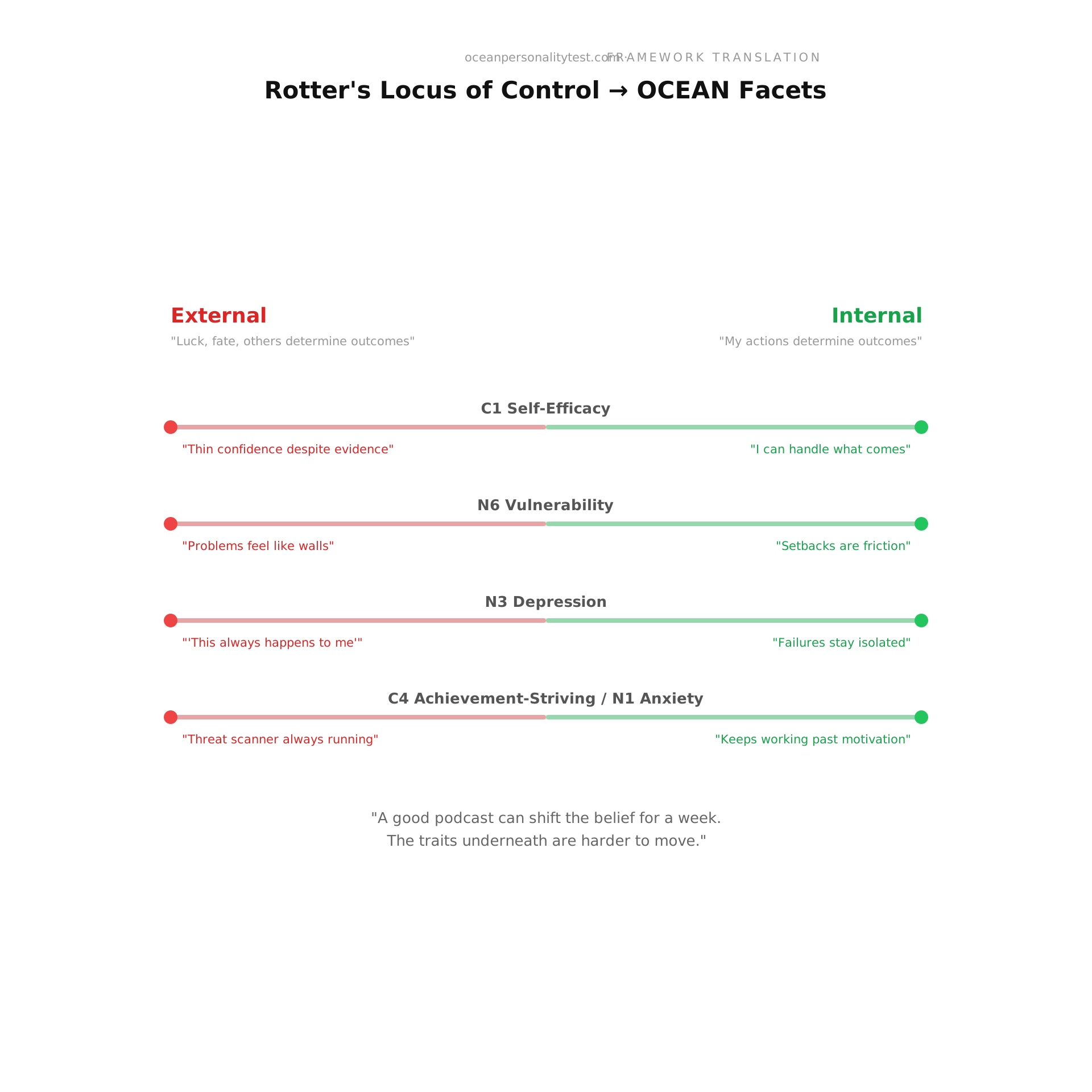
Julian Rotter published his locus of control scale in 1966. It gives you a single score on a continuum: internal (you believe your actions determine outcomes) or external (you believe luck, fate, or other people determine outcomes). Millions of people have taken some version of it. The problem is that it measures a belief, and beliefs are easy to shift. A good podcast can move your locus of control score for a week. The personality traits underneath the belief are harder to move, and the Big Five measures those directly.
Internal locus of control maps to a specific facet cluster: high Self-Efficacy (C1), high Achievement-Striving (C4), low Vulnerability (N6), low Depression (N3). C1 is the felt sense that you can handle what comes. C4 is what keeps you working after the initial motivation fades. Low N6 means setbacks don't register as proof that the world is uncontrollable; low N3 means failures don't calcify into a narrative about your own inadequacy. Together, these four facets create a personality structure where effort reliably feels like it leads somewhere. The belief in personal agency isn't floating free. It's anchored in traits that make effort actually productive, which reinforces the belief through lived experience.
External locus looks different at the facet level: low C1, high N6, high N3, high Anxiety (N1). When C1 is low, confidence in your own competence is thin even if evidence contradicts that. High N6 amplifies the weight of obstacles; a problem that someone with low N6 treats as friction, someone with high N6 treats as a wall. N3 turns isolated failures into patterns ("this always happens to me"), and N1 keeps the threat-scanning system running in the background so that potential problems get detected before they actually arrive. The person isn't choosing to feel powerless. Their trait structure is generating that experience continuously, and a motivational speech can't overwrite it for more than a few days.
Rotter's scale also misses something important: locus of control is domain-specific. Someone can feel completely internal about their career because their C4 is high and they've built competence through years of disciplined effort, while simultaneously feeling external about relationships because their N1 is elevated and their Assertiveness (E3) is low. They trust themselves at work. In a relationship, they feel like outcomes depend on whether the other person decides to stay. A single locus of control score averages these two experiences into one number, which accurately describes neither domain. The 30 OCEAN subfacets capture both patterns separately, because the facets driving career confidence and the facets driving relationship anxiety are different measurements.
This is also why locus of control shifts across situations in ways that confuse people. You feel in control at the gym and out of control at family dinners. That's not inconsistency; it's two different facet combinations activating in two different contexts. C4 and C1 carry you in structured environments where effort maps cleanly to results. N1 and N6 overwhelm you in emotionally unpredictable ones. The trait structure doesn't change. The context determines which facets are doing the heavy lifting.
Therapy and coaching that target "building an internal locus of control" are really targeting the facets underneath it, whether they name them or not. CBT for learned helplessness works on the N3 and N6 patterns. Exposure-based approaches reduce N1's grip on threat perception. Skill-building raises the lived experience of C1. The belief updates because the traits shift, slowly, through repeated experience. Not the other way around.
The 30-facet OCEAN personality test measures C1, C4, N1, N3, N6, E3, and 24 other subfacets that together determine where you sit on the internal-external spectrum, and which specific domains you feel in control of versus which ones you don't. Not a single score. The full trait architecture underneath it.