Leadership Style Is Personality: Transformational, Transactional, and Servant Leaders in OCEAN

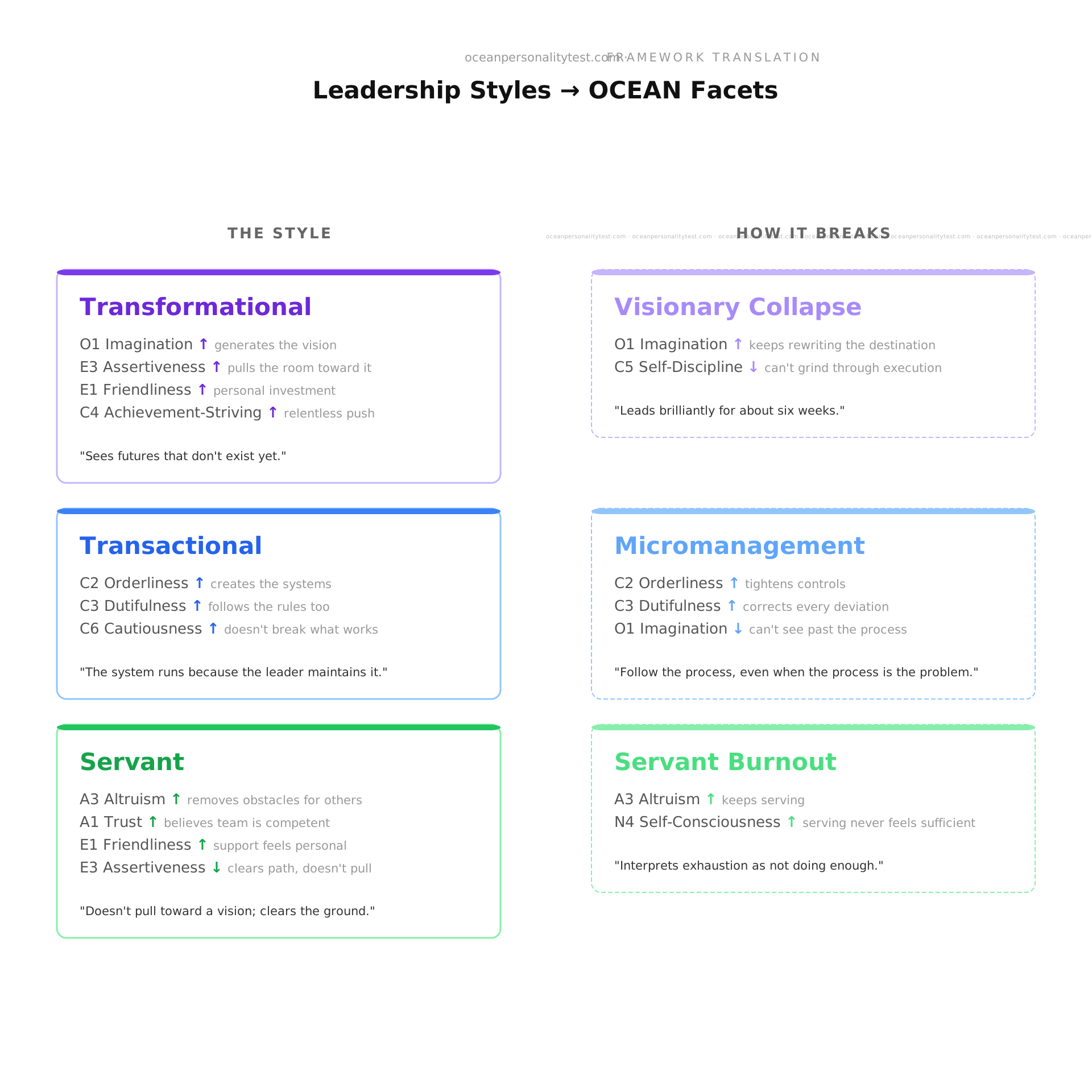
Leadership style quizzes tell you what kind of leader you are. They don't tell you why. The answer to "why" is always personality, and personality breaks down into measurable subfacets. Three leadership styles that researchers have studied for decades, transformational, transactional, and servant, each map to a specific cluster of OCEAN facets. The facets explain why someone gravitates toward one style, what makes it effective for them, and what causes it to collapse.
Transformational Leaders: Vision and Emotional Pull
Transformational leadership runs on four facets working together. High Imagination (O1) generates the vision; these leaders see futures that don't exist yet and talk about them as if they're already happening. High Assertiveness (E3) gives them the force to pull a room toward that vision without asking permission. High Warmth (E1) makes people feel personally invested in following, because the leader radiates genuine connection rather than just authority. And high Achievement-Striving (C4) provides the relentless push that keeps the whole thing moving past obstacles.
The failure mode is predictable. When a transformational leader scores low on Self-Discipline (C5), the vision stays a vision. They inspire a team, paint a vivid picture of where things are going, generate real momentum, and then lose interest in the grinding execution required to get there. Charismatic but disorganized. The team burns out chasing a moving target because the leader keeps rewriting the destination before anyone arrives at the previous one. High O1 without C5 to anchor it produces someone who leads brilliantly for about six weeks.
Transactional Leaders: Systems, Rewards, Consequences
Transactional leadership looks different at the facet level. High Orderliness (C2) creates the systems: clear processes, documented expectations, measurable outputs. High Dutifulness (C3) means the leader follows those same rules and expects others to do the same. High Cautiousness (C6) keeps them from making impulsive changes to what's already working. Assertiveness sits at a moderate level here, enough to enforce standards but not so high that it overwhelms the structure with personal force.
These leaders are effective in environments where consistency matters more than innovation. Manufacturing, compliance, logistics, finance. The system runs because the leader maintains it. But when O1 is low, the transactional style calcifies into micromanagement. Low Imagination means the leader can't see past the current process to a better one. They tighten controls instead of rethinking them. Every deviation from procedure triggers a correction rather than a conversation. The team stops bringing problems forward because the response is always "follow the process," even when the process is the problem.
Servant Leaders: Clearing the Path
Servant leadership maps to high Altruism (A3), high Trust (A1), high Warmth (E1), and low Assertiveness (E3). The combination is specific. A3 drives the instinct to remove obstacles for others rather than direct them. A1 means the leader genuinely believes their team is competent and doesn't need to be controlled. E1 makes the support feel personal rather than procedural. Low E3 is what distinguishes this from transformational leadership: the servant leader doesn't pull people toward a vision, they clear the ground so the team can move in whatever direction makes sense.
The failure mode lives in Neuroticism. A servant leader with high Self-Consciousness (N4) absorbs too much of the team's emotional weight. Every frustration a team member expresses registers as something the leader should have prevented. They over-give, take on work that isn't theirs, and interpret their own exhaustion as evidence they're not doing enough. The high A3 keeps them serving; the high N4 makes serving feel like it's never sufficient. Burnout in servant leaders almost always traces back to this specific combination.
Why Category Alone Fails
A leadership quiz that tells you "you're a servant leader" has given you a category. It hasn't told you which facets are producing that tendency, how strongly each one pulls, or which other facets are setting you up for the failure mode that matches your style. Two servant leaders with identical quiz results but different N4 scores will have completely different leadership experiences over a two-year period. One sustains it; the other flames out. The category is the same. The subfacet structure underneath it is not.
The 30-facet OCEAN personality test measures all of these subfacets: O1, E3, E1, C4, C5, C2, C3, C6, A3, A1, N4, and 19 others. Your results show which leadership style your trait structure naturally produces and, just as importantly, which facets are likely to undermine it under pressure.
Take the 30-facet OCEAN personality test and see which leadership style your personality actually supports.