Kolb Learning Styles Mapped to OCEAN: How You Learn Is How You Score

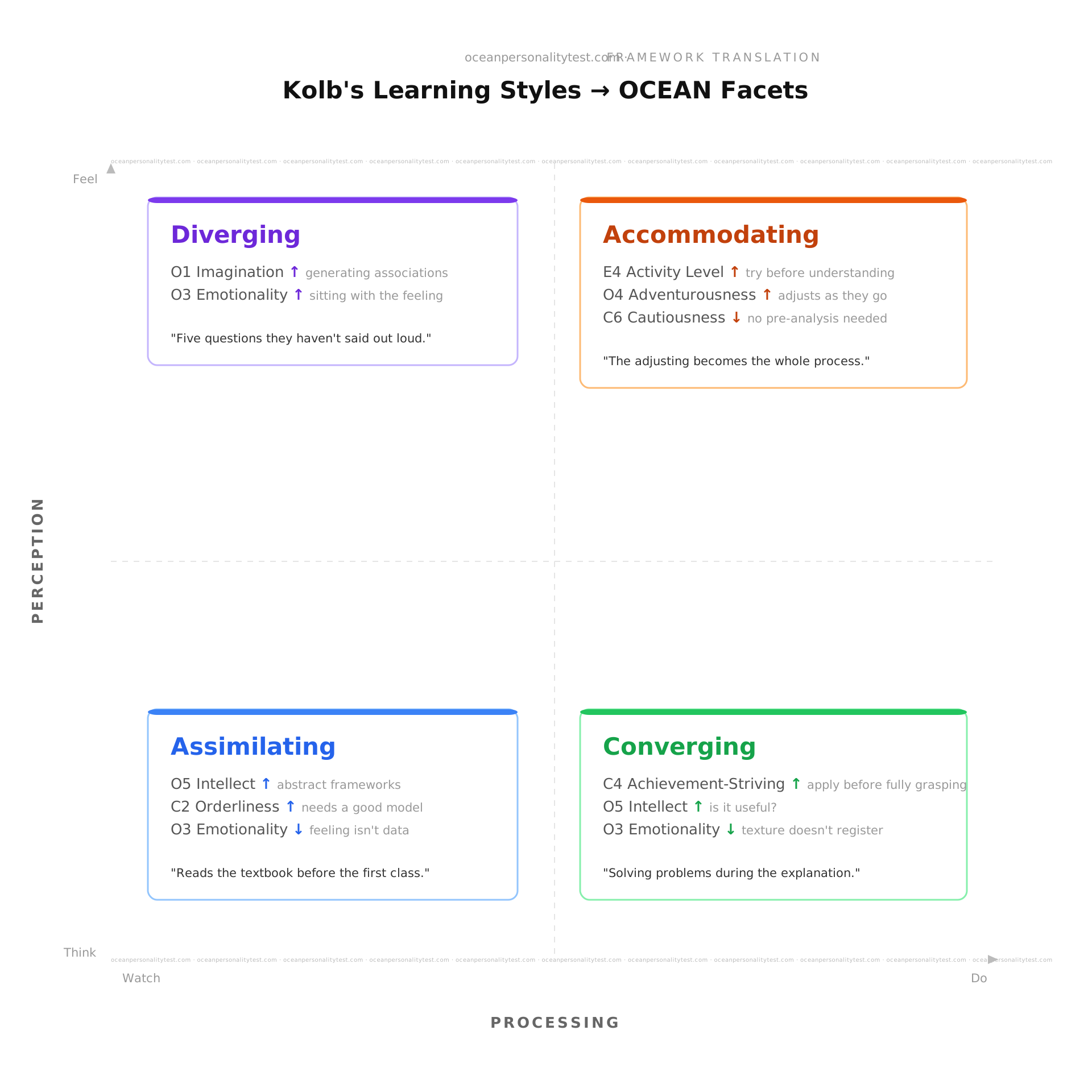
David Kolb's learning cycle has been used in training programs, MBA curricula, and coaching frameworks for decades. Four styles, two axes: how you take in experience (concrete vs abstract) and how you process it (reflective vs active). The model works well enough as a teaching scaffold, but it has a gap: it doesn't explain why you land where you land. OCEAN does.
The Diverging style sits in the feel-and-watch quadrant. People here experience something first, then step back to make sense of it. High O1 (Imagination) and high O3 (Emotionality) show up consistently: they're generating associations, absorbing the feel of the material rather than filing it into a system. They tend toward moderate Extraversion because they need some social input to spark the reflection process, but they're not burning energy on output yet. Put them in a lecture and they'll leave with five questions they haven't said out loud.
Assimilating is the opposite end of the emotional spectrum. High O5 (Intellect) and high C2 (Orderliness) dominate. The preference is for watching before doing and thinking rather than feeling, so abstract frameworks land more naturally than live examples. Extraversion tends to run low: they don't need to talk through ideas to understand them, they need silence and a good model. This is the style most likely to read the textbook before the first class and annotate it.
Converging is where the thinking orientation meets active experimentation. High C4 (Achievement-Striving) is the defining trait here. These people want to apply something before they've fully understood its edges; the application is how they understand. O5 (Intellect) often runs moderate to high, but O3 (Emotionality) sits low. The emotional texture of the content doesn't register as much as whether it's useful. They're solving problems during the explanation. Sometimes they're solving the wrong problem, but they correct fast.
Accommodating is the feel-and-do style: concrete experience plus active experimentation, which in OCEAN terms reads as high E4 (Activity Level), high O4 (Adventurousness), and low C6 (Cautiousness). They prefer trying something over understanding it in advance, and they'll adjust as they go. The risk with this profile is that the adjusting becomes the whole process, so they never fully consolidate what worked. Retention suffers without some structured reflection built in from the outside.
One thing Kolb's model doesn't capture well: learning style isn't static across contexts. OCEAN scores explain why. Someone with high C2 (Orderliness) and moderate O4 might Assimilate in unfamiliar technical domains and Accommodate in social ones where the stakes feel lower. The facets are pulling in different directions depending on what kind of material is in front of them. A single category from a learning style quiz misses that.
The 30-facet OCEAN personality test scores each of these facets separately so you can see which style is dominant and where the pull toward another style comes from. Take the 30-facet OCEAN personality test and check your O1, O3, O5, C2, C4, C6, E4, and O4 scores against the mapping above.