Imposter Syndrome Is a Measurable Trait: Where It Lives in Your OCEAN Profile

The people who struggle most with imposter syndrome are usually high performers. That's not irony, it's the mechanism: the same traits that push someone to achieve are the ones that make the achievement feel fraudulent afterward.
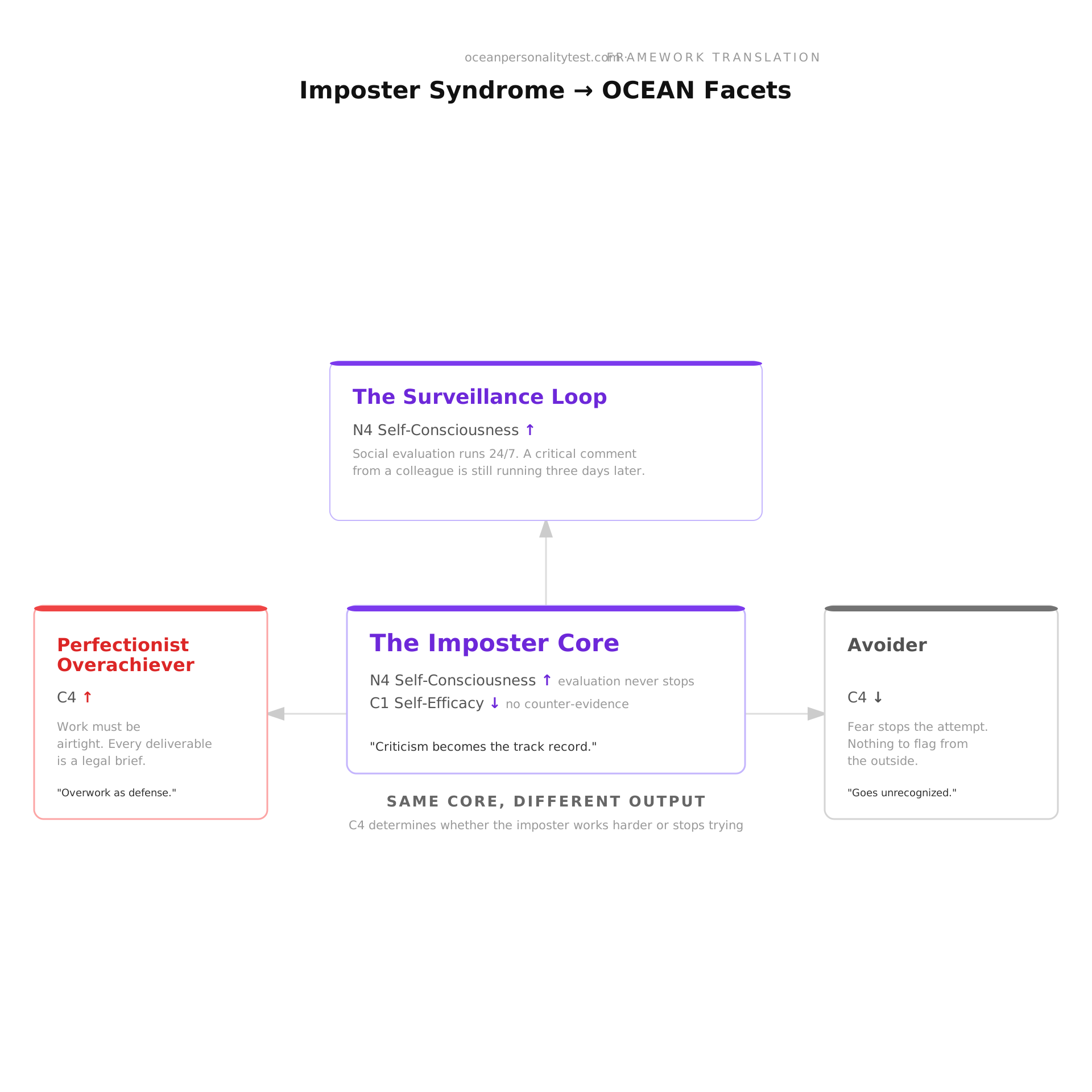
Self-Consciousness (N4) is the core driver. It measures how much social evaluation registers in your nervous system and, more importantly, how long it lingers. A critical comment from a colleague shouldn't still be running three days later. For high N4, it often is. You got the promotion, your manager praised the work, the evidence is there, and somewhere in the background, the review process is still running, still weighing whether the verdict holds.
The problem compounds when C1 (Self-Efficacy) is low. C1 is your baseline confidence in your own capability, not the performed kind but the internal kind, the counter-evidence you reach for when something critical comes in. High C1 means the criticism lands somewhere with existing mass. Low C1 means there's nothing to push back against it. The comment doesn't get weighed against your track record; it becomes the track record.
Add high C4 (Achievement-Striving) and the pattern gets exhausting in a specific way. The work has to be perfect because imperfect work is evidence. Every deliverable is also a legal brief. People call this perfectionism, and they're right, but the perfectionism isn't about standards. It's about keeping the case from being made against you.
Low C4 with the same N4/C1 combination produces something quieter. No overwork, no visible perfectionism. Just avoidance. The fear of evaluation stops the attempt entirely, so there's nothing to flag from the outside. This version often goes unrecognized as imposter syndrome because the person isn't producing at a high level; they never started. The scored imposter pattern keys on the overachiever form, where high Achievement-Striving converts the same fear into visible overwork, so this quieter avoider variant is the one the number tends to under-detect.
The extended profile scores all three facets together into a composite imposter syndrome score. What's useful about it isn't the number, it's that it tells you which version you're running (the perfectionist overachiever or the avoider) and which facet is doing the most damage.
Take the 30-facet OCEAN personality test and see your imposter syndrome susceptibility score.