Holland Codes (RIASEC) Mapped to OCEAN: Career Interest Types Translated to Personality Facets

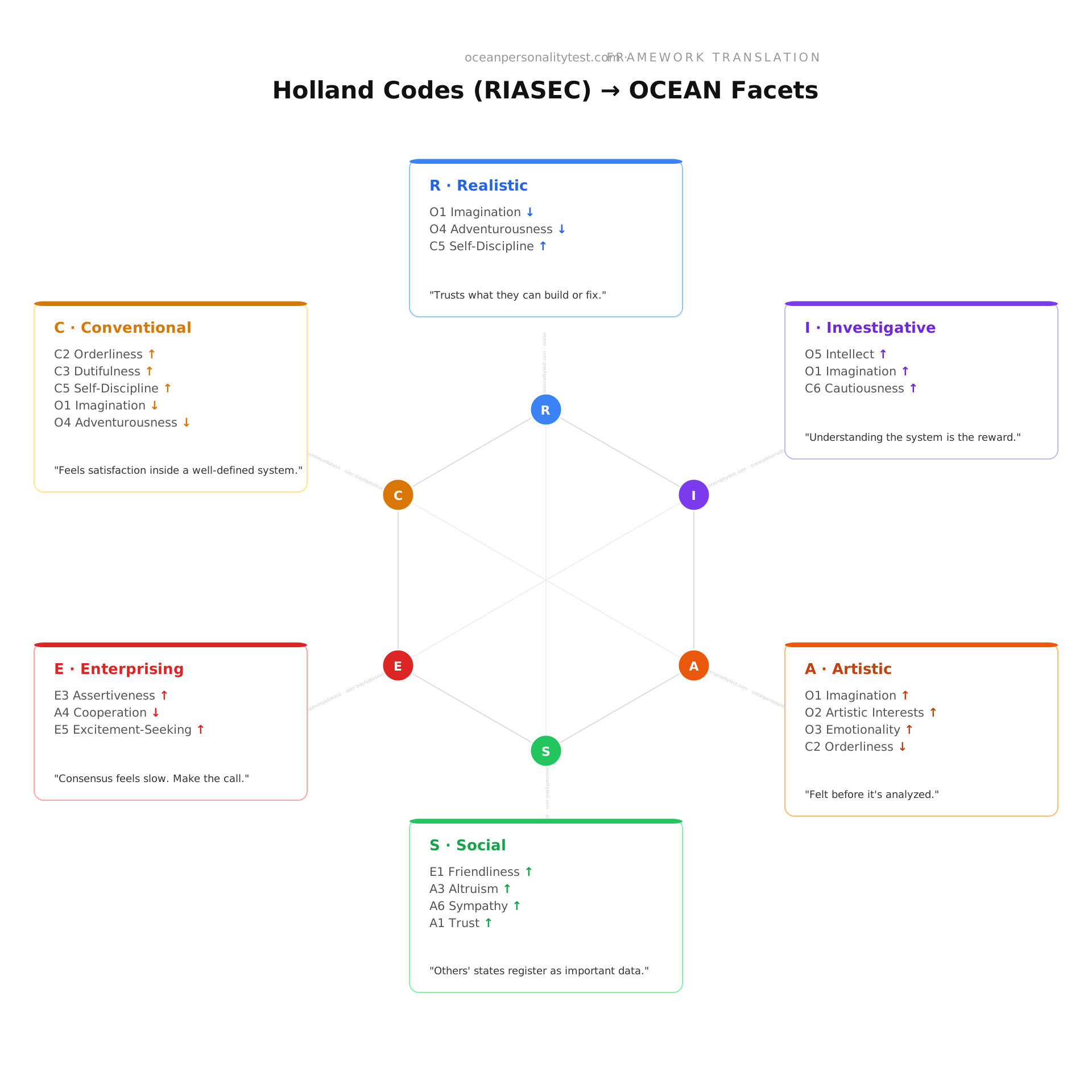
Holland's RIASEC model assigns people to six career interest types. The Big Five measures the personality traits that generate those interests. Mapping one to the other turns a career quiz into a facet-level profile.
Realistic types (R) are drawn to physical work and concrete problems. The facet signature is low Openness, particularly O1 (Imagination) and O4 (Adventurousness), combined with moderate-to-high C5 (Self-Discipline). They trust what they can build or fix. Abstract frameworks register as noise. Their curiosity runs along practical lines and stops when something doesn't have a tangible application.
Investigative types (I) score high on O5 (Intellect) and O1 (Imagination). The satisfaction comes from understanding a system, not from doing something with it afterward. High Cautiousness (C6) usually accompanies this: the need to think through a problem from multiple angles before committing to a position. Two people can both be Investigative but differ on whether they're drawn to physical systems versus abstract ones, and that split tends to show up in O2 and O4.
Artistic types (A) cluster around O1, O2 (Artistic Interests), and O3 (Emotionality). Aesthetic response is felt before it's analyzed, and that emotional sensitivity is part of what generates creative work. Low C2 (Orderliness) often appears alongside. The workspace is messy, the schedule is fluid. Where N1 (Anxiety) is elevated, the creative output tends to be more intense but less consistent.
What separates a Social type (S) from someone who simply likes company is that other people's internal states register as genuinely important information. High E1 (Warmth), A3 (Altruism), and A6 (Sympathy) are the facets behind this. Lower N scores than Artistic types and higher A1 (Trust) mean they're approaching relationships from good faith rather than vigilance. When A3 and E1 are both very high, the job performance prediction for direct service roles like teaching, counseling, and nursing is strong.
Enterprising types (E) are the easiest to spot in facet data: high E3 (Assertiveness) paired with low A4 (Cooperation). Consensus-building feels slow; they'd rather make a call and move. High E5 (Excitement-Seeking) often appears alongside E3, which explains the appetite for sales and high-stakes environments. An Enterprising type who scores high on A3 still pushes hard but feels some guilt about winning.
Conventional types (C) are the ones who actually feel satisfaction working within a well-defined system. Ambiguity produces the opposite. The facet cluster is C2 (Orderliness), C3 (Dutifulness), and C5 (Self-Discipline), with low O1 and O4 keeping them from finding deviation interesting. Elevated C3 means following the rules is something they genuinely care about, not a calculated move.
Holland's hexagon arranges the six types so that adjacent types are more compatible and opposite types are more different. In facet terms, the opposites make sense: Realistic and Social sit on opposite ends because low O and moderate-low A faces off against high A and high E1. Investigative and Enterprising conflict because deliberation and abstract curiosity pull against assertiveness and action under uncertainty.
Most people carry two or three letter codes rather than one. RIASEC codes like ISA or ECR translate cleanly to OCEAN because each letter maps to a different facet cluster, and the facets are independent. You can be high O5 and high E3 simultaneously: the person who reads the research and then takes the stage. The combination that's actually rare is the type pair where both sets of facets push in opposite directions.
The 30-facet OCEAN personality test scores all of these independently. If you've taken a Holland code test or a career aptitude test and want to see what's actually driving it at the facet level, your OCEAN profile will show you which subfacets are doing the work.
Take the 30-facet OCEAN personality test and see exactly which facets are shaping your career interests.