Highly Sensitive Person (HSP) in OCEAN: Elaine Aron's Model Translated to Facets

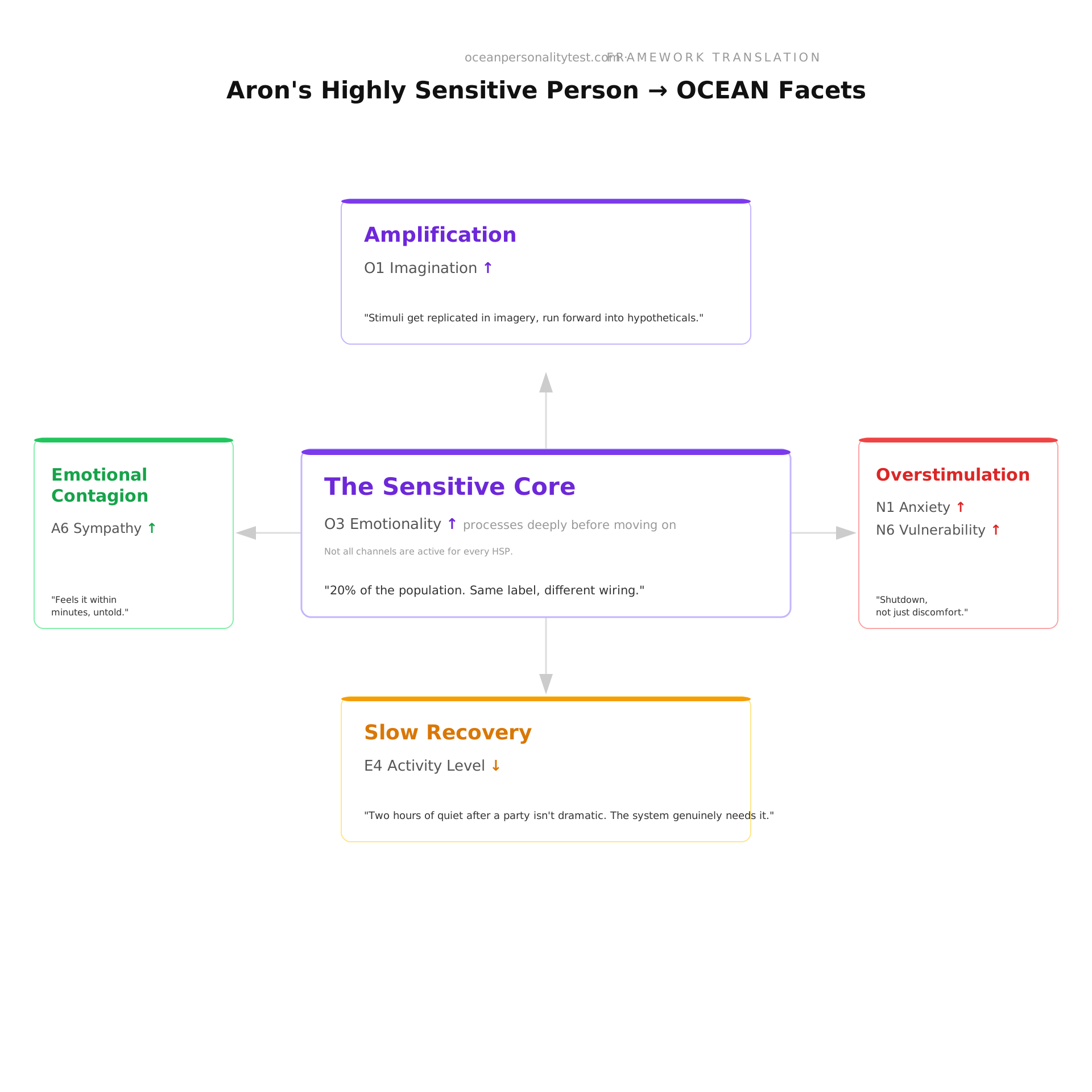
Elaine Aron's 1997 research on Sensory Processing Sensitivity established that roughly 20% of the population processes sensory and emotional input more deeply than average. That's the HSP construct. What it doesn't tell you is which part of the sensitivity profile is actually driving the experience. OCEAN does.
The core of Aron's model maps most directly to O3, Emotionality. This facet measures how deeply emotional content gets processed before it moves on. High O3 means feelings aren't filtered or set aside quickly; they're held, examined, and felt again. Most people who self-identify as HSPs score in the 80th percentile or above on O3. It's not the only relevant facet, but it's where the depth of processing lives.
O1 (Imagination) runs alongside it. A rich inner life means incoming stimuli don't just register once; they get replicated in mental imagery, associated with memories, run forward into hypotheticals. That amplification loop is part of what makes environments feel so full for high-sensitivity people. A concert isn't just loud, it's an entire constructed world by the time it's processed.
The overstimulation side of SPS shows up in two Neuroticism facets. N1 (Anxiety) captures the physiological arousal response when stimulation crosses a threshold: the need to leave a busy restaurant, the difficulty concentrating in open offices, the physical discomfort of fluorescent lighting. N6 (Vulnerability) is what happens after that threshold is crossed repeatedly without relief. It measures how hard it is to cope once the nervous system is already overloaded. High N6 with high N1 is the profile that leads to shutdown, not just discomfort.
Activity Level (E4) is the most practical facet here. Low E4 means you don't generate arousal-seeking behavior; you don't crave stimulation the way high-E4 people do. Critically, low E4 predicts a slower recovery time after overstimulation. The person who needs two hours of quiet after a party isn't being dramatic, their nervous system genuinely needs longer to return to baseline. This is one of the few facets where the HSP pattern is defined by what's low rather than what's high.
A6 (Sympathy) adds the social layer. High sympathy means other people's emotional states are absorbed before there's any conscious decision to absorb them. Walk into a room where someone is quietly upset, and a high-A6 person will feel it within minutes without being told. Aron's research describes emotional contagion as a component of SPS, and A6 is where that registers in OCEAN scoring.
What the facet breakdown reveals is that "HSP" is not one thing. Someone with high O3 and high N1 but moderate A6 and moderate N6 experiences sensitivity primarily through emotional depth and anxiety arousal, not through social contagion or breakdown under load. Someone with high A6 and high N6 but lower O3 will struggle most in emotionally charged social environments, not in quiet-but-stimulating ones. The self-report HSP quiz (Aron's HSPS) doesn't distinguish between these; a facet-level profile does.
Take the 30-facet OCEAN personality test and see exactly which dimensions of sensitivity are elevated in your own profile.