Growth Mindset vs Fixed Mindset: What Dweck Got Right and What the Big Five Adds

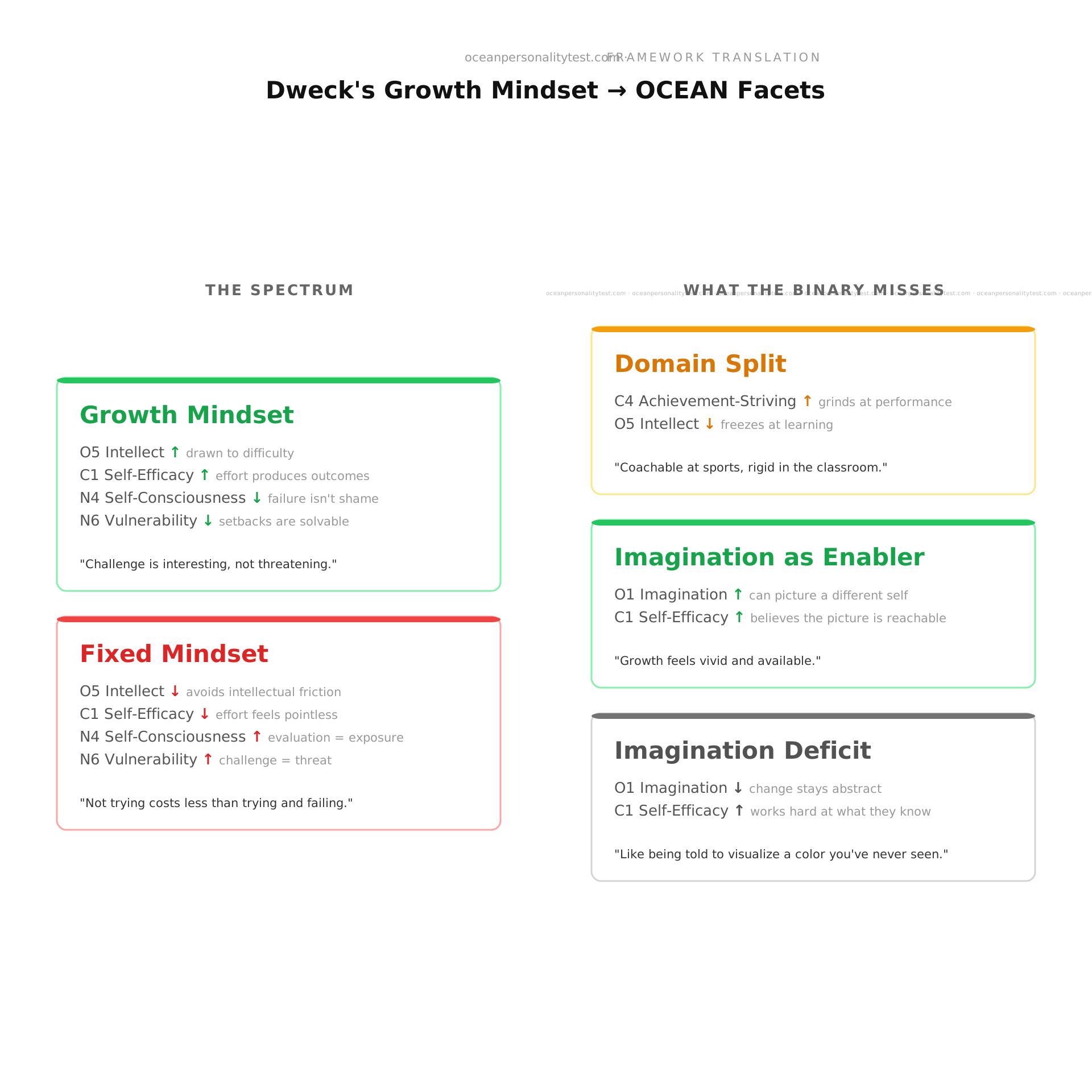
Carol Dweck's framework gave people a clean split: you either believe ability is fixed or believe it can grow. The insight was real. Decades of classroom research showed that students who treated intelligence as malleable performed better over time than students who treated it as set. Where the framework falls short is the binary itself. People don't carry one mindset across every domain of their lives, and the personality science underneath explains why.
Growth orientation maps onto specific OCEAN subfacets. High O5 (Intellect) means genuine curiosity about ideas; the person engages with difficulty because the difficulty itself is interesting to them, not because someone told them to "embrace challenges." High C1 (Self-Efficacy) means they believe their actions produce outcomes. Low N4 (Self-Consciousness) means failure doesn't collapse into shame. Moderate N6 (Vulnerability) gives enough stress tolerance that setbacks register as problems to solve rather than evidence of permanent limitation. When all four align, the person looks like a textbook growth mindset case.
Fixed mindset is the mirror: low O5 means the person isn't drawn to intellectual friction. Low C1 means they don't connect effort to results. High N4 means every evaluation feels like exposure. High N6 means the nervous system reads challenge as threat. That combination doesn't just produce a "belief" that ability is fixed. It produces a lived experience where trying hard and failing is genuinely more costly than not trying at all.
The part Dweck's model misses is that these facets are independent of each other. Someone can score high on C4 (Achievement-Striving) while scoring low on O5. That person will grind relentlessly at athletic goals, tolerate physical failure, push through plateaus, and still freeze when asked to learn something intellectually unfamiliar. They have a growth mindset about sports and a fixed mindset about academics. A coach would call them coachable; a professor would call them rigid. Both are right, because they're observing different facets. The binary can't hold both observations at once, but the facet profile holds them easily.
O1 (Imagination) matters here in a way most mindset research ignores. Growth orientation requires the ability to picture a version of yourself that doesn't exist yet. High O1 makes that picture vivid and available. Low O1 makes change feel abstract, like being told to visualize a color you've never seen. A person with low O1 and high C1 might work hard at what they already know how to do, but the idea of becoming fundamentally different at something doesn't land for them. It stays theoretical.
Then there's the replication problem. Growth mindset interventions have been hit hard by failed replications. Large-scale studies that tried to shift students from fixed to growth mindset found effects that were small, inconsistent, or absent entirely. Some of the most cited intervention studies couldn't reproduce their own results when run with larger samples or pre-registered designs. The Big Five doesn't have this problem; it replicates across cultures, languages, and decades because it measures trait structure rather than stated beliefs. Beliefs change after a good TED talk. The personality architecture underneath them is far more stable, and it's what actually predicts how a person responds to challenge, failure, and ambiguity over time.
This is what a mindset quiz can't tell you. It asks whether you agree with statements like "intelligence can be developed." Most educated adults will agree, because it sounds right and costs nothing to say yes. But agreeing with that statement while carrying high N4 and low C1 means the belief sits on top of a trait structure that will override it the moment real stakes appear. The person who "believes in growth" still avoids the job application, still declines the speaking invitation, still chooses the task they already know how to do. The facet scores show whether the wiring supports the belief or quietly contradicts it.
The 30-facet OCEAN personality test measures O5, C1, N4, N6, O1, and 25 other subfacets that determine where your growth orientation is genuine and where it's aspirational. Not a binary. The actual measurements underneath it.