Gregariousness (E2): Why Some People Need the Room and Others Need the Door
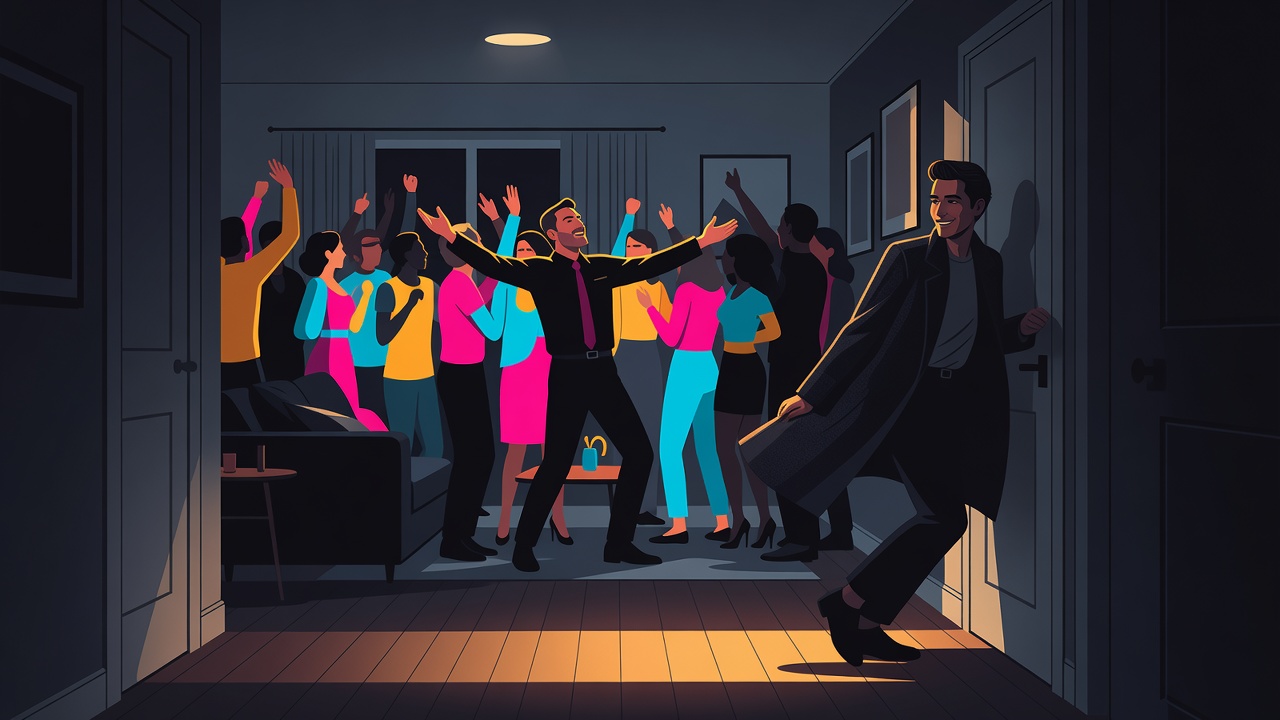
There is a moment at every party, somewhere past the two-hour mark, when the guests quietly sort themselves into two species. One is getting louder and looser and has started recruiting people for whatever happens after this. The other has begun calculating the shortest polite path to the door, and the calculation itself feels like relief.
Neither of them is having a better time than the other, though it can take a marriage to figure that out.
The facet underneath the sorting is Gregariousness (E2), the second facet of Extraversion, and it answers one question with unusual precision: how much company do you actually want? When ordinary people say "introvert" or "extrovert," this single facet is usually the thing they mean, even though Extraversion contains five other facets that can all point in different directions.
Contents
- What Gregariousness Actually Measures
- High E2: The Room Is the Reward
- Low E2: Company Has a Dose
- The Shy Extrovert and Other Crossings
- E2 at Work: The Open Office Problem
- E2 in Relationships: The Mismatch That Is Actually Manageable
- What to Do with Your Score
What Gregariousness Actually Measures
E2 measures your appetite for social quantity: crowds and gatherings, the sheer presence of other people. The IPIP-NEO items behind it ask about large parties and whether you chat with many different people at once. One asks flatly whether you avoid crowds. Your score is a percentile against the general population, so a 30 means most people want more company than you do.
The facet is narrower than the introvert label it gets confused with, and the narrowness matters. Wanting few people around says nothing about how warm you are with the people you keep; that temperature lives in Warmth (E1), and warm hermits are everywhere once you know to look for them. It also says nothing about your energy in general, which belongs to Activity Level (E4). A low-E2, high-E4 profile produces the person who declines every invitation and then single-handedly re-tiles a bathroom over the weekend.
One more boundary worth marking: some people skip the party because they like quiet, and some skip it because the party scares them. The second group comes later.
High E2: The Room Is the Reward
For a high scorer, the full room is what the evening is for. A full house feels like abundance, and an empty Saturday reads as a problem they expect to have solved by noon. High E2 fills its own calendar without noticing the effort.
The strengths are structural. Teams, parties, conferences, and extended families all run on people willing to be the connective tissue, and high scorers supply it for free. The tax arrives in the gaps: solitude genuinely costs them something, and a stretch of enforced aloneness, a remote job in a new city, say, can slide into real low mood before they diagnose why. Their unread messages also pile up into a maintenance debt no honest calendar can service, since the appetite for acquiring people always outruns the hours available for keeping them.
Low E2: Company Has a Dose
A low scorer likes people the way most of us like espresso: genuinely, but past a certain dose the same substance starts producing the opposite effect. Two close friends over dinner can be the best part of their week, while a forty-person happy hour is a shift they never agreed to work.
What outsiders misread is the exit, which looks like rejection. The low scorer is rarely fleeing anyone in particular. The room hit its dose, and they noticed before you did. This is also the profile that quietly thrives in circumstances that would flatten a high scorer: remote work, single-occupancy travel, lighthouse keeping, long-haul research. If crowded, loud environments exhaust you faster than the socializing itself does, some of that may be sensory rather than social, and the highly sensitive person test separates those two signals.
A 15 who moralizes their solitude into depth, and a 90 who moralizes their sociability into good character, are making the same mistake in opposite directions.
The Shy Extrovert and Other Crossings
E2 gets far more interesting when it crosses other facets. The most painful combination is high E2 with high Self-Consciousness (N4): a person who wants the room and fears its judgment at the same time. They accept the invitation, dress, drive over, and then orbit the kitchen island rehearsing entrances. From the outside they read as aloof. Inside, the appetite and the fear are eating each other. The N4 deep-dive covers that machinery; the shy extrovert is its most misunderstood customer.
The reverse crossing produces the unbothered loner: low E2 with N4 near the floor. This person skips the party without a flicker of guilt and is baffled by the suggestion they should feel any. Crossed with high E1 instead, low E2 gives you the beloved regular who knows one bartender and maybe four humans deeply, and would not trade any of them for a network.
Where your own facets sit relative to each other is most of what the domain score conceals, and the facet conflict guide walks through the major collisions.
E2 at Work: The Open Office Problem
Modern office design is a bet on high E2, and the bet loses on roughly half the workforce. Open floor plans, all-hands standups, team-building offsites, hot desking: each assumes the presence of colleagues is a stimulant. For low scorers it is a slow leak: the cost surfaces as ordinary tiredness, tired people rarely file complaints about furniture, and so it stays invisible on every survey the facilities team runs. Remote and hybrid arrangements re-sorted this deck dramatically, which is why the same policy change was experienced across one company as liberation and abandonment simultaneously.
Hiring makes its own E2 mistakes. Sales floors and event teams really do run better on high scorers, but interviews overweight the facet everywhere else too, because a candidate who lights up in a roomful of strangers is easy to like. Whether the job contains any rooms full of strangers is a separate question a measured profile answers before the offer goes out.
E2 in Relationships: The Mismatch That Is Actually Manageable
Our compatibility framework barely weights this facet, which surprises people. The heavily weighted facets are the ones a pair cannot outsource, like Warmth and Anger. Social quantity is different, because it can be satisfied outside the relationship: the high-E2 partner can get their crowd from friends and the group chat, and the low-E2 partner gets their quiet after the high scorer leaves for all of it. Mismatched couples run happily on that arrangement for decades.
The arrangement fails only when the mismatch gets moralized. "You never want to see anyone" and "you always need a circus" are both accusations aimed at a percentile, and a percentile does not respond to accusation. Couples who instead treat the gap as logistics, two social budgets that need a calendar, tend to stop fighting about it entirely. A compatibility report puts both E2 scores on the table next to the facets that actually carry the relationship, and the scheduling conversation can start from numbers instead of grievances.
What to Do with Your Score
Mostly, stop billing your setting to other people's meter. High scorers: your appetite is real, but it is yours, and a 20 dragged along to your third gathering of the week experiences it as overtime. Schedule your crowd where it lives. Low scorers: name the dose out loud, because "I'm good for about two hours and then I turn into a pumpkin" is one sentence, and it retires years of being read as cold. Both settings run whole, rich lives; they just draw the floor plan differently.
"Introvert" flattens six dials into one word, and the dials disagree with each other more often than not. The 30-facet OCEAN personality test reads all six separately, along with the remaining 24 subfacets. It takes about 15 minutes, and basic results are free.