Friedrich Nietzsche's The Gay Science and Excitement-Seeking (E5)
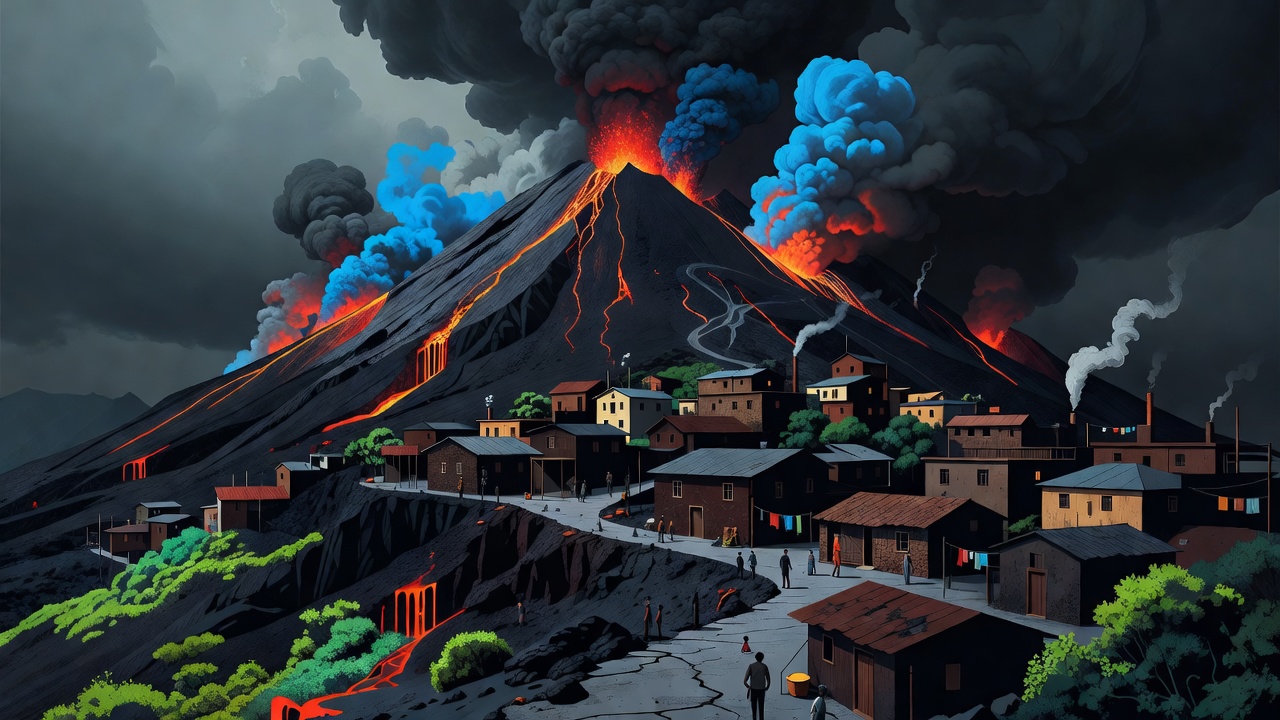
Friedrich Nietzsche wrote The Gay Science in a burst of recovery and high spirits, and it carries a restless energy, a suspicion of comfort, and a conviction that a safe life is a half-lived one. Scattered through it is his argument that growth and joy come from courting risk rather than avoiding it, from choosing the harder, more exposed path. He puts it as a dare. In The Gay Science he writes, "The secret for harvesting from existence the greatest fruitfulness and the greatest enjoyment is: to live dangerously! Build your cities on the slopes of Vesuvius! Send your ships into uncharted seas!" That pull toward risk and intensity is, in the Big Five, one facet.
The pull toward risk is the Excitement-Seeking facet
That facet is Excitement-Seeking (E5), under Extraversion, how much stimulation, risk, and intensity you need before life feels fully switched on. A high scorer is drawn to the edge and goes flat in safety and routine; a low scorer finds that same edge draining and prefers calm. Nietzsche writes as the patron saint of the high end, treating comfort as a kind of slow death and danger as the price of a vivid life. His dare is E5 raised to a philosophy, a demand that you refuse the tame path on principle.
His call runs close to Adventurousness (O4), the appetite for the new and untried, and Nietzsche wants both. But there is a warning folded into the thrill, since a life built entirely on the slopes of Vesuvius is also a life one eruption from ruin. High E5 without judgment chases intensity for its own sake, which can burn as easily as it lights. For a high-E5 reader Nietzsche is intoxicating and worth reading with a cool head, since the vivid life he promises is real, and so is the wreckage when the daring loses all its ballast.
For a reader placing themselves, your E5 is a fair read on how much intensity you need before something feels worth doing and how restless a safe stretch leaves you. High on it and Nietzsche names a hunger you already know, with the caution that living on the volcano is thrilling right up until it is not. Low on it and The Gay Science is a window into why some people court danger on purpose, and a quiet reassurance that a calmer life is not a lesser one. Where you sit on Excitement-Seeking tells you how much risk it takes before you feel alive, and we take the facet apart in Excitement-Seeking (E5).
Read the book: The Gay Science by Friedrich Nietzsche.
See Where You Fall
Where do you actually fall? The 30-facet OCEAN personality test takes about 15 minutes and scores all five domains and the facets underneath them. Take the test
Research Citations
Nietzsche, F. (1882). Die fröhliche Wissenschaft [The gay science]. Verlag von E. W. Fritzsch.
Zuckerman, M. (1994). Behavioral expressions and biosocial bases of sensation seeking. Cambridge University Press.
Johnson, J. A. (2014). Measuring thirty facets of the Five Factor Model with a 120-item public domain inventory: Development of the IPIP-NEO-120. Journal of Research in Personality, 51, 78-89.
Costa, P. T., & McCrae, R. R. (1992). Revised NEO Personality Inventory (NEO-PI-R) professional manual. Psychological Assessment Resources.