Enneagram to OCEAN: What Your Enneagram Type Actually Measures

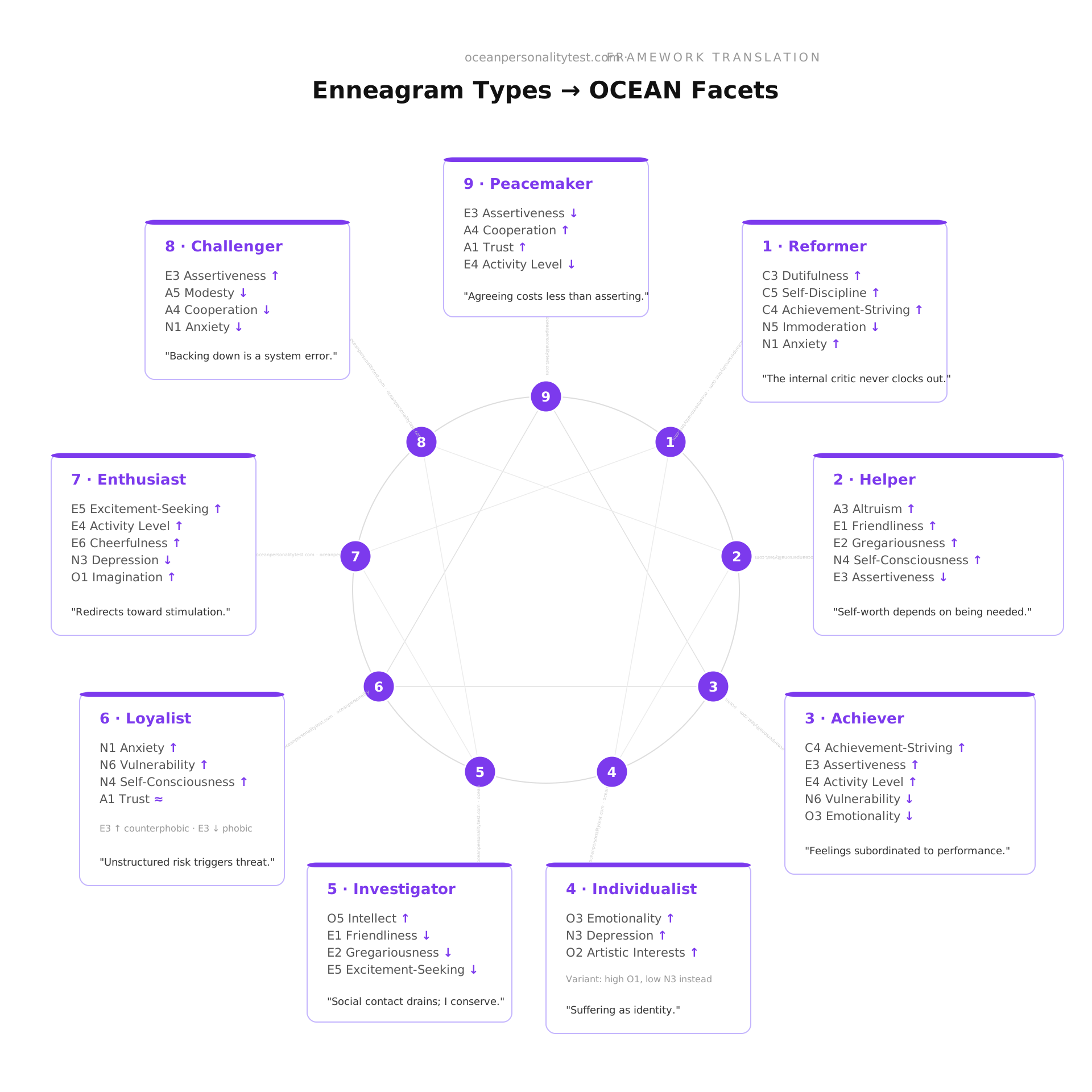
The Enneagram gives you a number. The Big Five gives you the trait measurements that number is built from. Every Enneagram type corresponds to a specific cluster of OCEAN subfacets, and once you see the mapping, the category starts to feel like a rough sketch of something the facet scores draw in full.
Type 1 (the Reformer) runs on high Dutifulness (C3), high Self-Discipline (C5), high Achievement-Striving (C4), and low Immoderation (N5). The internal critic that defines this type is structural: C3 generates the moral standard, C5 enforces it, and low N5 prevents impulse from overriding it. Add high Anxiety (N1) and you get the classic perfectionist who can't stop editing their own behavior.
Type 2 maps to high Altruism (A3), high Warmth (E1), high Gregariousness (E2), and high Self-Consciousness (N4). The compulsive giving isn't generosity alone; it's A3 locked to N4, where the person's self-worth depends on being needed. Low Assertiveness (E3) often shows up here too, making it hard to say no even when the giving is costing them.
Type 3 is high Achievement-Striving (C4), high Assertiveness (E3), high Activity Level (E4), and low Vulnerability (N6). This type rarely tests high on Emotionality (O3) because emotional processing gets subordinated to performance. Their energy is real, but it's channeled through image management, which is why C4 alone doesn't capture it; you need to see C4 relative to Straightforwardness (A2) to know whether the ambition is transparent or performative.
Type 4 is where the Enneagram's limits start showing. The type is supposed to mean "individualist," but it collapses at least two different subfacet profiles into one label. A Type 4 with high Emotionality (O3), high Depression (N3), and high Artistic Interests (O2) is having a completely different internal experience from a Type 4 with high O3 and high Imagination (O1) but low N3. The first one is pulled toward suffering as identity. The second is pulled toward creative immersion without the depressive undertow. The Enneagram calls both of them "Four" and moves on.
Type 5 sits at high Intellect (O5), low Warmth (E1), low Gregariousness (E2), and often low Excitement-Seeking (E5). Social withdrawal in this type isn't avoidance in the anxious sense; it's a resource calculation. Low E1 and E2 mean social contact drains energy fast, so the person conserves it. If N1 is also high, the withdrawal carries an anxious quality. If N1 is low, it's just preference. Same Enneagram label, different lived experience.
Type 6 correlates with high Anxiety (N1), high Vulnerability (N6), moderate Trust (A1) that swings unpredictably, and high Self-Consciousness (N4). The "loyalty" framing obscures what's actually happening: the person bonds to institutions or authority figures because unstructured risk triggers their threat response. Whether they become phobic or counterphobic depends on where Assertiveness (E3) lands. High E3 counterphobics challenge the thing they fear; low E3 phobics comply with it.
Type 7 maps cleanly: high Excitement-Seeking (E5), high Activity Level (E4), high Cheerfulness (E6), low Depression (N3), and high Imagination (O1). The avoidance of pain that defines this type shows up as low N3 combined with high E5, a system that reflexively redirects toward stimulation whenever discomfort surfaces. Type 8 is high Assertiveness (E3), low Modesty (A5), low Cooperation (A4), and low Anxiety (N1). The dominance isn't aggression for its own sake; it's a trait structure where social hierarchy feels natural and backing down registers as a system error. Type 9 is low Assertiveness (E3), high Cooperation (A4), high Trust (A1), and moderate to low Activity Level (E4). Conflict avoidance isn't passivity; it's what happens when agreeing costs less energy than asserting.
The Enneagram gives you one of nine boxes. What it can't do is tell you how far into the box you sit, which facets are driving the pattern, or where two people with the same number diverge. A Type 6 at the 55th percentile on N1 worries occasionally. A Type 6 at the 95th percentile on N1 is running a background threat scanner that never turns off. The Enneagram treats them identically; continuous measurement does not.
The 30-facet OCEAN personality test measures all of the subfacets above on a continuous scale, so instead of a type number, you get the actual trait coordinates that produce whatever Enneagram label you've been given. You can see which facets are elevated, which ones are moderate, and where the real tension in your profile lives.
Take the 30-facet OCEAN personality test and see what your Enneagram type looks like when you measure the traits underneath it.