Empath or High Agreeableness? What the Science Actually Says

The word "empath" does a lot of work for a term with no agreed scientific definition. It shows up in self-help books, Reddit threads, and therapy waiting rooms, almost always meaning something slightly different. What the research actually measures are specific, independent traits: emotional intensity, sensitivity to others' distress, anxiety, and vulnerability to being overwhelmed. These don't move together. Someone can have some of them without the others, and that distinction changes everything about how they function.
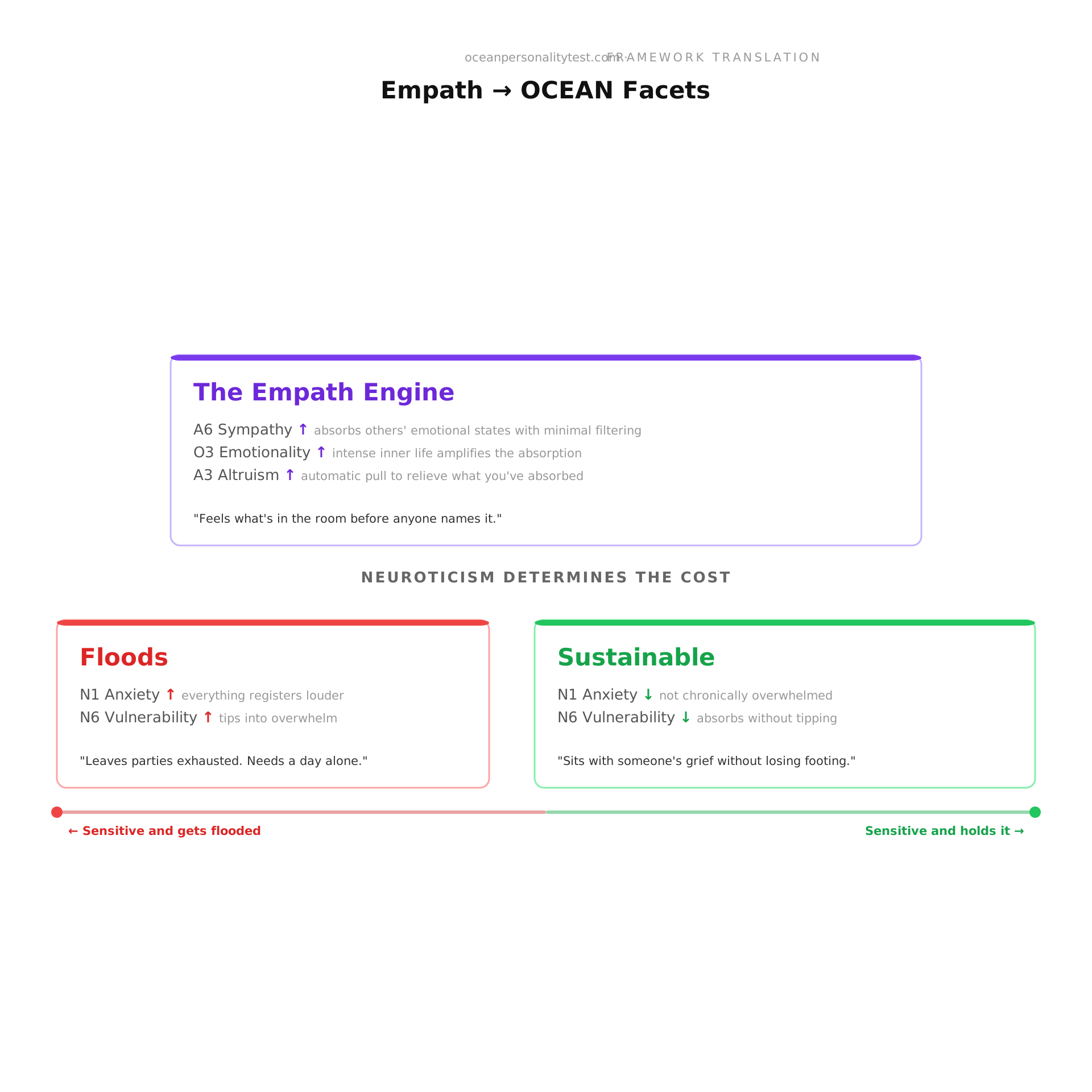
The OCEAN facet that most resembles the core of "empath" is Sympathy (A6). High A6 means you absorb other people's emotional states with minimal filtering. You feel what's in the room before anyone names it. The experience isn't chosen; it's more like how certain sounds cut through noise while others don't register at all. A6 is part of the Agreeableness domain, and it's measurable independently.
Emotionality (O3) adds something different. It measures the richness and intensity of your own inner emotional life, not just your responsiveness to others'. High O3 people feel things deeply in their own right, whether or not anyone else is in the room. When O3 is elevated alongside A6, you get someone who both experiences emotions intensely and absorbs them from others. That combination is what most people mean when they call themselves an empath. But O3 alone, without high A6, looks quite different: intense inner experience, less automatic absorption of external emotion.
Then there's the Neuroticism side. Anxiety (N1) amplifies sensory and social input across the board; everything registers louder. Vulnerability (N6) measures how quickly the nervous system tips into overwhelm when it's been saturated. A person with high A6, high O3, and also high N1 and N6 isn't just sensitive; they're sensitive and get flooded. That's the person who leaves parties exhausted, who needs a day alone after an emotionally heavy conversation, who gets called "too much" by people who don't flood the same way. The profile is coherent. The flooding isn't a character flaw, it's a predictable output of those specific facet combinations.
The version without the Neuroticism elevation looks completely different in practice. High O3, high A6, low N1: you feel a lot, you track others well, but you're not chronically overwhelmed by it. That person can sit with someone's grief without losing their own footing. They might get called an empath too, but their day-to-day experience of that trait is substantially less costly.
What the "empath" label obscures is which facets are actually driving the experience. Someone who scores high on an empath quiz because they feel emotionally drained by social situations might be looking at high N6, not high A6. Someone else with the same quiz score might have high O3 with moderate everything else. The interventions that help one person function better won't help the other at all, because the underlying structure is different.
The 30-facet OCEAN personality test scores all four of these facets independently: O3, A6, N1, N6. The extended profile shows each one with a percentile score, so you can see where your particular combination sits rather than collapsing it into a single label that flattens the differences that matter most.
Take the 30-facet OCEAN personality test and find out which facets are actually running your emotional experience.