Emotional Intelligence Is Not One Thing: The Five EQ Dimensions Mapped to OCEAN Subfacets

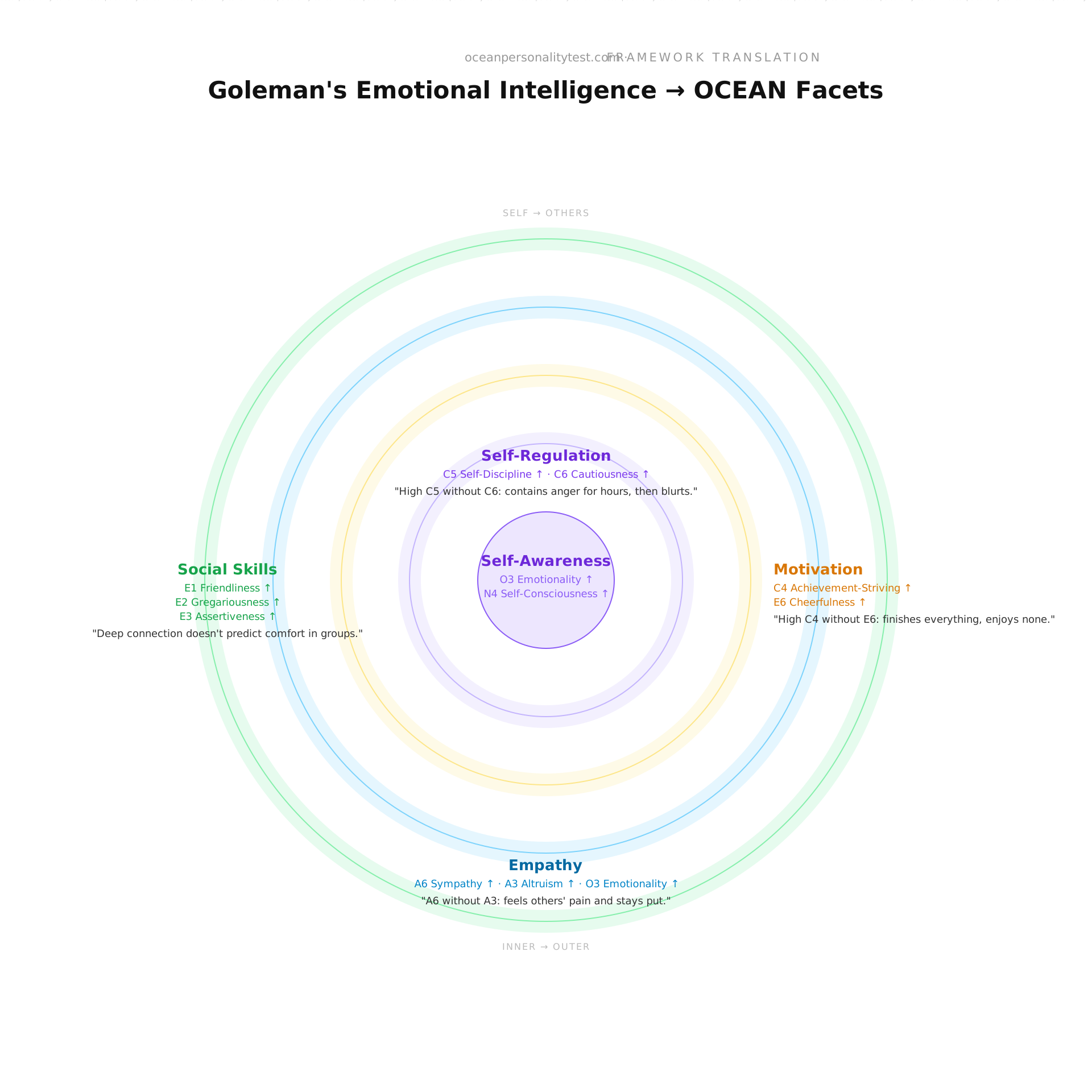
Daniel Goleman's EQ model has five components, and the reason it produces vague test scores is that each component is actually two or three separate personality capacities collapsed into one label.
Take self-awareness. The OCEAN model splits it: Emotionality (O3) measures how much you actually register your own internal states as data before acting. Self-Consciousness (N4) measures how aware you are of yourself under social observation. These are different things. Someone with high O3 and low N4 knows exactly what they feel but doesn't spiral about how others see them. Someone with low O3 and high N4 is hypervigilant to social evaluation and barely in contact with their own emotional state. An EQ test gives both a moderate self-awareness score.
Self-regulation is Self-Discipline (C5) — the capacity to hold an impulse — and Cautiousness (C6), which is the pause before you speak. High C5 without C6 means someone who can contain anger for hours and then blurts something impulsive in a single lapse. The two capacities operate independently, which is why 'self-regulation' as a single EQ score tells you almost nothing useful about where the breakdown will actually happen.
Motivation in Goleman's framework maps to Achievement-Striving (C4) and Cheerfulness (E6). C4 drives you toward goals for internal reasons. E6 is the enthusiasm that makes sustained effort feel like something other than grinding. High C4 without E6 is the person who finishes everything and enjoys none of it. High E6 without C4 is someone with lots of energy who never quite builds toward anything. Collapsing both into 'motivated' doesn't help you understand either type.
Empathy is where the model gets interesting. Sympathy (A6) is the automatic compassionate response. Altruism (A3) is the impulse to act on it. Emotionality (O3) feeds in here too because absorbing someone else's state requires access to your own emotional processing. Pull out any one of the three and the empathy changes shape in a specific way: A6 without A3 is someone who feels others' pain and stays put. A3 without O3 is compulsive helping that misses what the person actually needs.
Social skills map to Warmth (E1), Gregariousness (E2), and Assertiveness (E3), which aren't interchangeable. Deep one-on-one connection doesn't predict comfort in groups. Taking charge doesn't predict making people feel welcome. What looks like 'social skill' from the outside is usually some combination of these three at moderate-to-high levels, and the combination varies.
The 30-facet OCEAN personality test scores all of this directly. Your results include an EQ interpretation breaking Goleman's five dimensions into the specific subfacets underneath them, so instead of a composite score, you can see which components are carrying the weight and which aren't there.
Take the 30-facet OCEAN personality test and see what your attachment style and emotional intelligence look like in facet scores.