Sarah Ellis's Learn Like a Lobster and the Intellect Facet (O5)
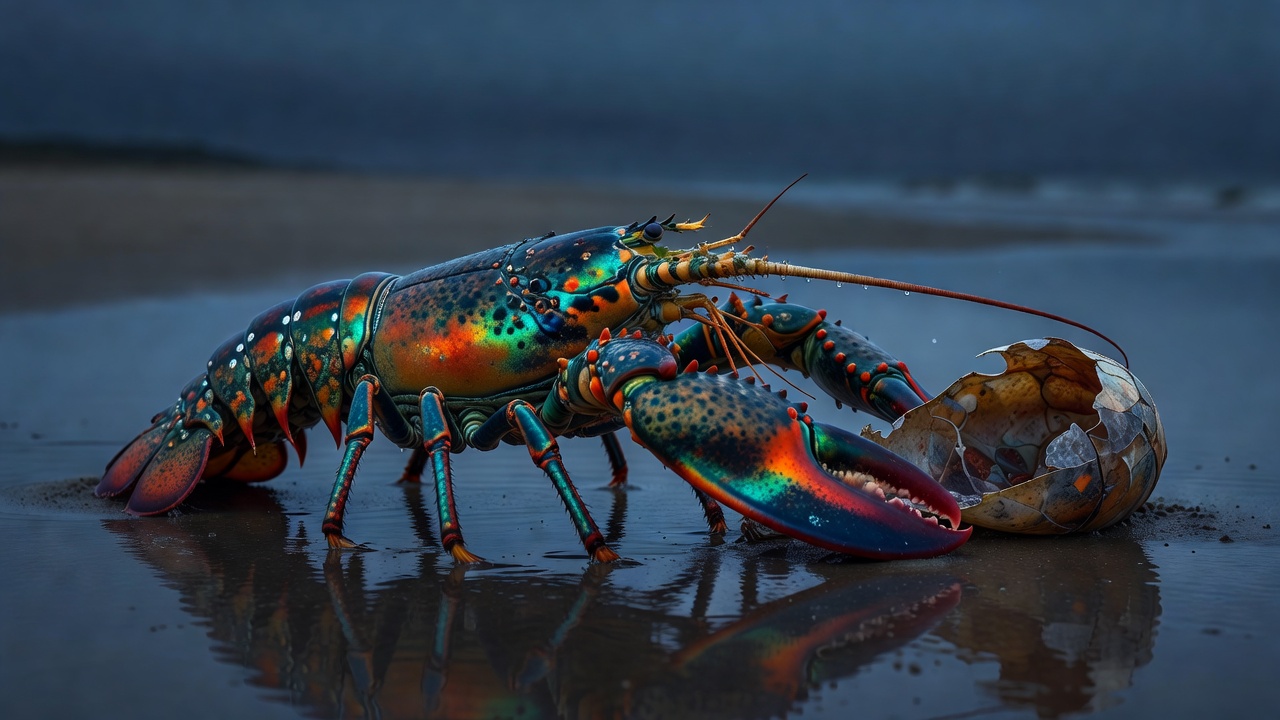
Sarah Ellis and Helen Tupper, the pair behind the Squiggly Careers work on modern careers, wrote Learn Like a Lobster around a creature that must shed its shell to grow. They open by reframing what work is now for, on the book's page: "We used to go to work to learn to do the job. Now learning IS the job." That appetite for ideas and for growing your own understanding is, in the Big Five, one facet.
The appetite to keep learning is the Intellect facet
That facet is Intellect (O5), under Openness, the pull toward ideas, understanding, and the pleasure of getting better at how you think. Ellis and Tupper are writing for high O5: a mind that treats learning not as a phase that ends with school but as the ongoing work itself, shed and regrow, shed and regrow. A high scorer enjoys chewing on new ideas and goes looking for the next thing to understand. A lower scorer learns what a task needs and stops there, and may find the always-a-student posture more effortful than appealing.
The move that makes the metaphor land is that the lobster fuels its own growth. It does not wait to be taught, it sheds when it is ready, which reframes learning from something done to you into something you drive, and pairs with the openness to reconsider what you already know. For a lower-O5 reader the usable version is narrow, picking one skill you actually need and getting deliberately curious about how you best learn it, rather than trying to become a scholar of everything. The job you trained for keeps changing. Ellis and Tupper's wager is that the person who treats learning as the real work is never left behind by it.
Read your O5 to know how Learn Like a Lobster lands. If it runs high, the book gives a vivid frame to an appetite for learning you already run on. If it runs low, it asks something real of you, to treat learning as the ongoing job rather than a stage you have finished, which is work but the kind that keeps you growing. The shell that fit last year gets tight. Ellis and Tupper keep insisting the growth comes from being willing to shed it.
Read the book: Learn Like a Lobster: Grow as You Go, Fuel Your Own Progress, Accelerate Your Career by Sarah Ellis.
See Where You Fall
Where do you actually fall? The 30-facet OCEAN personality test takes about 15 minutes and scores all five domains and the facets underneath them. Take the test
Research Citations
Ellis, S., & Tupper, H. (2025). Learn like a lobster: Grow as you go, fuel your own progress, accelerate your career. Penguin Business.
Mussel, P. (2013). Intellect: A theoretical framework for personality traits related to intellectual achievements. Journal of Personality and Social Psychology, 104(5), 885-906.
Johnson, J. A. (2014). Measuring thirty facets of the Five Factor Model with a 120-item public domain inventory: Development of the IPIP-NEO-120. Journal of Research in Personality, 51, 78-89.
Costa, P. T., & McCrae, R. R. (1992). Revised NEO Personality Inventory (NEO-PI-R) professional manual. Psychological Assessment Resources.