Dunning-Kruger and the Big Five: Which Personality Profile Thinks It Knows More Than It Does

The popular summary of Dunning-Kruger is that stupid people think they're smart. That's not the finding. The actual result is narrower: people with low ability in a specific domain overestimate their performance in that domain, because the same skill gap that causes poor performance also prevents them from seeing it.
What the research doesn't explain is why some people are more susceptible than others. Two people with the same gap in the same domain can land in completely different places. One will overestimate wildly; the other will hedge. The difference isn't intelligence, it's personality.
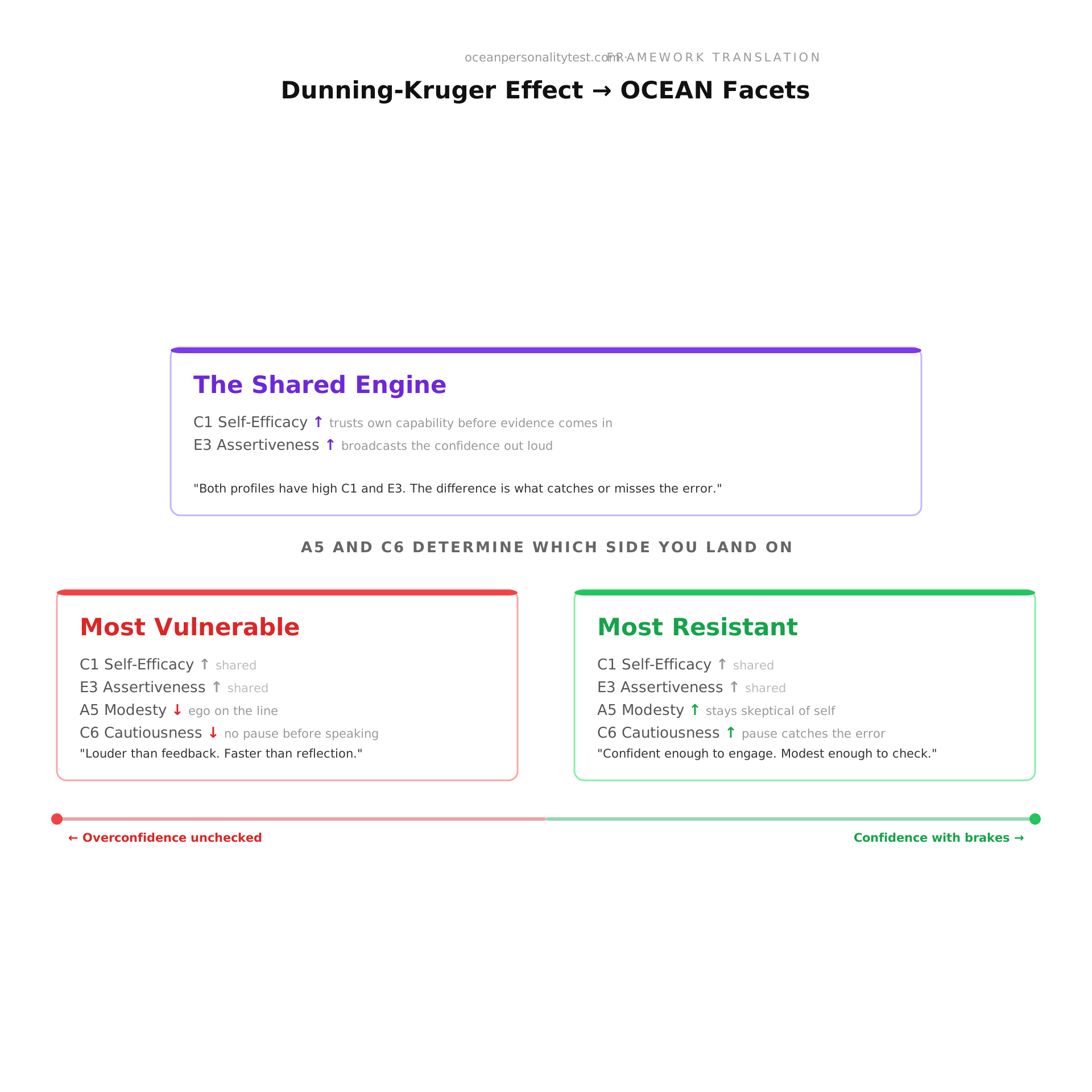
Self-Efficacy (C1) is the most direct predictor. High C1 means you trust your own capability as a default setting, before evidence comes in. If that confidence is calibrated against actual skill, it's useful. If it isn't, it's the exact mechanism Dunning and Kruger documented. Someone sitting at the 95th percentile on C1 entering a domain they don't know will assume they're doing well, because their baseline is competence. Low C1 produces the opposite problem: doubt even when the evidence says you're good. The effect has two directions; personality determines which one you land in.
Assertiveness (E3) is what makes overestimation visible. Overconfidence without assertiveness stays internal. The person is miscalibrated, but they're not announcing it. Add high E3 and the same error gets broadcast: they're taking charge of projects they can't execute, filling dead air in meetings where they're the least informed person in the room. The overconfidence is the calibration problem; the assertiveness is just the delivery mechanism.
Intellect (O5) is the one that surprises people. Being drawn to complex ideas and actually understanding them are different things. High O5 with low C1 produces someone who seeks out complexity and then spirals on whether they've grasped it. High O5 with high C1 produces someone who reads the Wikipedia article and explains the topic at dinner like they've spent years on it. The appetite for difficulty is genuine; the confidence that they've processed it correctly is not.
Modesty (A5) functions as the natural brake. Even with high C1, someone high in A5 reflexively downplays their abilities, which keeps the miscalibration internal long enough to be corrected by actual results. They're not invested in being right out loud, so they can update. Strip that out — low A5 — and the ego is now on the line. Feedback lands as a threat. The high C1, high E3, low A5 combination is the textbook case: overconfident, loud, and unable to hear correction without reading it as an attack.
Cautiousness (C6) is the last piece. High C6 means there's a pause between first impression and final statement, which is the exact window where Dunning-Kruger errors can be caught. Low C6 closes that window entirely. The wrong answer is already out of your mouth before the doubt had time to surface.
The profile most resistant to the effect: moderate C1, high A5, high C6, moderate E3. Confident enough to engage, modest enough to stay skeptical, deliberate enough to check. The profile most vulnerable: high C1, low A5, low C6, high E3. The combination where overconfidence is louder than feedback and faster than reflection.
Your 30-facet OCEAN personality test results show exactly where you land on each of these facets. The combination tells you whether you're running overcalibrated or under, and in which situations the miscalibration is most likely to get you.
Take the 30-facet OCEAN personality test and see which side of the Dunning-Kruger line your profile falls on.