DISC to OCEAN: The Corporate Assessment Translated to Science
DISC gives your company four letters. The Big Five gives you thirty independent measurements. Most HR teams pick DISC because it fits on a slide, and that convenience costs them almost everything the assessment could have told them.
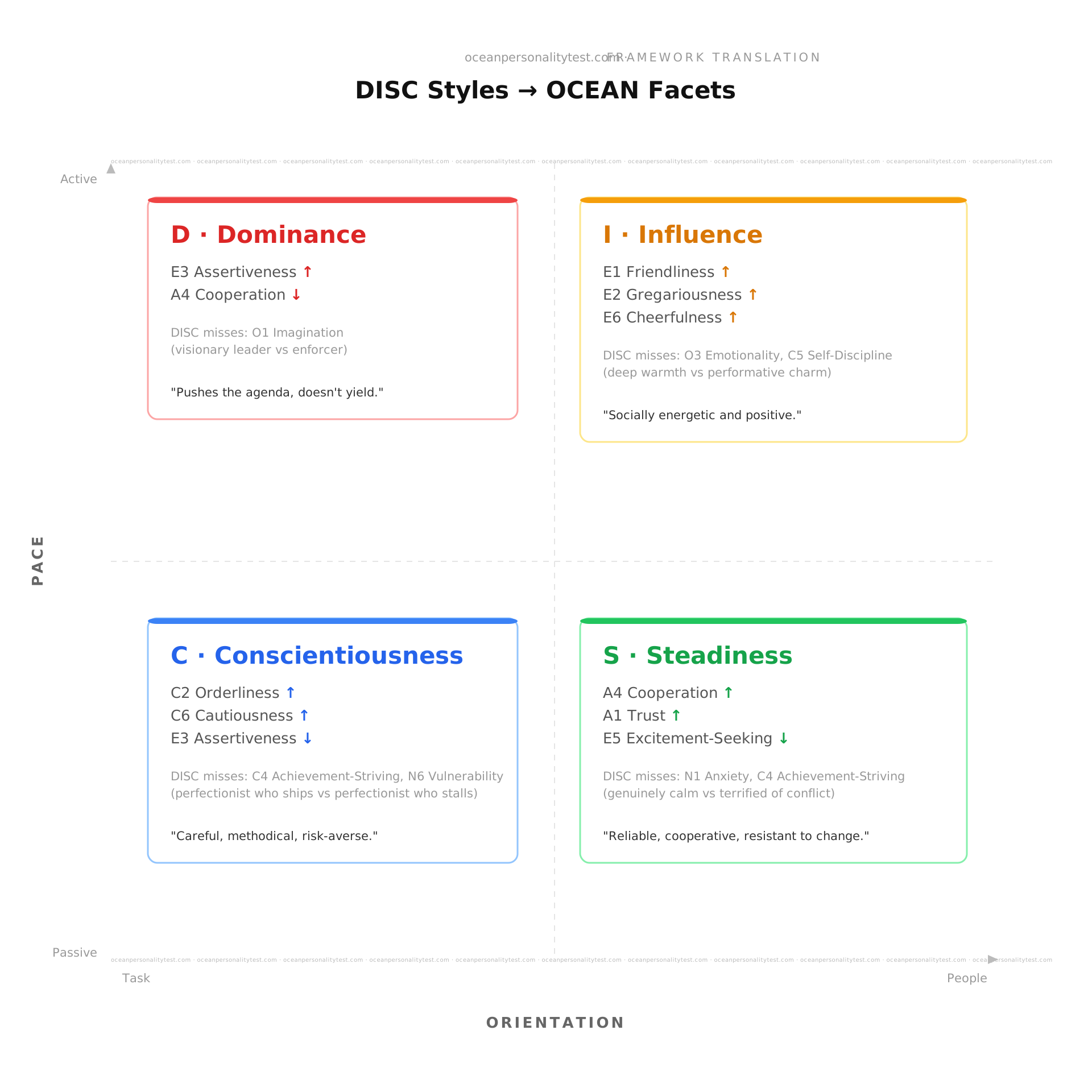
The translation is straightforward once you see it. A high-D (Dominance) profile maps to high Assertiveness (E3) combined with low Cooperation (A4). The person pushes their agenda and doesn't yield to group pressure. That much is real, and DISC captures it accurately. What DISC cannot tell you is whether that high-D also scores high on Imagination (O1). A dominant person with high O1 is a visionary leader who drives toward ideas nobody else has considered yet. A dominant person with low O1 is an enforcer: they push hard, but only for what already exists. Those two people get the same DISC score. They require completely different management strategies, completely different project assignments, completely different development plans. DISC can't distinguish them.
High-I (Influence) maps to high Warmth (E1), high Gregariousness (E2), and high Cheerfulness (E6). The person is socially energetic and positive. But DISC says nothing about their Emotionality (O3), which determines whether that warmth runs deep or stays performative. It says nothing about Self-Discipline (C5), which determines whether the influencer follows through on what they promise in all those meetings. Two high-I profiles can have completely different reliability, completely different emotional depth; DISC treats them as interchangeable. One of them builds lasting client relationships. The other charms the room, then drops the ball on every deliverable.
High-S (Steadiness) maps to high Cooperation (A4), high Trust (A1), and low Excitement-Seeking (E5). Reliable, cooperative, resistant to change. Fine as a description. Useless as a prediction. The S profile tells you nothing about Anxiety (N1), which is the difference between someone who is steady because they're genuinely calm and someone who is steady because they're terrified of conflict. The first person anchors a team under pressure; the second one caves the moment pressure actually arrives. DISC also ignores Achievement-Striving (C4) entirely, so you can't tell whether your steady employee is content maintaining the status quo or quietly frustrated that nobody is raising the bar.
High-C (Conscientiousness, in DISC's terminology) maps to high Orderliness (C2), high Cautiousness (C6), and low Assertiveness (E3). Careful, methodical, risk-averse. DISC collapses all of that into one quadrant and misses the 26 facets it never measured. Is this careful person also high in Achievement-Striving (C4)? Then they're a perfectionist who ships. Low in C4? A perfectionist who stalls. High in Vulnerability (N6)? Every mistake feels catastrophic to them. Low in N6? Mistakes are data points, processed and discarded. Same DISC letter, opposite workplace behavior.
The math is simple. DISC touches 4 of the 30 facets that the Big Five measures. That's 13% of the available personality information. The other 26 facets cover imagination, intellectual curiosity, emotional volatility, self-discipline, achievement drive, modesty, sympathy, depression tendency, impulsiveness, and more than a dozen other dimensions that directly predict job performance, team friction, and leadership style. Corporations keep choosing DISC because it takes fifteen minutes and the results fit in a 2x2 grid. The results fit in a 2x2 grid because they leave out most of the picture.
There's also the question of what happens between quadrants. Real people don't sit cleanly in one box. Someone with moderate E3 and moderate A4 lands in no DISC quadrant with any confidence, so DISC either forces them into whichever quadrant they lean toward slightly or labels them a "blend." The Big Five doesn't have this problem because it never reduces you to a category in the first place. Your percentile on each of the 30 facets is your score. No rounding, no binning, no information thrown away.
The 30-facet OCEAN personality test measures all five domains at the subfacet level, including the four traits DISC captures and the twenty-six it doesn't. Your results show percentile scores for each facet, so you can see exactly where you sit on every dimension, not just which quadrant a simplified model assigns you to.
Take the 30-facet OCEAN personality test and see what DISC was leaving out.