Codependency Is a Personality Pattern: What the OCEAN Test Actually Measures

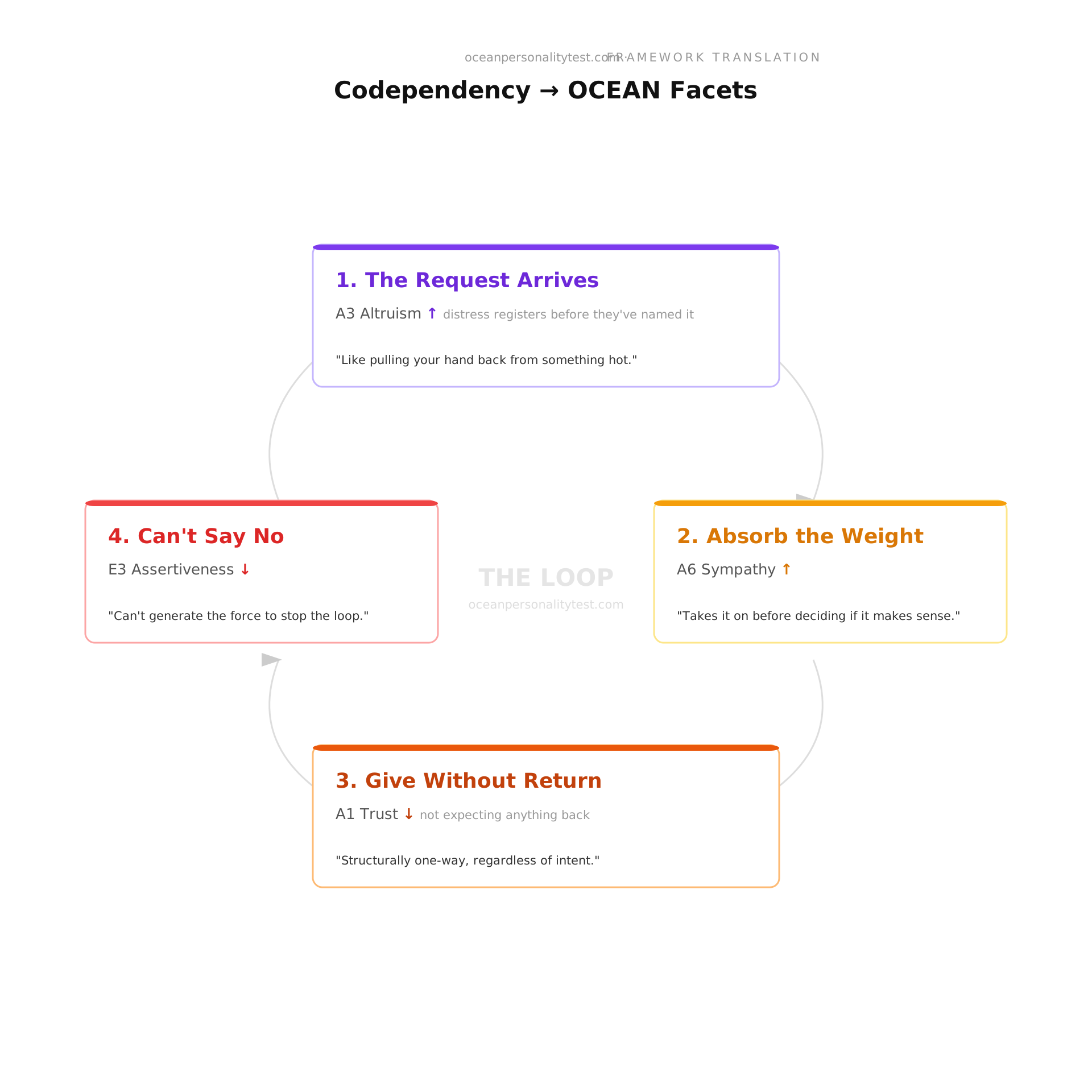
Most codependency frameworks treat helping as the problem. OCEAN disagrees. The scores point to four specific facets, and the issue isn't any one of them in isolation.
Altruism (A3) is the starting point. At high levels, other people's distress registers before they've named it. The response isn't deliberate. It's closer to how you'd pull your hand back from something hot. Sympathy (A6) sits right next to it: it measures how much of someone else's emotional state you absorb before deciding whether absorbing it makes sense. Together, these two create someone who walks into a room already solving problems that haven't been voiced yet.
Trust (A1) is usually where people are surprised. Codependent patterns tend to show low A1, not high. The giving isn't coming from a place of security or reciprocity, it's coming from a nervous system trained to give without expecting return. Which makes the giving structurally one-way, regardless of intent.
Assertiveness (E3) is what's missing when the loop can't stop. The request arrives, A3 fires, A6 absorbs the weight of the other person's need, low A1 means you're not waiting for anything back, and low E3 means you can't generate enough force to say no even when you see what's happening. The pattern doesn't require malice from either side. It just runs.
The codependency composite in the extended profile weights all four of these facets. A high score means the loop is mostly automatic. A moderate one means it kicks in with specific people or situations. Where any of the four lands tells you which part of the pattern has the most give.
The 30-facet OCEAN personality test scores all four independently. The extended profile shows the composite and where each facet sits.
Take the 30-facet OCEAN personality test and see your codependency pattern score.