Burnout Test: Still Producing, No Longer Present

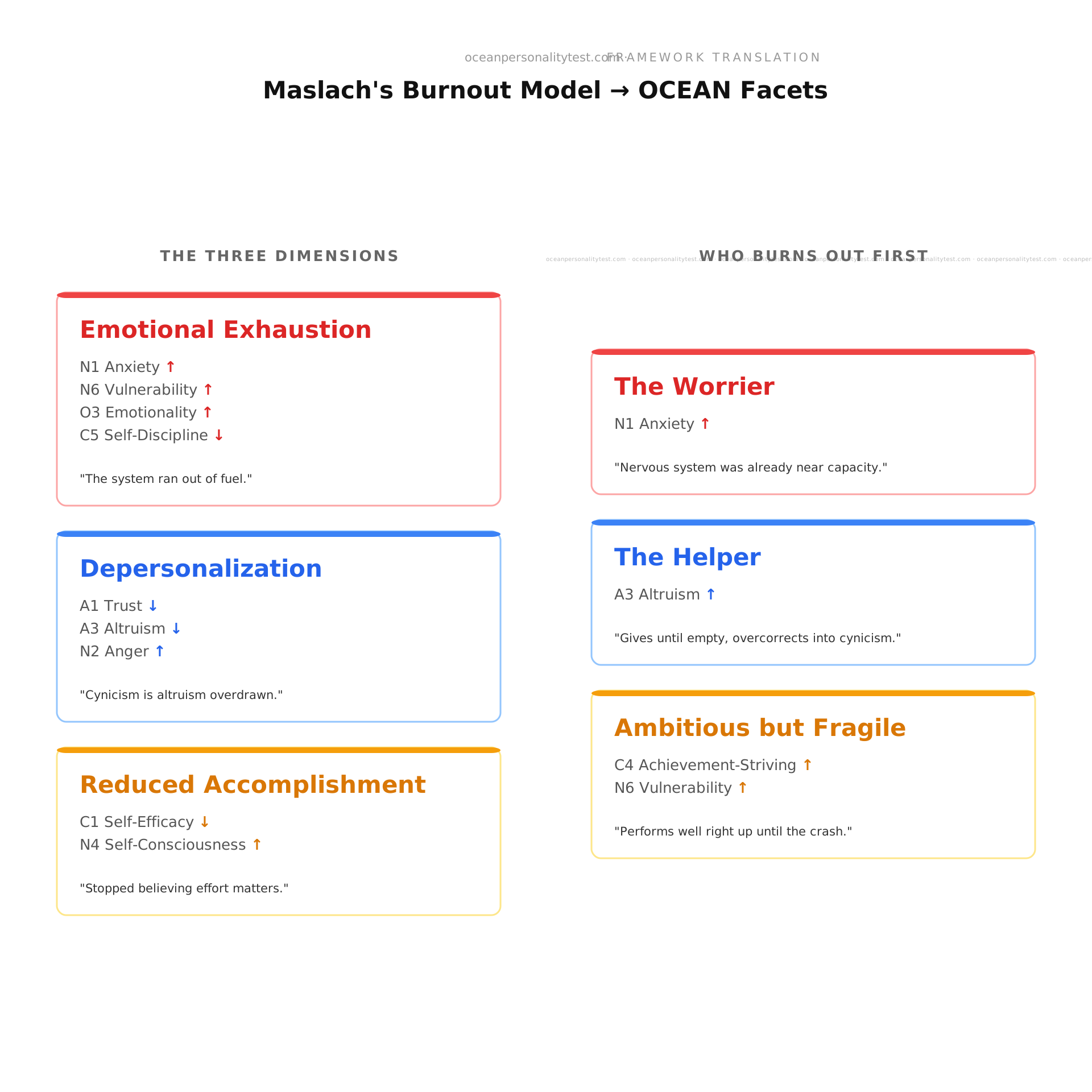
You're still hitting deadlines. Your manager has no complaints. The work gets done, on time, at the quality people expect. From the outside, nothing is wrong. From the inside, you're operating on a version of yourself that feels like a photocopy of a photocopy: the shape is right, the words are there, but the resolution has dropped so low that you can barely recognize yourself in it. You show up, you perform, and when the day ends you sit in your car for ten minutes before driving home because the transition from one empty room to another requires a gathering of energy you no longer have.
If you've searched for a "burnout test," you're probably already past the point where a vacation would fix it. What personality science reveals about burnout is more structural than most people expect: it maps onto a specific combination of OCEAN facets, and the cruelest part is that the traits which made you capable of sustained high performance are the same traits that make burnout, for you specifically, almost inevitable.
C3 Dutifulness: the engine that won't turn off
C3 Dutifulness measures how strongly you feel obligated to meet commitments. High C3 means obligations feel binding at a level below conscious choice. You don't decide to follow through; following through is the default, and not following through requires active override. This trait is what keeps burned-out people producing long after the fuel runs out. The body is exhausted, the motivation is gone, the joy evaporated months ago, but C3 keeps the machinery running because stopping feels like a violation of something fundamental.
People with low C3 burn out differently, or often don't burn out at all in the traditional sense, because when the work stops feeling worthwhile they disengage. The commitment circuit releases and they redirect. High-C3 people can't do this. The commitment holds even when everything underneath it has collapsed. They describe feeling like they're watching themselves work from a distance, performing the motions with a competence that no longer connects to any internal state. The lights are on. Nobody's home.
C5 Self-Discipline: the first thing to fail
C5 measures your capacity to sustain effort through discomfort. In a healthy state, C5 is what gets you through the hard parts of work, the boring stretches, the friction, the tasks you'd rather skip. As burnout progresses, C5 is the first facet to erode. Things you used to power through now feel impossible. Small tasks accumulate because the override that used to handle them has been running at capacity for too long and the mechanism is worn.
This produces a confusing internal experience. You still care about the work (C3 ensures that). You still hold yourself to high standards (C4 Achievement-Striving ensures that). But you can't make yourself do the small things that used to be automatic. Emails sit unanswered. Administrative tasks pile up. You start the day with a list and end the day having done the three things that were absolutely unavoidable while everything else slides. The gap between what C3 says you should do and what depleted C5 can actually execute becomes its own source of distress.
N1 Anxiety: rest as threat
Here is where the trap closes. N1 Anxiety measures how readily your system generates a threat response to uncertainty. For someone deep in burnout with high N1, stopping feels dangerous. Not metaphorically dangerous. The body responds to rest the way it responds to a predator: with activation, vigilance, a rising sense that something is about to go wrong. Weekends are worse than weekdays because the structure is gone and the anxiety fills the space. Vacations are agony for the first two days and tolerable by the fourth, just in time to start dreading the return.
N1 in the context of burnout creates a paradox that most recovery advice ignores. The standard prescription is rest. But rest, for this profile, is not experienced as restoration; it's experienced as exposure. You sit still and the anxiety that work was suppressing comes flooding in. So you work, not because you want to and not even because C3 demands it, but because working is the only state where the anxiety has a container. The job becomes the coping mechanism for the condition the job created.
E6 Cheerfulness: the signal that went dark
E6 measures your capacity to experience joy, enthusiasm, and optimism. In burnout, this facet drops even in people whose baseline is moderate or high. Things that used to generate pleasure, a good meal, a weekend plan, a friend's message, register as neutral or as additional demands on a depleted system. Someone texts you about dinner Saturday and instead of anticipation you feel the weight of having to perform social engagement for three hours. The anticipation circuit isn't broken; it's been commandeered by C3 for work purposes and there's nothing left over for the rest of your life.
Low E6 in burnout is qualitatively different from low E6 as a baseline trait. Someone who's always scored low on positive emotions doesn't expect them. Someone who used to feel excitement and gradually watched it drain out knows what's missing, which makes the absence harder to tolerate. You remember being the person who looked forward to things. You can't access that person anymore and you're not sure when the transition happened.
C4 Achievement-Striving: the bar that keeps rising
C4 completes the architecture. This facet measures how high you set internal standards and how persistently you pursue them. High C4 in combination with high C3 means you're not just obligated to meet commitments; you're obligated to exceed them. The bar rises automatically. Last year's performance becomes this year's baseline, and anything less triggers the feeling that you're sliding backward. Burnout doesn't lower the bar. It lowers your capacity to reach it while the bar stays exactly where it is, or drifts higher.
The perfectionism overlap here is real. Many burnout profiles include a perfectionism signature: high C4, high C3, high N1. The perfectionism keeps raising standards, the dutifulness makes abandoning them impossible, and the anxiety makes every gap between current performance and the standard feel like an emergency. Burnout is what happens when this system runs long enough without the inputs (rest, reward, meaning) that it needs to sustain itself.
Why "take a vacation" doesn't work
C3 Dutifulness travels with you. You can change your location, your schedule, your responsibilities, and C3 will find obligations in the new environment within hours. You'll feel guilty about not enjoying the vacation. You'll check email "just once" because the thread you left behind is generating a low hum of obligation that C3 won't let you ignore. You'll spend the trip recovering from the effort of not working, which is itself a form of work for a high-C3 system.
Recovery for this profile requires something more targeted than time off. It requires understanding which facet is the bottleneck and intervening there. If depleted C5 is the primary issue, reducing cognitive load matters more than reducing hours. If N1 is preventing rest, the anxiety needs its own intervention separate from the work question. If E6 has gone dark, reintroducing small, low-stakes sources of positive experience can restart the circuit, but only if C3 isn't immediately redirecting that energy back into obligation.
Your C3, C5, N1, E6, and C4 scores all appear in the 30-facet OCEAN personality test. It takes about 15 minutes. The results won't tell you whether you're burned out; you already know. They'll show you which part of the machine failed first and which part is keeping the whole thing running past the point where it should have stopped, which turns out to be the difference between recovery advice that works and recovery advice that sounds right but doesn't change anything.