Alex Hutchinson's The Explorer's Gene and the O4 Facet
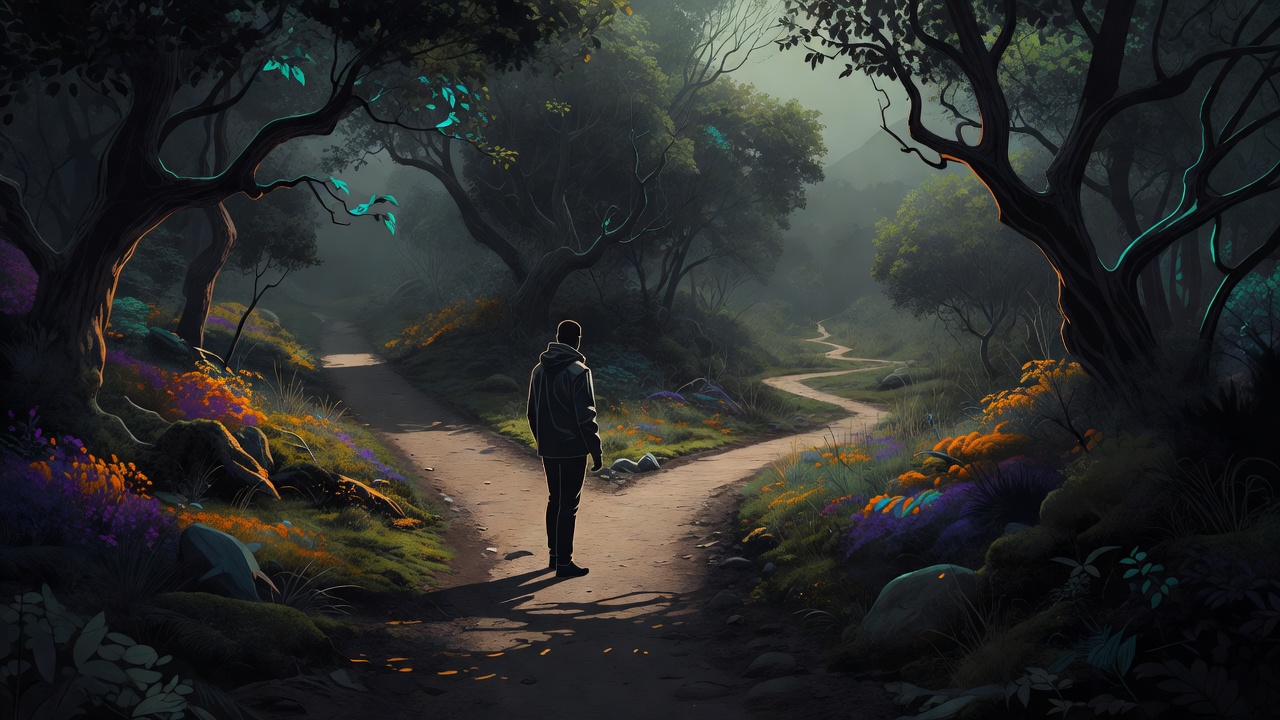
Alex Hutchinson's The Explorer's Gene is about a restlessness most of us feel but rarely examine: the pull toward the new. Not everyone parasails to the South Pole, but as he says on a podcast, "We're all drawn, I think, to novelty in some way, whether it's listening to new music or finding books that you haven't read, or ordering different things in the restaurant or whatever." His argument is that this pull is a deep, evolved feature of the human mind rather than a quirk. In the Big Five, how strong it runs in you is one facet.
The pull toward the unknown is Adventurousness
Adventurousness (O4), under Openness, is the appetite for new experiences and unfamiliar territory, literal or otherwise. A high scorer takes the untried route and the trip with no plan; a low scorer prefers the known quantity. Hutchinson frames the whole book around the tension every animal faces between exploiting what already works and exploring for something better. As he puts it, "Exploring something is getting off the beaten path where you don't know what the outcome is going to be." High O4 is a temperament that finds that not-knowing exciting rather than threatening.
What is useful about Hutchinson's framing is that it separates two things people lump together. Exploration is not the same as thrill-seeking. Excitement-Seeking (E5) wants intensity and adrenaline; O4 wants novelty and information, which can be perfectly calm. Reading in an unfamiliar field, or changing careers at fifty, are high-O4 moves with no adrenaline at all. The evolutionary logic Hutchinson describes is about reducing uncertainty by walking toward it, which is closer to curiosity than to daredevilry.
We break the facet down on its own in Adventurousness (O4). The reassuring read of The Explorer's Gene, if your O4 runs low, is that the drive sits on a spectrum and it responds to use: the more novelty you let yourself sample, the more the unfamiliar shifts from threatening to interesting. And if your O4 runs high, the book is permission. That itch to see what is over the next hill is old equipment doing its job rather than restlessness to fix.
Read the book: The Explorer's Gene: Why We Seek Big Challenges, New Flavors, and the Blank Spots on the Map by Alex Hutchinson.
See Where You Fall
Where do you actually fall? The 30-facet OCEAN personality test takes about 15 minutes and scores all five domains and the facets underneath them. Take the test
Research Citations
Hutchinson, A. (2025). The explorer's gene: Why we seek big challenges, new flavors, and the blank spots on the map. Mariner Books.
DeYoung, C. G. (2013). The neuromodulator of exploration: A unifying theory of the role of dopamine in personality. Frontiers in Human Neuroscience, 7, 762.
Johnson, J. A. (2014). Measuring thirty facets of the Five Factor Model with a 120-item public domain inventory: Development of the IPIP-NEO-120. Journal of Research in Personality, 51, 78-89.
Costa, P. T., & McCrae, R. R. (1992). Revised NEO Personality Inventory (NEO-PI-R) professional manual. Psychological Assessment Resources.